
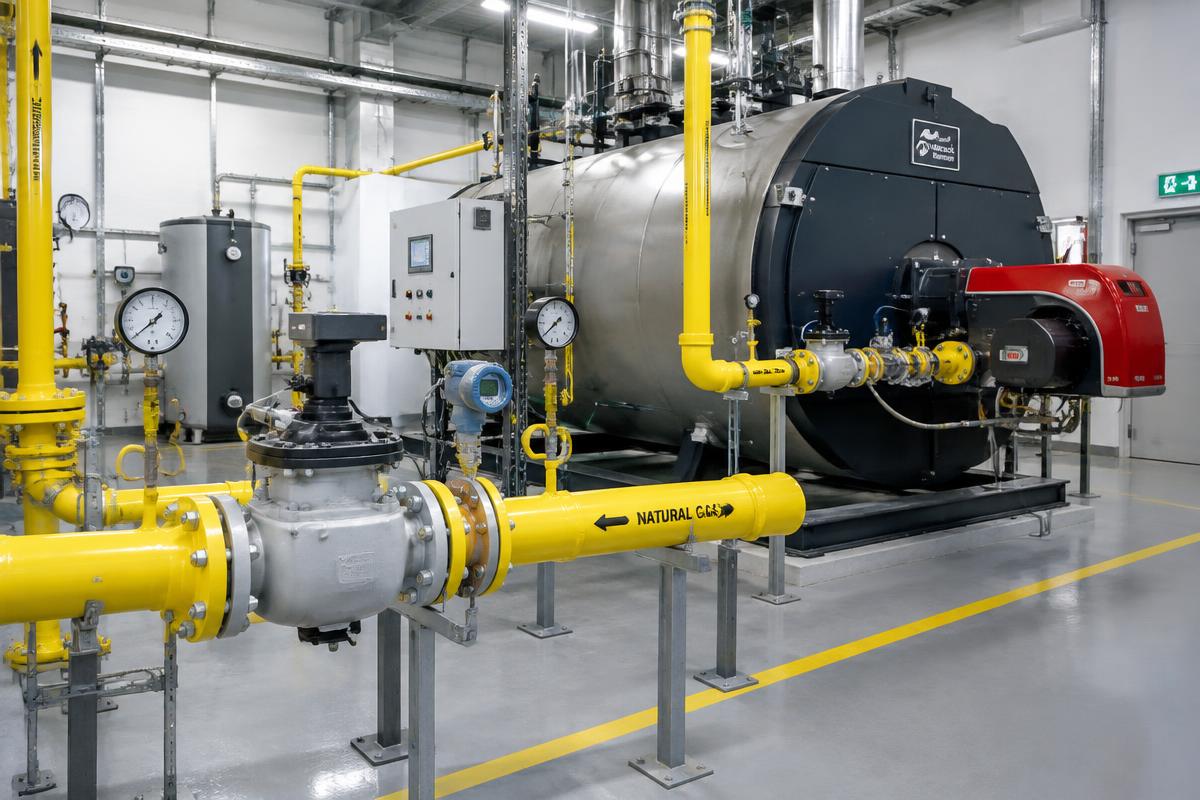
Introduction to Industrial Natural Gas Use
The use of natural gas in the industrial sector constitutes the backbone of Greek production, offering high energy efficiency and a significant reduction in operating costs compared to heating oil or mazut. However, industrial installations differ radically from residential ones, as they handle massive volumes and often operate under high pressure (above 4 bar). Proper design, the selection of certified materials, and strict adherence to safety regulations are not merely legal obligations, but prerequisites for the seamless operation of the business.
Technical Specifications and Network Design
The design of an industrial installation begins with determining the maximum hourly consumption and the required operating pressure of the burners. In Greece, installations are governed by the "Technical Regulation for Internal Natural Gas Installations with an operating pressure above 0.5 bar".
Metering and Regulating Stations (M/R Stations)
The M/R station is the heart of the installation. This is where pressure reduction from the EDA network occurs (e.g., from 19 bar down to 4 bar or 300 mbar), as well as consumption metering. Key requirements include:
- Safety Device (Slam-shut valve): Automatic flow shut-off in case of overpressure or underpressure.
- Filtration: Use of high-efficiency filters to protect regulators and meters from particles.
- Dual lines (Run and Standby): To ensure supply even during maintenance of one branch.
Piping and Materials
In industrial applications, seamless steel pipes according to API 5L or EN 10216 are the standard. Connections are made exclusively by certified welders, and welds are subjected to radiographic testing (X-ray) at a rate defined by the design, typically 10% to 100% depending on the pressure.
Safety Systems and Automation
Safety in an industrial environment relies not only on the mechanical strength of the pipes but also on active protection systems.
- Leak Detection: Installation of explosion-proof detectors (ATEX) in locations susceptible to leaks, such as regulators, valves, and burner heads.
- Safety Solenoid Valves: Connected to the fire detection system and gas detectors, which shut off the supply outside the building in case of danger.
- Ventilation System: Mandatory natural or mechanical ventilation in boiler rooms to prevent the accumulation of an explosive mixture.
Burner Installation and Adjustment
Industrial burners (monoblock or dual fuel) require specialized adjustment to optimize combustion. Poor adjustment not only increases consumption but also produces carbon monoxide (CO) and nitrogen oxides (NOx), burdening both the environment and equipment.
It is critical to check the burner's "gas train", which includes the Valve Proving System (VPS). This system automatically checks if the main valves close tightly before every ignition, preventing explosions in the combustion chamber.
Maintenance and Legal Obligations
The maintenance of an industrial installation is not optional. According to Greek legislation, the following are required:
- Annual leak test: Pressure testing or the use of special equipment on connections.
- Issuance of Inspection Sheet: By a licensed gas technician, certifying emission levels and performance.
- Pressure vessel inspection: If there are tanks or large collectors.
- Re-inspection every 5 years: A general inspection of the entire installation by an independent certification body.
Frequently Asked Questions (FAQ)
1. What is the difference between low and medium pressure?
Low pressure refers to installations up to 50 mbar (mainly residential). Medium pressure refers to industries and large commercial units, with values from 0.5 bar to 4 bar, requiring stricter material specifications.
2. What is an ATEX zone in a gas installation?
It is an area where there is a potential for an explosive atmosphere. Electrical equipment (lights, switches, detectors) within these zones must be of a special type so as not to cause sparks.
3. Can I use existing oil piping for natural gas?
No, the specifications are completely different. Natural gas requires specific materials, certified welding methods, and different pressure drop calculations.
4. What happens in the event of a power outage?
Industrial gas solenoid valves are "Normally Closed" type. This means that if power is cut, the valve closes automatically for safety reasons, unless supported by a UPS for controlled shutdown.
Conclusion
Industrial natural gas installations offer huge advantages but require responsibility. Investing in quality equipment and collaborating with specialized engineers and technicians ensures your business remains productive, cost-effective, and, above all, safe for personnel and the environment.