
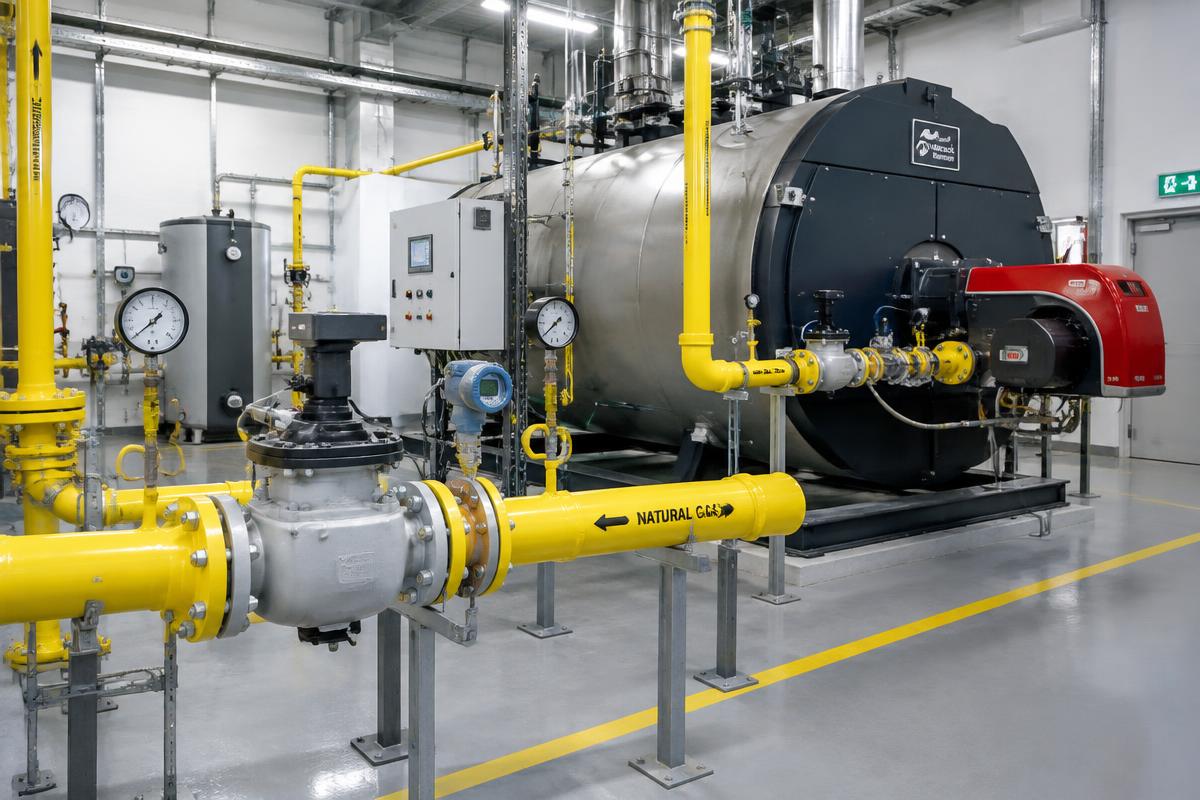
Corrosion can gradually reduce the wall thickness of a metal pipe and create a serious risk of leakage. In an industrial natural gas network, corrosion protection must be treated as part of the overall facility safety.
External corrosion
The external surface can be affected by moisture, chemical pollutants, condensates, industrial atmospheres, or contact with other materials. Areas near floors, walls, and supports require special attention.
Internal corrosion
If moisture, pollutants, or corrosion products are present inside the line, the internal surface may be affected. The presence of solid residues can also cause problems for filters and regulators.
Painting and protective coatings
Protective coatings must remain continuous and in good condition. Scratches, delamination, or poor surface preparation can create localized spots of intense corrosion.
Underground sections
For underground pipelines, additional protective measures may be required, such as appropriate coating and cathodic protection systems. Their selection is determined by the design and in accordance with project requirements.
Thickness measurement
At critical points, thickness measurements can be taken using appropriate methods. Comparison with previous measurements indicates whether there is an active rate of material loss.
What should be recorded
The location, extent, depth of corrosion, and remediation actions must be documented. This creates a history that assists in maintenance planning and the prevention of sudden failures.