
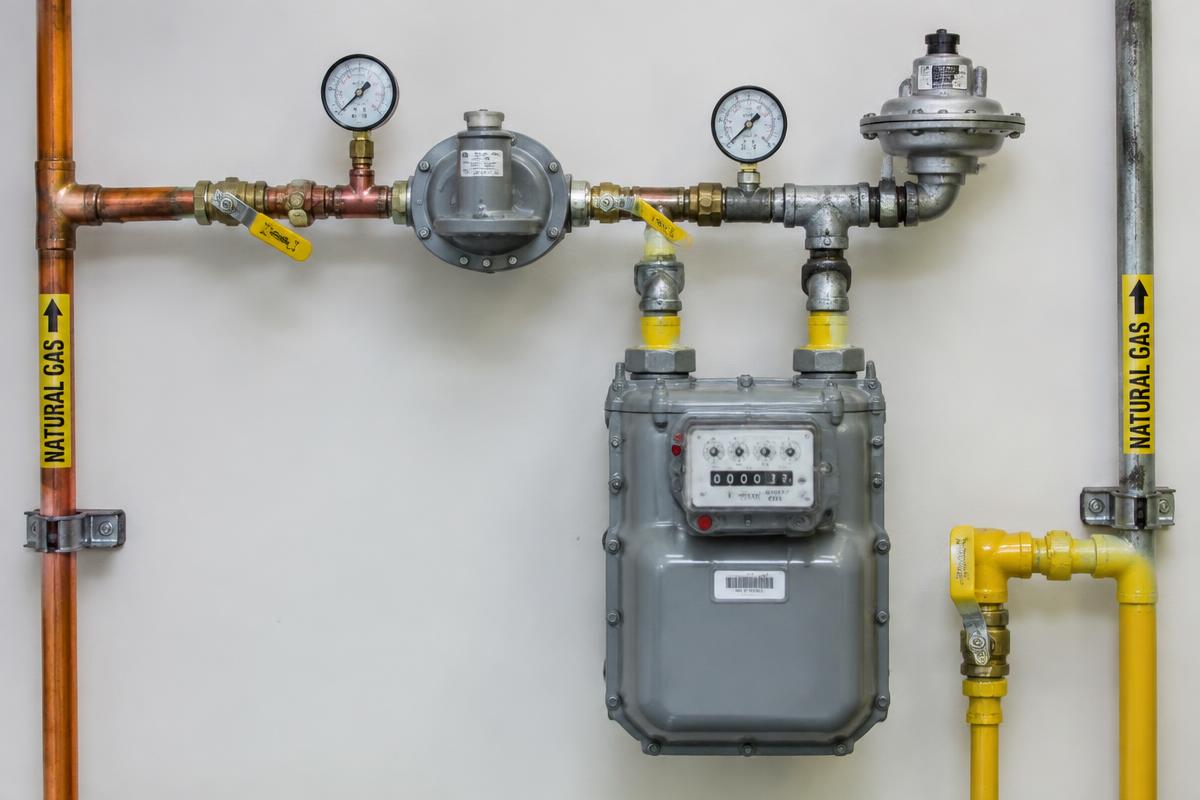
Introduction to how the natural gas meter works
The natural gas meter acts as the "bridge" between the distribution network and your home's internal installation. For the owner, it is a tool for monitoring expenses, while for the technician, it is the basis for checking boiler performance. Despite its importance, many consumers find it difficult to interpret the numbers they see on the dial, resulting in an inability to verify the accuracy of their bills.
In Greece, most residential meters are of the "diaphragm" type, which measure the volume of gas passing through them in cubic meters (m³). It is important to understand that gas is billed by energy (kWh), but the meter records volume.
How to read the reading correctly
When you look at your meter's dial, you will notice a series of digits. Reading it correctly is the first step to staying in control of your consumption.
The meter digits
- Black digits: These are on the left and indicate the whole cubic meters (m³). These are the numbers the Gas Distribution Company (EDA) is interested in and what you should report if you are performing a self-reading.
- Red digits: These are on the right (usually after a decimal point) and indicate decimals (liters). These are not used for billing.
For example, if the meter reads 04562.381, the reading we are interested in is 4562. Some older meters may not have red digits but rather a frame that separates them.
The conversion from m³ to kWh: Why does the bill change?
This is the most common question among consumers. Because natural gas is a gaseous substance, its energy value (how much heat it provides) depends on its chemical composition, pressure, and temperature. Therefore, one cubic meter of gas in January may provide slightly different energy than one cubic meter in March.
The mathematical formula used is:
Energy (kWh) = Volume (m³) × Conversion Factor (Z) × Gross Calorific Value (GCV)
- Conversion Factor (Z): Corrects the volume according to the pressure and temperature of your area.
- Gross Calorific Value (GCV): Shows how much energy is contained in one m³. In Greece, it usually ranges between 11.1 and 11.6 kWh/m³.
Technical inspection and meter safety
As a technician, I often encounter cases where the meter "runs" without consumption or remains stationary while the boiler is running. The meter is the property of the Network Operator, but checking the tightness after the meter is the owner's responsibility.
Signs of a meter problem
- Noise during operation: An intense metallic or "clicking" sound may indicate wear on the internal diaphragms.
- Gas smell: If you smell gas near the meter, immediately check the connections (unions) with soapy water. Never use a lighter!
- Frozen dial: In extremely low temperatures, if there is moisture inside the mechanism, the meter may block.
How to perform a leak check using the meter
A practical method to ensure your installation has no leaks is to check the decimal digits. Turn off all gas appliances (boiler, stove) but leave the main valve open. Note the red digits and wait 20-30 minutes. If the digits change, there is a leak in the internal piping, and you should call a licensed technician immediately.
Frequently Asked Questions (FAQ)
1. Why does my meter read more than my neighbor's when we have the same houses?
This can be due to many factors: different thermostat settings, different home insulation, or even the boiler's performance. Also, the combustion setting (flue gas analysis) plays a decisive role in consumption.
2. Can I move my meter?
Not by yourself. Moving the meter requires approval from the EDA and must be done by a specialized team, as it affects the fuel delivery point.
3. What does it mean when the meter displays "Error" or the glass is foggy?
On smart meters, an error usually indicates a battery or communication problem. If the glass is fogged by moisture, do not try to open it, as the meter is sealed.
4. How do I know if the reading on my bill is an "estimate" or an actual reading?
The bill always states whether the reading is "Estimated" (based on history) or "Actual" (real recording). If you see a large discrepancy, you can provide the actual reading by phone or via your provider's app.
Conclusion
Understanding the natural gas meter is not just a matter of economy, but also of safety. By regularly monitoring the readings (at least once a month), you can detect malfunctions in time and have a clear picture of your home's energy efficiency. Always remember that for any intervention on the network, the only authorized person is a licensed gas technician.