
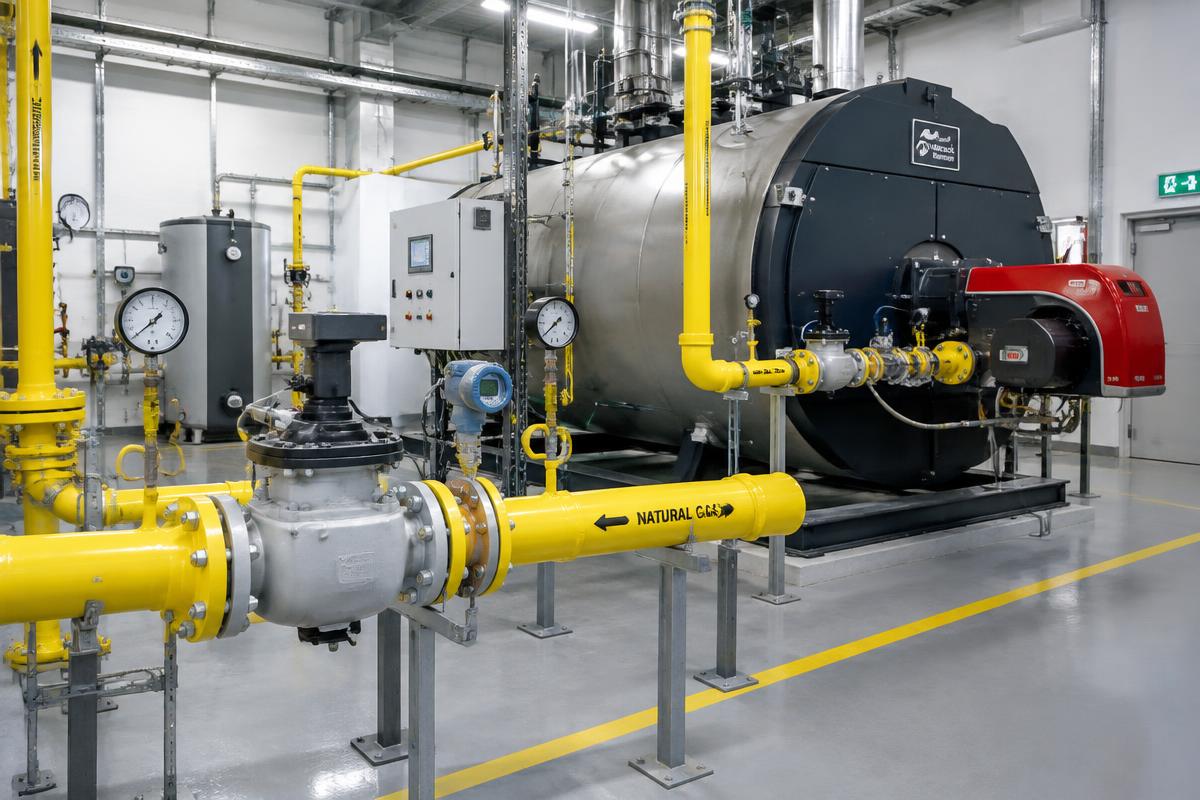
Emergency Shut Down, often referred to as ESD, is the safety shutdown logic that isolates the natural gas supply when a serious unsafe condition occurs. In industrial facilities, it can be triggered by a manual emergency stop or automatically by other safety systems.
What can trigger an ESD
Depending on the design, causes may include gas detection, fire detection, loss of critical ventilation, specific system alarms, or a manual emergency command.
What happens when triggered
The facility is brought to a predetermined safe state. Typically, the gas supply is cut off via a safety valve, and consumers are stopped according to the system logic.
Fail-safe philosophy
Critical devices are designed so that a loss of power or signal leads to a safe state, not to the uncontrolled continuation of the gas supply.
Interlocks
An interlock is a condition that must be met to allow operation. For example, a system might require proven ventilation operation before allowing gas supply to a specific area.
Reset after an event
A reset should not be performed mechanically without investigation. First, the cause that triggered the ESD must be identified and resolved. In many systems, a manual reset is required precisely to prevent automatic restart after a serious alarm.
Safety testing
ESDs, contacts, valves, and interlock logic must be periodically tested using a controlled procedure and in accordance with the facility's maintenance schedule.
Bypassing an ESD or interlock to continue production removes a critical layer of protection and is not an acceptable diagnostic method.