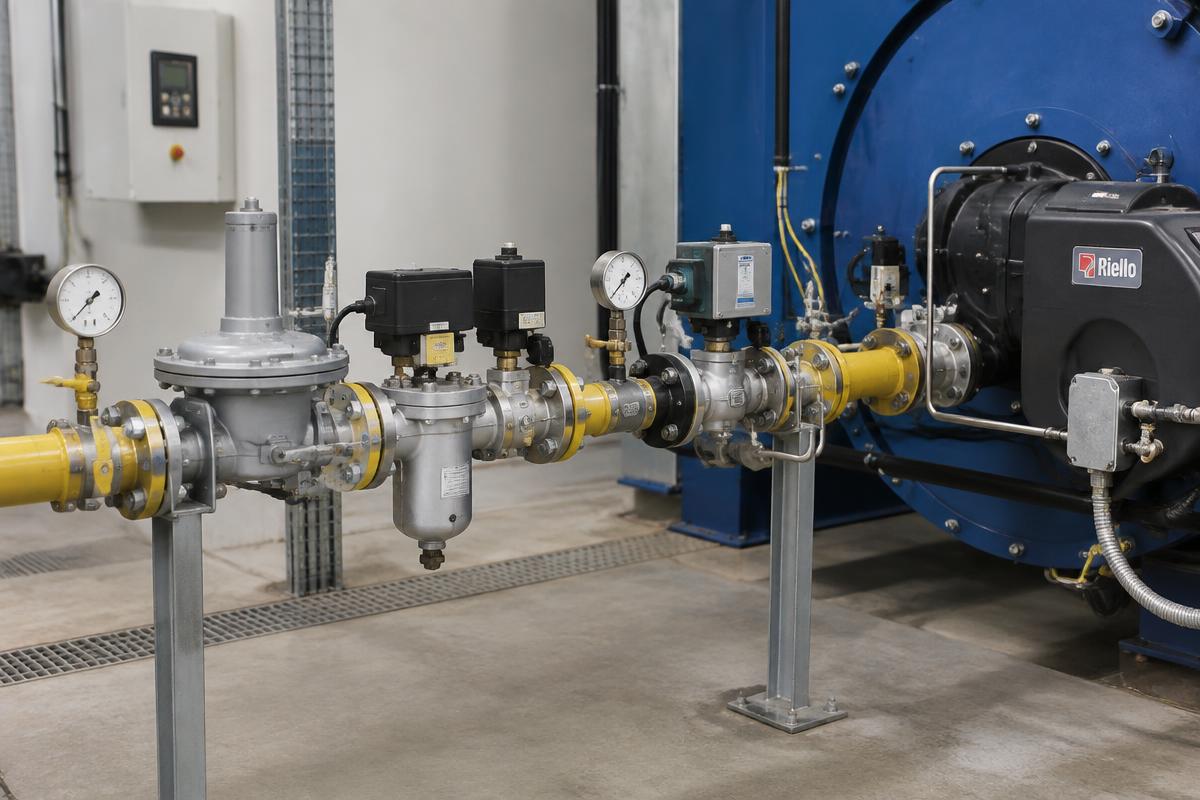
Natural gas safety valves are not selected solely based on having the same thread or nominal diameter. Suitability depends on the design standard, pressure, temperature, closing time, power supply, and intended use.
Nameplate and full code
Before removing a component, the full code, manufacturer, DN, maximum operating pressure, coil voltage, frequency, and any additional functions must be recorded. Minor differences in the code may correspond to a different version.
Certification for fuel gas
A general-purpose process solenoid valve is not automatically considered equivalent to a burner safety valve. The component must be suitable and certified for the specific application and comply with the burner manufacturer's or gas train configuration.
Closing time and fail-safe operation
For safety shut-off valves, the intended behavior during a power loss is significant. The valve must be driven to the safe position in the manner and within the time required by the application.
Flow rate and flow characteristics
The same DN does not mean the same flow capacity. The pressure drop at the required flow rate and the characteristics of the specific model must be evaluated.
Additional functions
Slow opening, initial flow adjustment, end switch, manual reset, or an integrated control system may be part of the original design. Omitting such a function during replacement may alter the operational sequence.
What "equivalent" really means
An equivalent spare part is one that meets all the requirements of the original application, not just a component that "fits" the piping. In safety systems, documented compatibility is essential.
Practice: when the exact model is unavailable, the selection must be made by a qualified technician based on datasheets, certifications, and manufacturer instructions.