
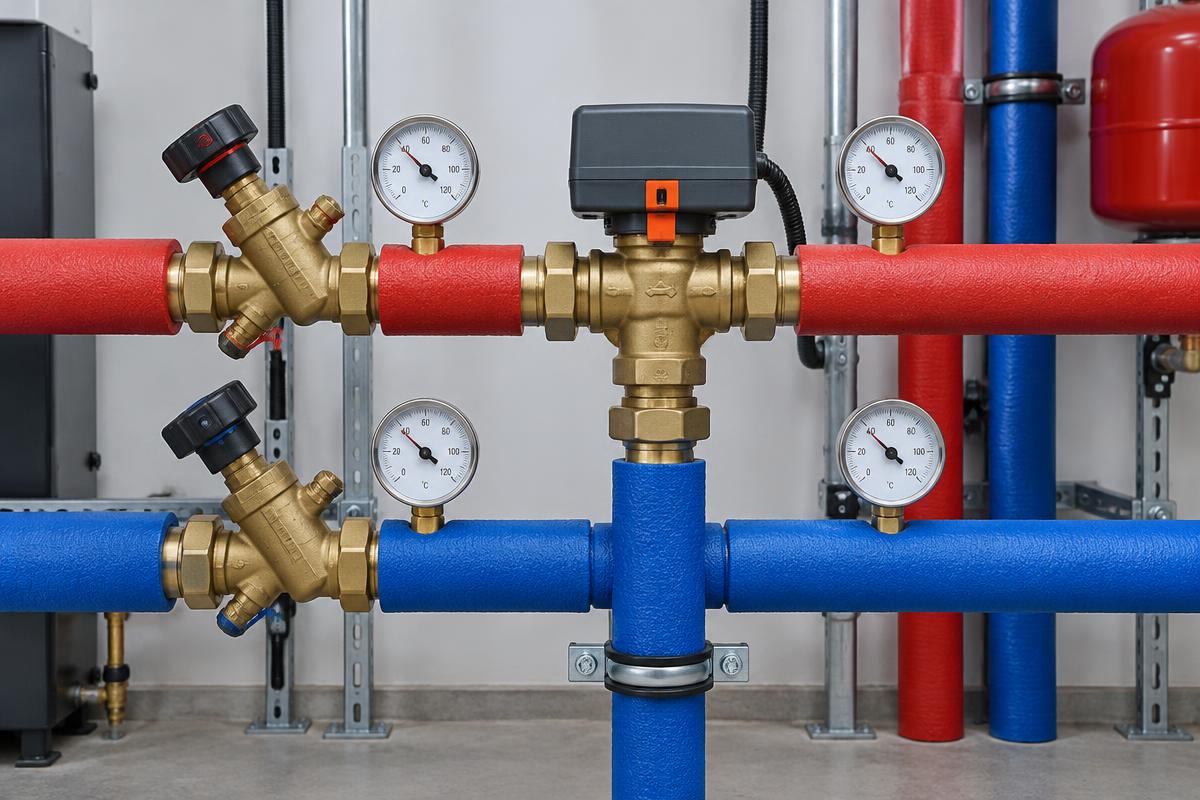
The natural gas solenoid valve is one of the most important safety devices of the burner. It allows gas flow only when the control system determines that the conditions for safe operation are met.
Basic principle of operation
The solenoid valve has a coil. When the coil is supplied with the correct voltage, a magnetic field is created that moves the valve mechanism. This opens the gas passage. When the voltage is removed, the valve returns to its safe position, which is usually closed.
Normally Closed – why it is used
Most gas safety solenoid valves are Normally Closed, meaning they remain closed without electrical power. This ensures that in the event of a power failure, automation malfunction, or safety trigger, the gas supply is cut off.
When is the opening command given
The opening command is given only after the necessary stages of the startup sequence are completed. Typically, these include an air pressure switch check, pre-purge, gas pressure check, and confirmation that no active alarm exists.
When does it close
The solenoid valve closes when the burner stops, when the flame is lost, when a low or high-pressure switch is triggered, when an emergency stop command is given, or when the automation system detects an unsafe operating condition.
How to distinguish between an electrical and a mechanical problem
If there is correct voltage at the coil but the valve does not open, there is a possibility of a mechanical jam or a failure in the coil/mechanism. If there is no voltage, you must determine which safety interlock or sequence contact has prevented the command.
Symptoms of failure
Common symptoms include: the burner performs pre-purge but does not ignite, a gas valve alarm appears, the coil is heard but there is no flow, or the valve overheats.
Diagnosis must be performed based on the electrical schematic, the burner's operating sequence, and the manufacturer's instructions.