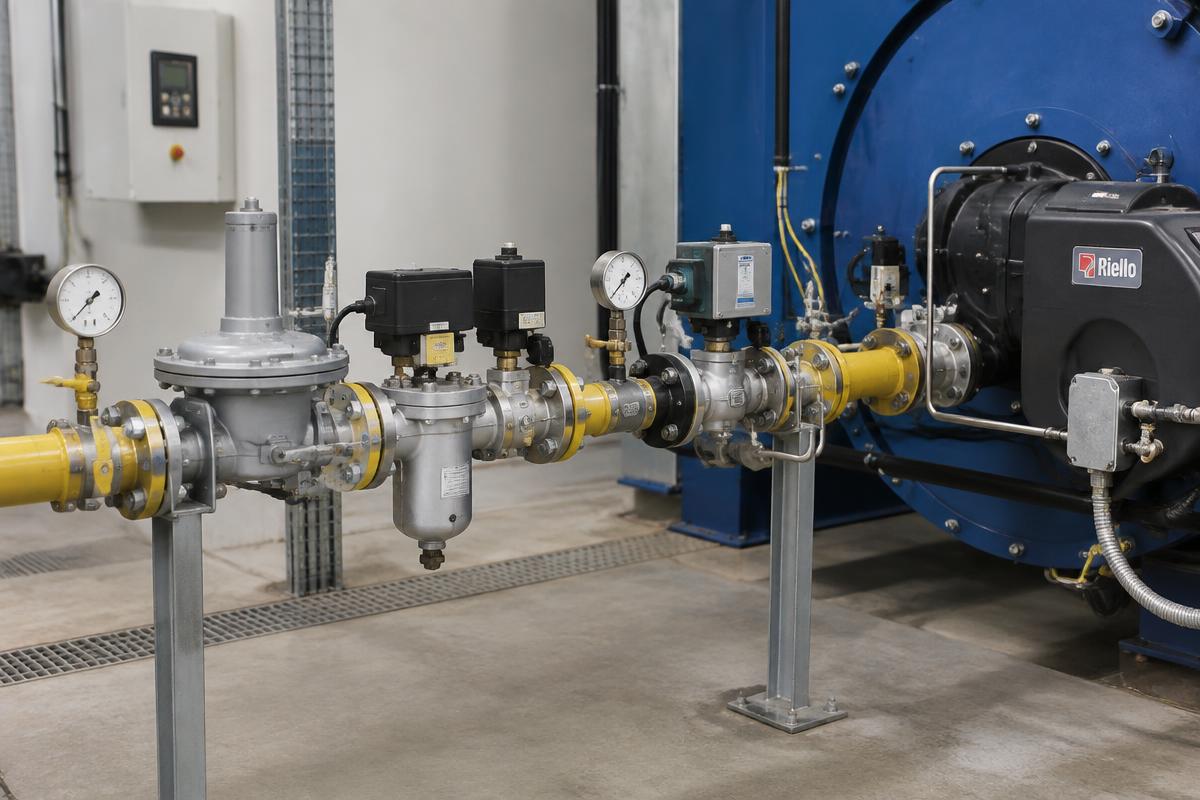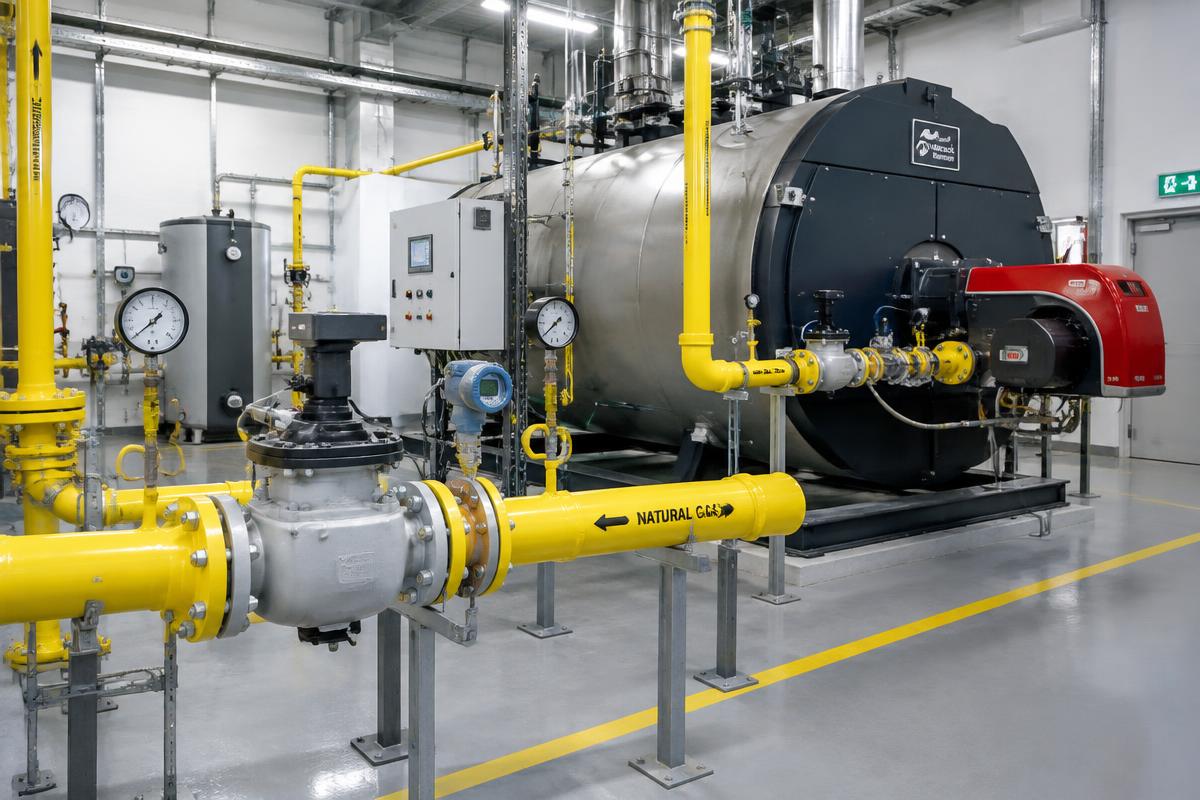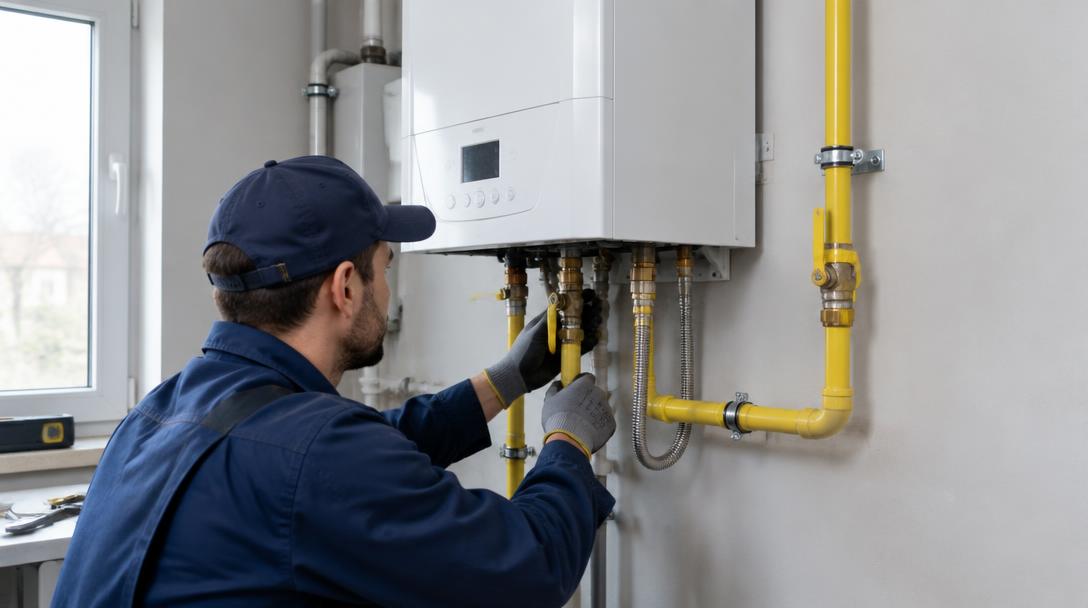
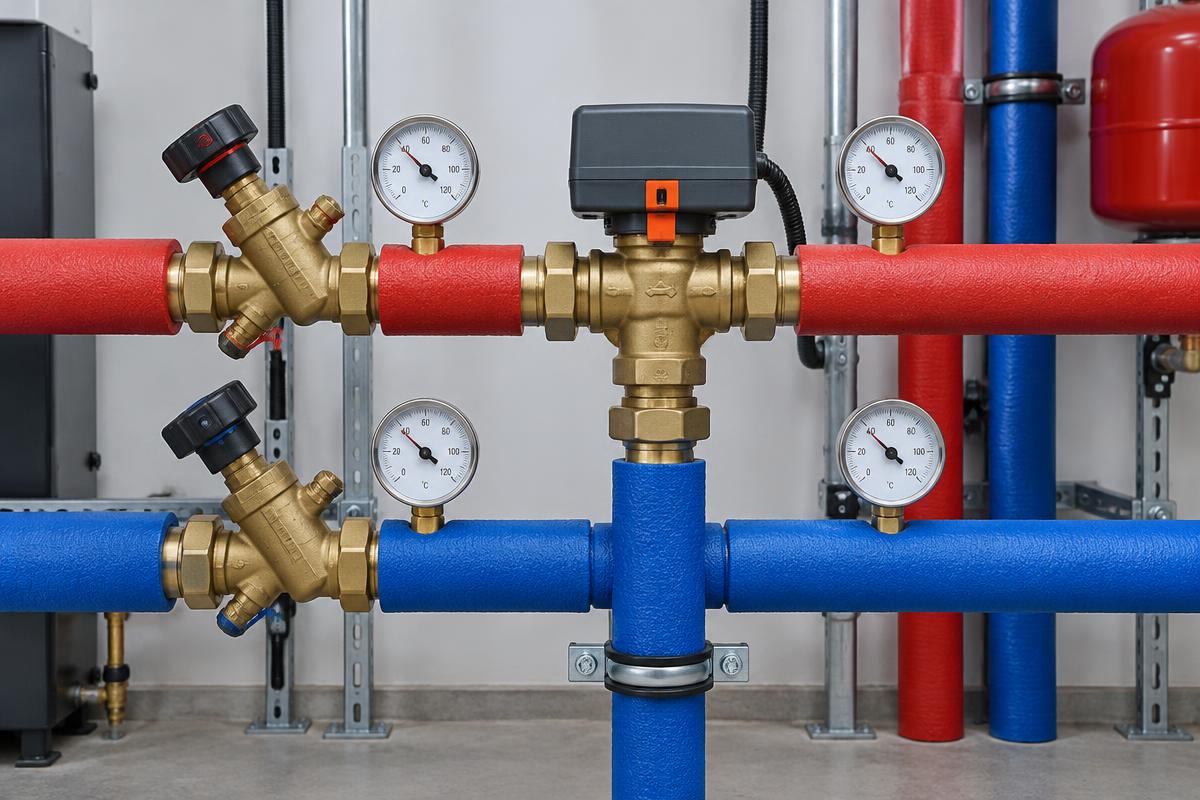
Preventive maintenance of the gas train aims to identify deviations before they evolve into lockouts, unstable operation, or safety issues. Valves and pressure switches should not be checked only when the burner has already failed.
1. Visual inspection
Inspect the valve bodies, connections, terminals, wiring, sensing lines, and pressure test points. Look for signs of overheating, corrosion, mechanical stress, loose connections, or unauthorized modifications.
2. Tightness test
Check tightness using the prescribed method and appropriate equipment. In systems with valve proving, evaluate the results/faults of the automatic check; however, this does not replace the required periodic testing.
3. Recording static and dynamic pressure
Record pressures under stable reference conditions to allow comparison with previous measurements. A gradual increase in pressure drop may indicate a clogged filter or a change in regulator behavior.
4. Pressure switch check
Verify settings and, where required by the maintenance schedule, check the actual switching and reset points using suitable instrumentation. Record the values and compare them with the datasheet.
5. Solenoid valve check
Observe whether they open and close without delay, if there is any unusual humming or rattling, and if the automation signals are stable. Also, check the condition of the coils and electrical connections.
6. Gas filter
The condition of the filter directly affects dynamic pressure. Inspect or replace it according to the schedule and manufacturer's instructions, ensuring proper isolation and post-maintenance tightness testing.
7. Safety sequence check
Maintenance is not limited to mechanical components. Confirm that the burner controller correctly recognizes permissives and that the valves move to the safe position during a requested shutdown.
8. Recording alarm history
The fault history can reveal recurring low gas pressure, high gas pressure, valve proving, or flame failure alarms. Trends over time are often more useful than an isolated event.
9. Check after every intervention
After replacing a valve, coil, pressure switch, filter, or regulator, a full functional check of the sequence and the required safety tests are mandatory.
10. Documentation
Record the date, measurements, settings, replaced parts, and observations. Documentation allows you to determine if a value is changing gradually and prevents arbitrary setpoint changes by different technicians.
Basic principle: No safety device may be bypassed to "test" the burner in normal operation. Maintenance must follow the manufacturer's instructions, the installation design, and applicable safety procedures.