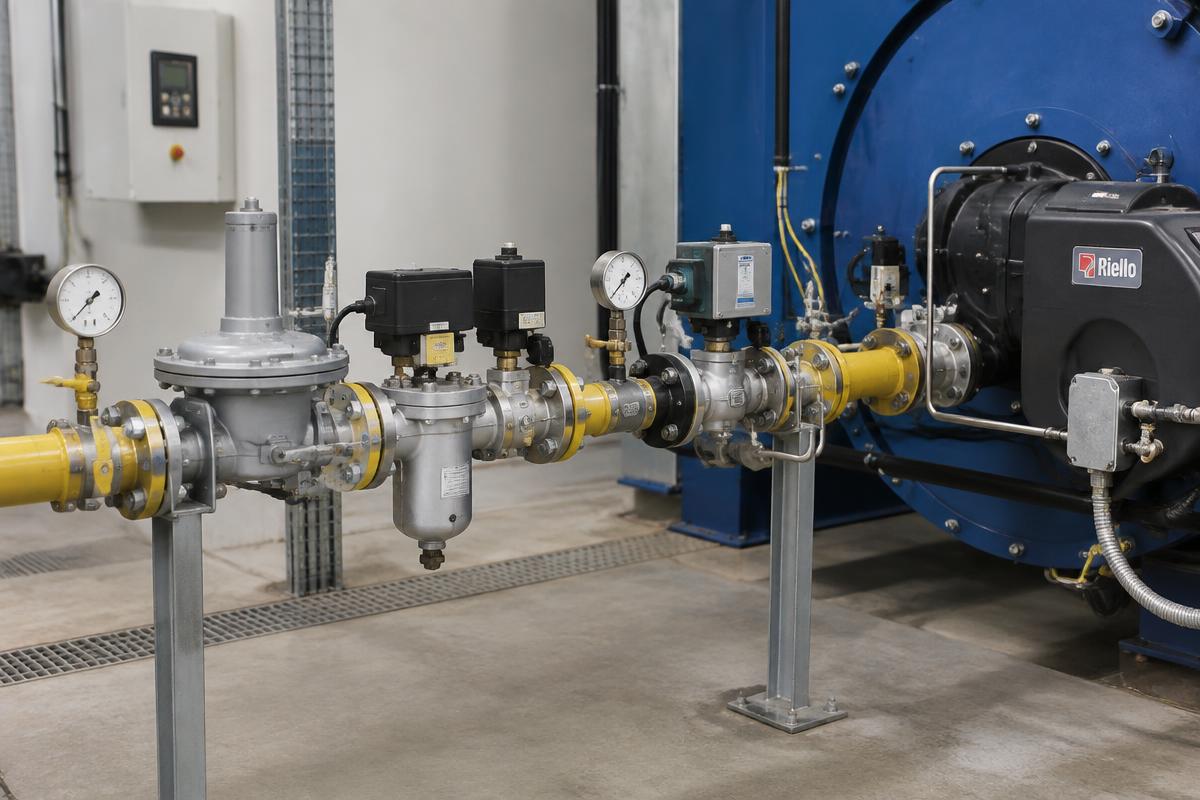
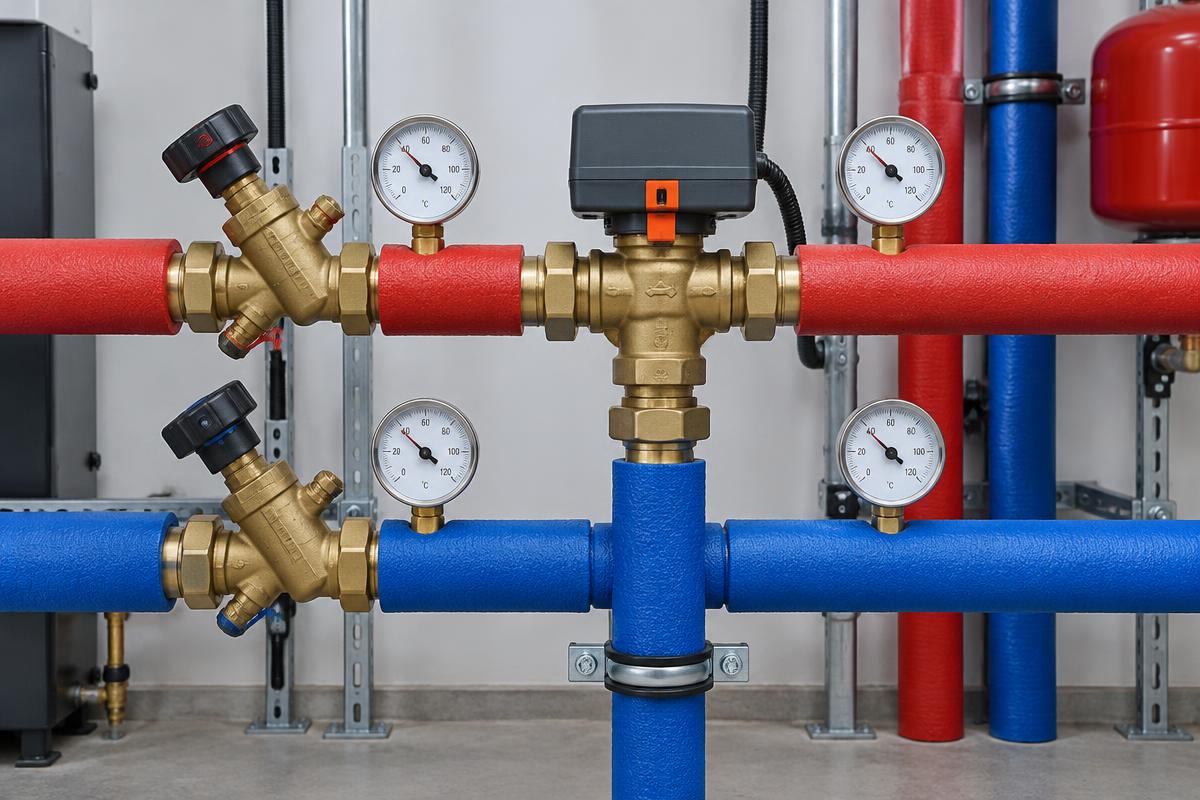
The natural gas filter is one of the simplest components of a gas train, but it can cause disproportionately large problems when it begins to clog. Its role is to trap particles and impurities before they reach the regulator, solenoid valves, and the burner.
Why a filter is needed
Particles from pipes, network maintenance, rust, or other impurities can affect valve seats, regulator diaphragms, and small passages. The filter acts as the first line of defense for the most sensitive components.
What pressure drop in the filter means
Every filter creates some resistance to flow. As the flow rate increases or the element fills with debris, the pressure difference before and after the filter increases. This can result in normal static pressure but insufficient dynamic pressure during burner operation.
Symptoms of a clogged filter
Low gas pressure alarms, failed startups during high demand, reduced maximum power, or a significant pressure drop when the solenoid valves open are common. The problem may only be apparent when the burner ramps up to full load.
How to properly diagnose
The most useful indicator is comparing the pressure before and after the filter under actual flow conditions. The acceptable pressure drop depends on the model, flow rate, and system specifications, and therefore should be compared against the manufacturer's technical data.
Cleaning or replacement
The procedure depends on the type of filter. Some models allow for cleaning or element replacement, while others require changing specific parts. After opening the housing, proper assembly and a leak test are mandatory.
What should not be done
Do not remove the element to temporarily reduce pressure drop. Doing so leaves the valves and regulator unprotected. If the pressure drop remains high with a clean filter, check the sizing or look for another point of restriction.
Conclusion: a filter in good condition improves both reliability and pressure stability. Its condition should be evaluated through measurements under load, not just by visual inspection.