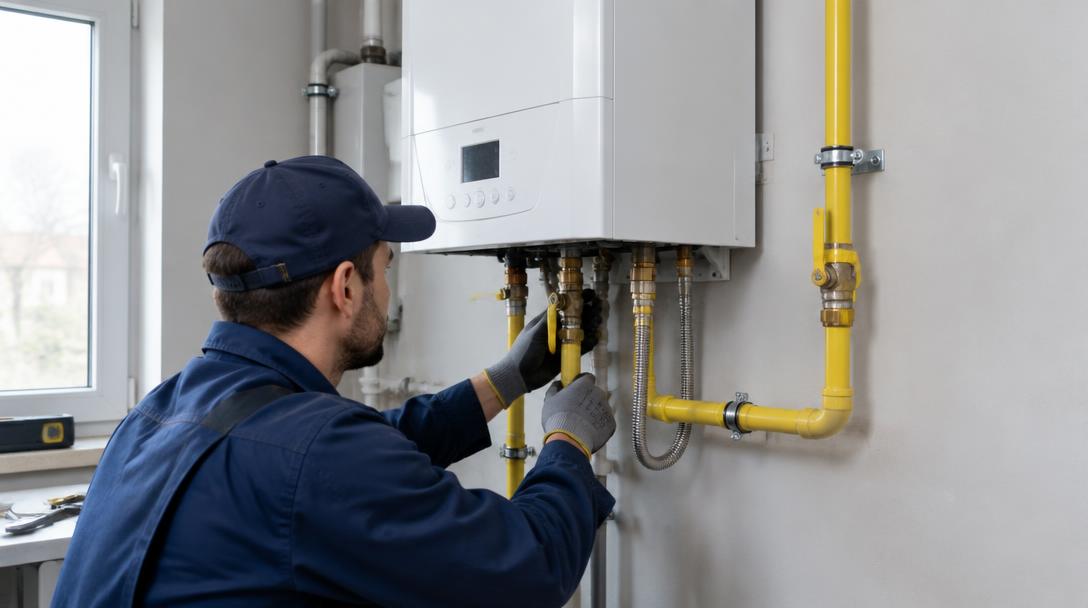
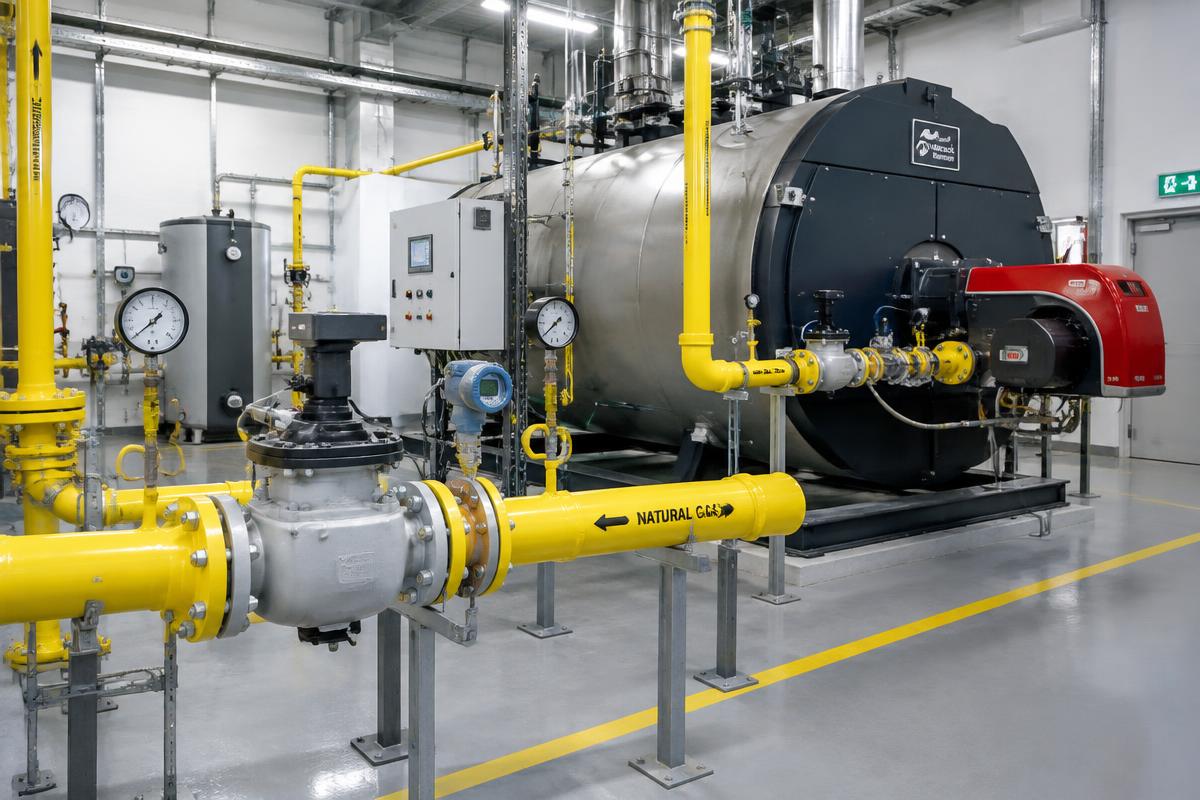
Before opening a natural gas line for maintenance, closing a valve is not enough. The section must be isolated and a controlled procedure of venting, cleaning, and where required, inerting must be followed. This process is often referred to as purging.
Why purging is critical
Natural gas may remain inside closed piping even when the pressure has dropped. If air enters, a flammable mixture can be created. For this reason, the transition from a "gas-filled line" to a "line safe for work" must be done in a controlled manner.
Isolation
The section to be maintained is isolated using the prescribed procedure. For critical tasks, appropriate lockout/tagout practices are applied, and it is confirmed that no unintended re-energization can occur.
Venting and safe discharge
Venting is not performed at a random point. The vent or discharge line must lead to a safe location and must be designed for the specific use. Uncontrolled release of gas into an enclosed space is prohibited.
Inerting
In some industrial processes, an inert gas is used to remove the natural gas without forming a dangerous mixture with air. The exact procedure depends on the size of the network, the equipment, and the facility's approved instructions.
Confirmation before work
The state of the line is confirmed with appropriate measuring instruments and in accordance with the facility's safe work procedure. The absence of pressure on a gauge alone is not proof that there is no gas present.
Restoration to service
After the work, a reverse controlled procedure follows. Leak testing is performed, the air or inert medium is removed as prescribed, and the section is put back into operation only when all checks have been completed.