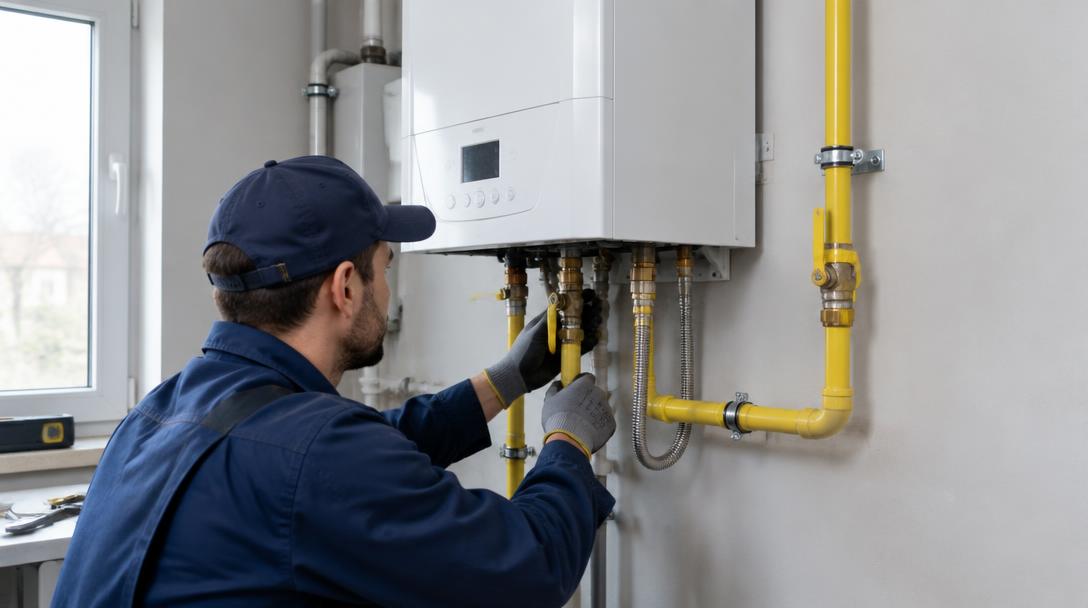
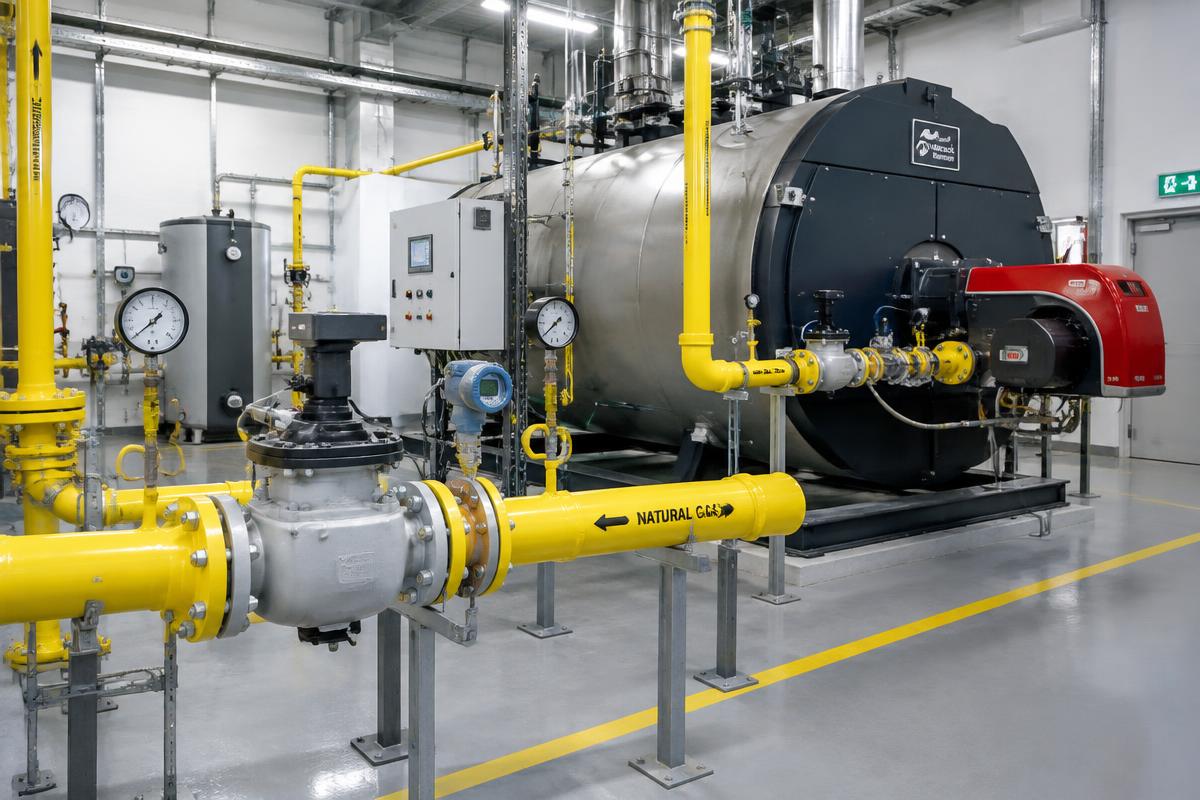
Tightness testing and strength testing are among the most critical inspections before an industrial natural gas network is commissioned. The goal is not just to verify that 'there is no gas smell,' but to ensure the network remains safe at the design operating pressure without losses or mechanical failures.
Difference between strength testing and tightness testing
The strength test verifies whether pipes, components, welds, and connections can withstand the specified pressure without deformation or failure. The tightness test checks for micro-leaks in flanges, threads, valves, instruments, and connection points.
What is checked before the test
Before applying pressure, a visual inspection of the installation must be performed. Supports, welds, flanges, valve orientation, plugs, instruments, and any temporary connections are checked. Equipment not permitted to withstand the test pressure must be isolated according to the manufacturer's instructions.
Test medium
The choice of test medium and pressure is determined by the approved design study, applicable technical requirements, and the instructions of the responsible engineer. Arbitrary pressures are not applied. In natural gas installations, procedures are used that avoid the creation of a hazardous mixture.
Pressure monitoring
Pressure must be measured with an appropriate and calibrated instrument. During the test duration, pressure changes are monitored, taking into account temperature fluctuations that can affect the reading without an actual leak being present.
Checking connections
Accessible connections are checked using an approved leak detection method. A flame is never used for tightness testing. Special attention is required for flanges, threads, valves, pressure gauges, regulators, and instrument connections.
What test failure means
If a pressure drop or leak is detected, the section is not put into operation. The point of failure is identified, repaired, the test is repeated, and the result is recorded. Returning to operation only occurs when the network meets the acceptance criteria.
Recording
In an industrial installation, it is important to maintain a record containing the date, network section, test pressure, duration, measuring instrument, result, and the inspector in charge. This provides documented history for future maintenance and inspection.