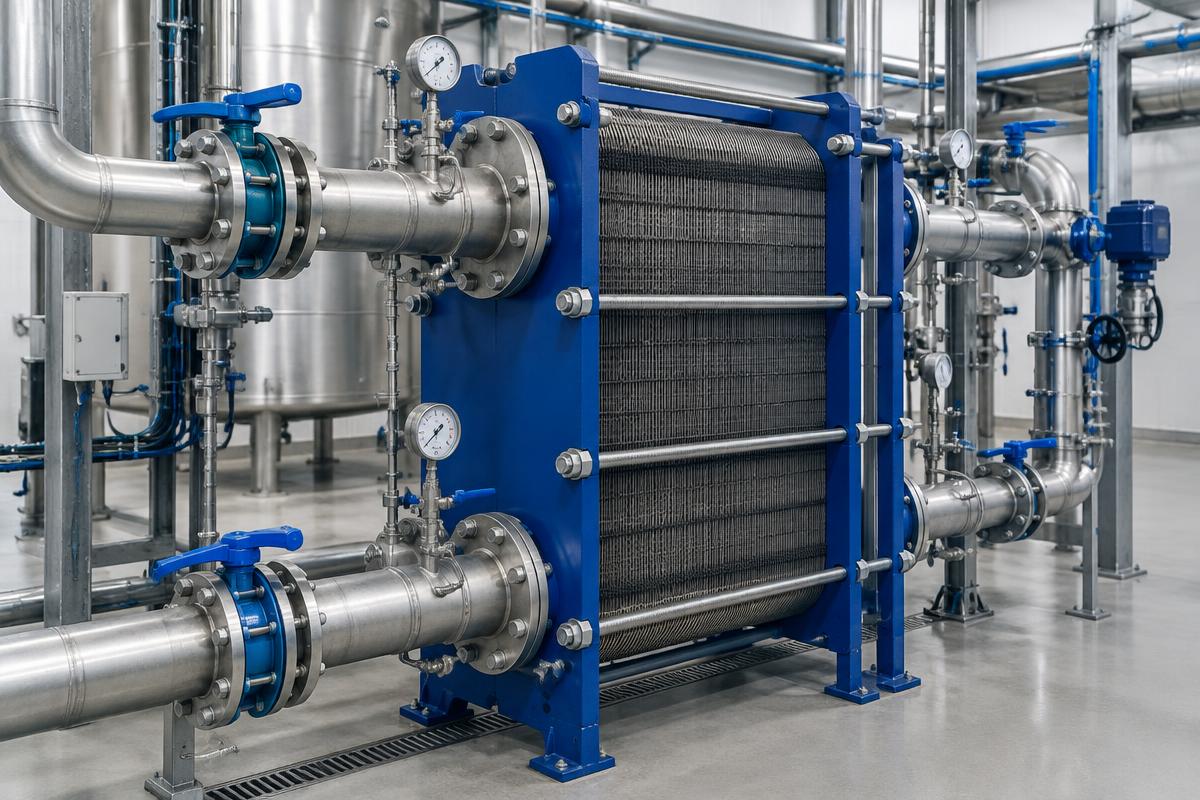
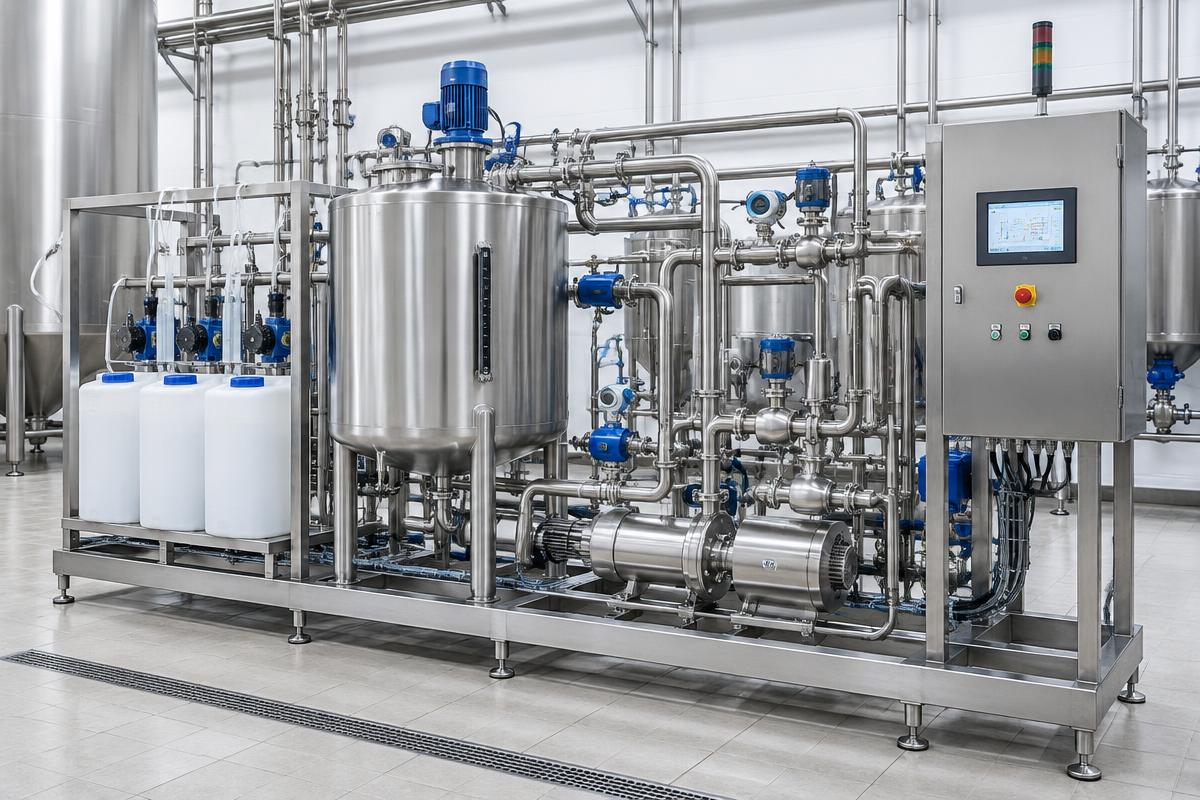
In the building services and industrial sectors, the accumulation of deposits (limescale, sludge, rust) is the "silent enemy" of efficiency. The Cleaning in Place (CIP) method, also known as on-site cleaning, is the most modern and effective solution for cleaning the internal surfaces of piping, heat exchangers, and boilers without the need to disassemble the equipment.
What is CIP Cleaning and how does it work?
CIP cleaning is a process that utilizes the dynamic circulation of chemical solutions within a closed circuit. Instead of taking apart a plate heat exchanger or disconnecting entire production lines, we connect a specialized power flushing pump that circulates the cleaning agent at high velocity.
The basic principle is based on four pillars, also known as the Sinner's circle:
- Chemical action: Selecting the appropriate solution to dissolve the deposits.
- Mechanical action: The turbulent flow of the liquid that dislodges the residues.
- Temperature: Heating the solution (usually to 40-60°C) accelerates the reactions.
- Time: The duration of circulation required for complete cleaning.
The stages of a professional CIP process
For proper technical cleaning in a residential or industrial installation, we follow specific steps to ensure the integrity of the metals and gaskets (seals).
1. Isolation and Pre-flushing
The section to be cleaned is isolated from the rest of the network using valves. This is followed by a flush with clean water to remove loose particles and sludge (magnetite).
2. Chemical Solution Circulation
The CIP pump is connected. Depending on the problem, we use:
- Acids (e.g., citric or phosphoric acid): For removing calcium deposits.
- Alkaline cleaners: For organic deposits and fats.
- Corrosion inhibitors: Essential for protecting metal surfaces (copper, steel, aluminum) during the acid's action.
3. Neutralization and Final Flushing
After cleaning is finished, the system's pH must be restored to neutral levels (7.0 - 7.5). A special neutralizing solution is used, followed by extensive water flushing until the output is crystal clear.
Benefits for the Owner and the Technician
Implementing CIP is not just a maintenance task; it is an investment in the longevity of the system. The main benefits include:
- Reduced labor costs: No man-hours are required for dismantling and reassembling components, nor is there a need to replace gaskets that are often destroyed during disassembly.
- Energy savings: Even 1mm of scale in a heat exchanger can reduce efficiency by up to 10%. With CIP, efficiency is restored to manufacturer specifications.
- Safety: Lower risk of leaks after maintenance, as sealed parts remain in place.
- Speed: A typical process on a wall-hung gas boiler takes about 1-2 hours.
When is cleaning without disassembly necessary?
There are specific signs that indicate your system is in immediate need of CIP cleaning:
- Boiler noise (boiling): Usually caused by local overheating due to limescale.
- Slow domestic hot water response: In gas boiler heat exchangers, limescale prevents heat transfer.
- Uneven heating of radiators: When radiators are cold at the bottom, there is an accumulation of sludge (magnetite).
- Increased fuel consumption: Without any obvious reason related to weather changes.
Frequently Asked Questions (FAQ)
1. Are the chemicals dangerous for my pipes?
If the correct certified chemicals are used with appropriate corrosion inhibitors, the process is completely safe. Care is required in systems containing aluminum, where the pH of the cleaner must be controlled.
2. How often should CIP cleaning be done?
In residential heating networks, cleaning every 5-7 years is ideal. In areas with very hard water or in industrial applications, the frequency may be annual.
3. Can I perform CIP myself?
It is not recommended. It requires a special pump with reverse flow capability and knowledge of the chemical behavior of materials. A wrong choice of acid can puncture a heat exchanger in minutes.
4. What is the cost of such a service?
In the Greek market, the cleaning of a heat exchanger starts from 60-80€, while cleaning the entire heating network of an apartment usually ranges between 150€ and 300€, depending on the number of radiators and the condition of the network.
Conclusion
CIP cleaning is the "smartest" solution for keeping mechanical installations in excellent condition. It ensures maximum efficiency, lowers energy bills, and prevents costly breakdowns. If you notice a drop in heating or hot water performance, consult a specialized technician for a CIP cleaning assessment.