
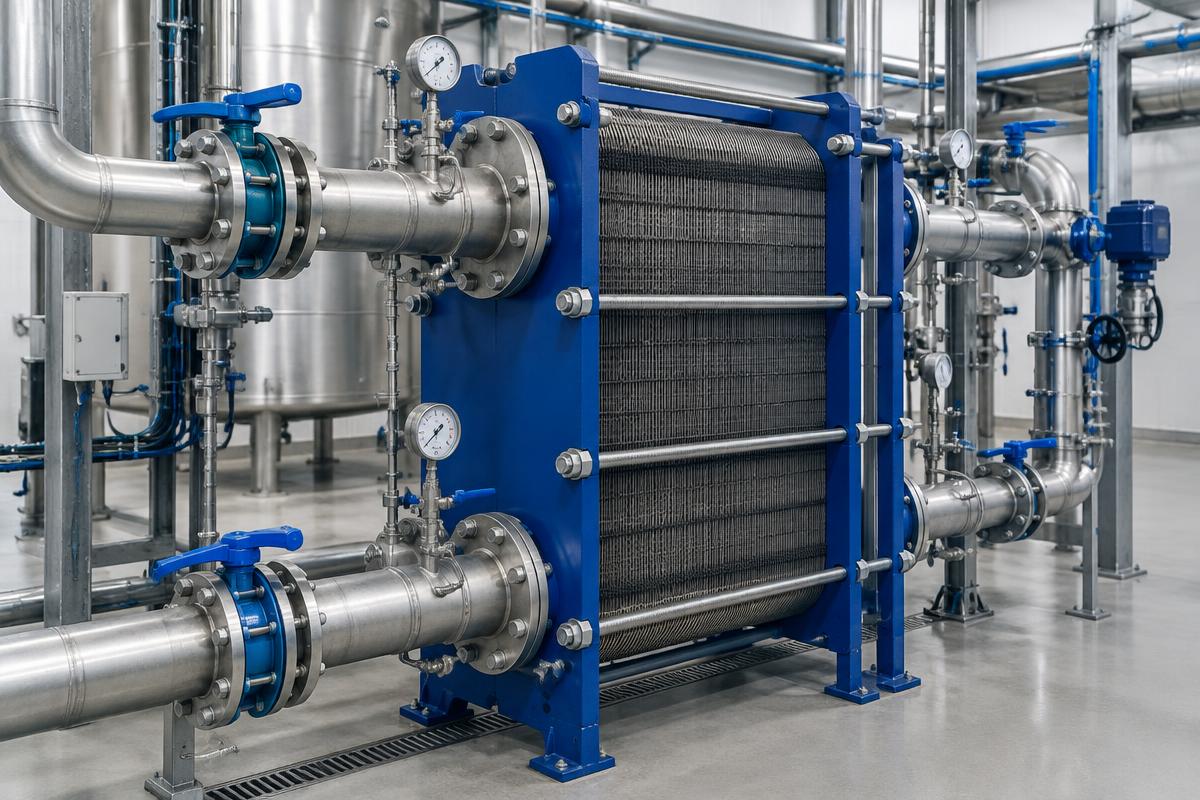
What is a heat exchanger and what is its role in the system?
The heat exchanger is the "heart" of every modern heating system, whether we are talking about a natural gas boiler or a heat pump. Its basic function is to transfer thermal energy from one medium (e.g., flue gases or hot water from the primary circuit) to another (radiator water or domestic hot water), without the two coming into direct contact.
In wall-hung gas boilers, we typically find two types: the primary heat exchanger (located above the burner) and the secondary plate heat exchanger (for domestic hot water). Over time, the accumulation of scale (calcium, magnesium) and the creation of deposits ("sludge" from the radiators) reduce efficiency and can lead to costly breakdowns.
When does it need cleaning? Signs you shouldn't ignore
The need for cleaning does not appear suddenly, but gives warning signs. As technicians, we often see owners neglecting these symptoms, resulting in total blockage or even a puncture in the heat exchanger.
- Fluctuations in water temperature: If the water in the shower switches from hot to cold without you touching the faucet, the secondary heat exchanger is likely clogged with scale.
- "Kettling" noises: If you hear metallic sounds or sounds resembling a kettle from inside the boiler, it means the water flow is obstructed and localized boiling is creating steam bubbles.
- Reduced hot water pressure: When the cold water pressure is normal but the hot water flow is noticeably weaker.
- Increased fuel consumption: Deposits act as an insulating material. Even 1mm of scale can increase energy consumption by 10-12%.
- Frequent pressure drops or flow errors: The boiler displays error codes related to overheating or lack of flow.
The professional cleaning process
Cleaning a heat exchanger is not a simple DIY task, as it requires the use of chemicals and specialized equipment. The process followed by a certified technician includes the following steps:
1. Isolation and draining
We close the supply and return valves, as well as the cold water supply. We drain the water from inside the boiler so we can safely remove the heat exchanger.
2. Mechanical or Chemical cleaning
If the plate heat exchanger is removable, it is placed in a power flushing machine that circulates a mild acid solution. The acid dissolves the scale without corroding the stainless steel or copper, provided that the correct duration and concentration are used.
3. Rinsing and neutralization
After using the chemical, it is critical to perform a thorough rinse with water and use a neutralizer solution to stop the acid action and prevent future corrosion.
Preventive measures: How to avoid clogging
Prevention is always cheaper than repair. In Greece, especially in areas with "hard" water (such as Attica or Crete), the following measures are essential:
- Installation of a Magnetic Filter: Traps iron filings and sludge from the pipes before they reach the heat exchanger.
- Use of Polyphosphate Filters: Installed at the cold water inlet to limit scale deposition.
- Chemical network cleaning (Power Flush): Before installing a new boiler, the old network must be completely cleaned.
- Addition of a corrosion inhibitor: A special liquid that remains inside the closed circuit and protects metals from oxidation.
Frequently Asked Questions (FAQ)
How often should the heat exchanger be cleaned?
There is no predetermined interval, as it depends on water quality. However, a check during annual maintenance is necessary. Typically, cleaning is required every 4-6 years under normal conditions.
How much does heat exchanger cleaning cost?
In the Greek market, the cost for cleaning a secondary heat exchanger typically ranges between 60€ and 100€, depending on access difficulty and the chemicals used. If a replacement is needed, the cost rises significantly (150€-300€).
Can I use simple vinegar for cleaning?
Vinegar is too weak for hard scale deposits and cannot remove "sludge" (magnetite). Furthermore, it offers no guarantee for the protection of the heat exchanger's gaskets (seals).
Conclusion
The heat exchanger is the key to the efficient and economical operation of your heating system. Recognizing the signs of blockage, such as temperature fluctuations and strange noises, can save you from a total machine failure. Trust a licensed technician for periodic inspection and maintenance, thereby ensuring the longevity of your system.