Introduction to the importance of tightness testing
The use of natural gas in Greece, whether for heating, cooking, or hot water production, is governed by strict safety regulations. Tightness testing of pipes and components is not just a standard maintenance procedure, but the only guarantee that the installation remains safe for occupants and the building. The invisibility of the fuel and its nature as a flammable material make periodic inspection mandatory.
When is a tightness test mandatory?
According to the Technical Regulation for Indoor Natural Gas Installations, tightness testing is not left to the owner's discretion but is required in specific cases:
- Every 4 years for piping: Legislation dictates that a Re-inspection Certificate must be issued every four years for the section of the line from the meter to the appliances.
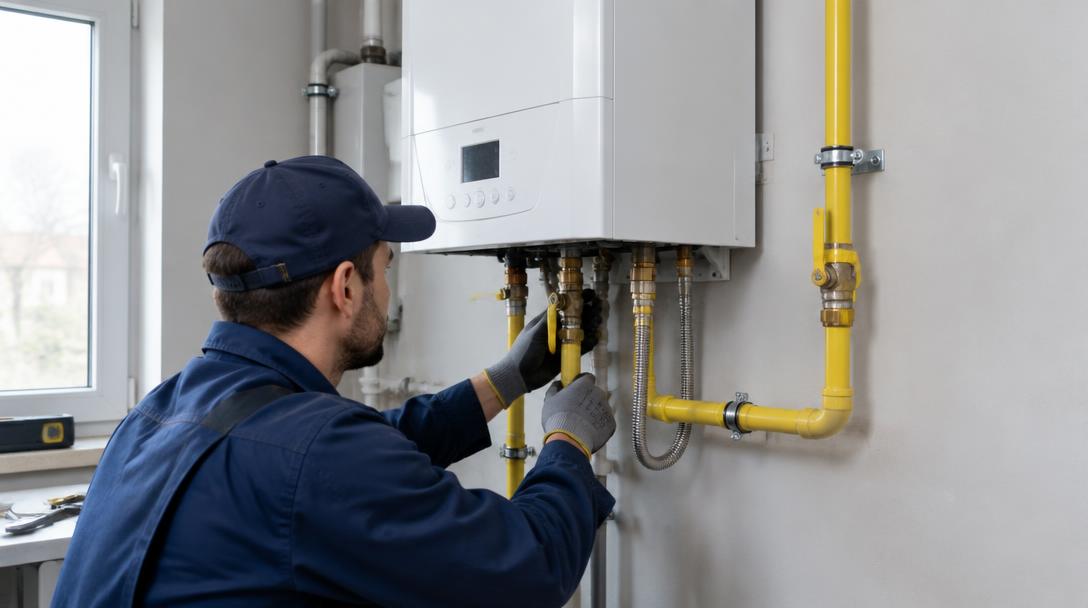
- After modifications: Any change in the piping route or the addition of a new appliance (e.g., replacing an old boiler with a new condensing one) requires a new test.
- After supply interruption: If the supply has been interrupted for a long period, the network operator (e.g., EDA ATTIKIS) may request a new certificate for reconnection.
- Annual maintenance: Although a full network test is conducted every four years, the technician should locally check the tightness of connections during the annual boiler service.
The step-by-step technical procedure
Tightness testing is performed exclusively by a licensed gas technician. The procedure is divided into two main phases, depending on the operating pressure of the installation (usually 20mbar for domestic use or 50mbar for commercial).
1. Network preparation
The technician closes the main valve at the meter and the valves of the appliances. If the test concerns a new installation, pipes must be free of welding residue or dust. In existing installations, the boiler is isolated to prevent damage to its gas valve from the test overpressure.
2. Precision manometer testing
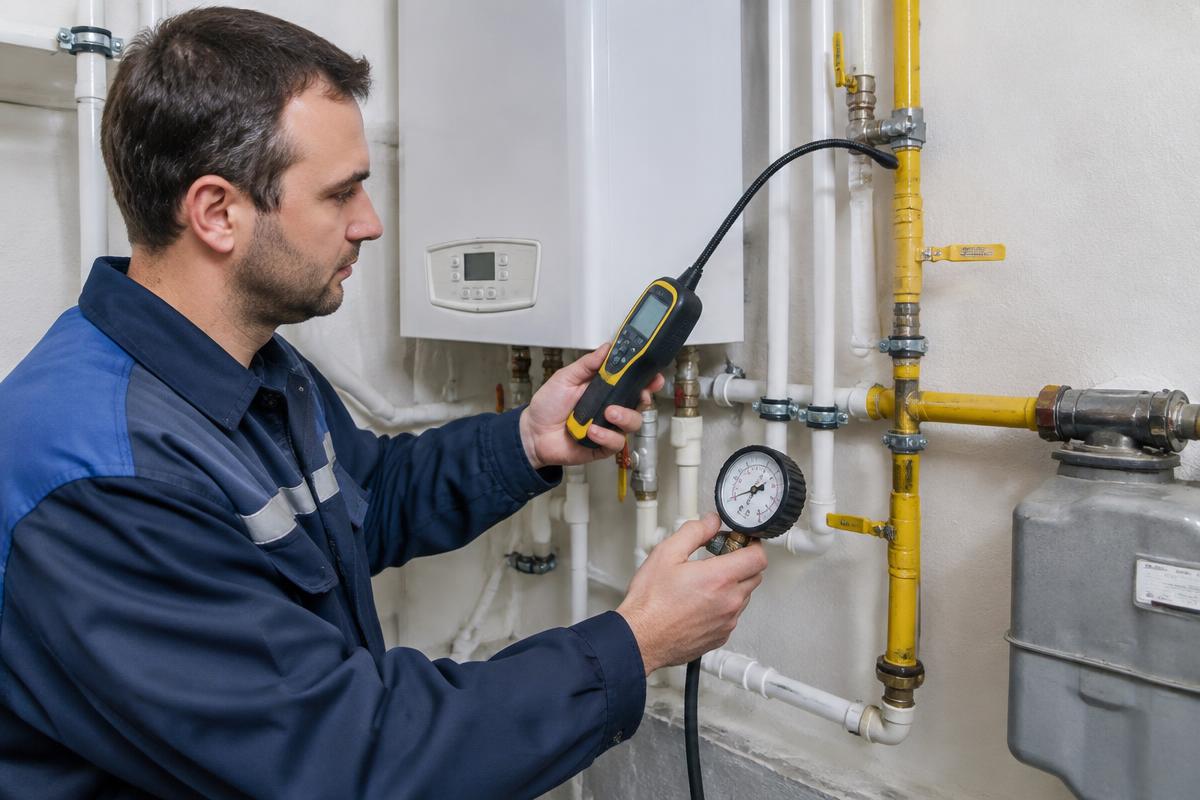
A high-resolution digital manometer or a water/glycerin column analog manometer is used. The pressure applied is typically 150 mbar (three times the operating pressure) for the tightness test.
- Waiting time: After filling the network with air or nitrogen, 10-15 minutes are required for temperature stabilization.
- Main measurement: The test lasts at least 10 minutes. If the pressure drop is zero, the installation is considered tight.
3. Testing with a gas detector or foam
In case the manometer shows a drop, the technician uses specialized electronic gas detectors (Gas Sniffers) or special leak detection foam on connections, fittings, and welds to locate the leak point.
What does the Re-inspection Certificate include?
After the successful completion of the test, the technician issues the Indoor Installation Tightness Re-inspection Certificate. This document must include:
- The details of the licensed technician and their company.
- The diagram (floor plans/isometric) of the installation if changes have occurred.
- The test pressure and its duration.
- The list of installed appliances and their condition.
The original is delivered to the owner, and a copy is sent to the relevant Distribution Network Operator (DEDA, EDA THESS, etc.).
Frequently Asked Questions (FAQ)
What happens if a leak is detected during the test?
If the leak is small (within the safety limits of the regulation), the technician fixes it immediately by tightening connections or changing gaskets. If the leak is serious, the supply must be sealed until the network is fully repaired.
Can I perform the test myself with soapy water?
No. Soapy water can help locate a large leak, but it is not a method for certifying tightness. Only a manometer can confirm the absence of micro-leaks invisible to the eye, and only a licensed technician has the legal jurisdiction to sign the certificate.
How much does a typical tightness test cost?
In the Greek market, the cost for a tightness test along with the issuance of the certificate usually ranges between 50€ and 90€, depending on the size of the installation and the area. It is often combined with the annual boiler maintenance at a better overall price.
Conclusion
Gas tightness testing is not a bureaucratic obligation, but a safety mechanism for your life and property. Adhering to the four-year re-inspection deadline ensures that your network remains in excellent condition, preventing accidents and unnecessary costs due to fuel loss. Trust only certified technicians who possess the appropriate measuring instruments and the experience to guarantee the result.