
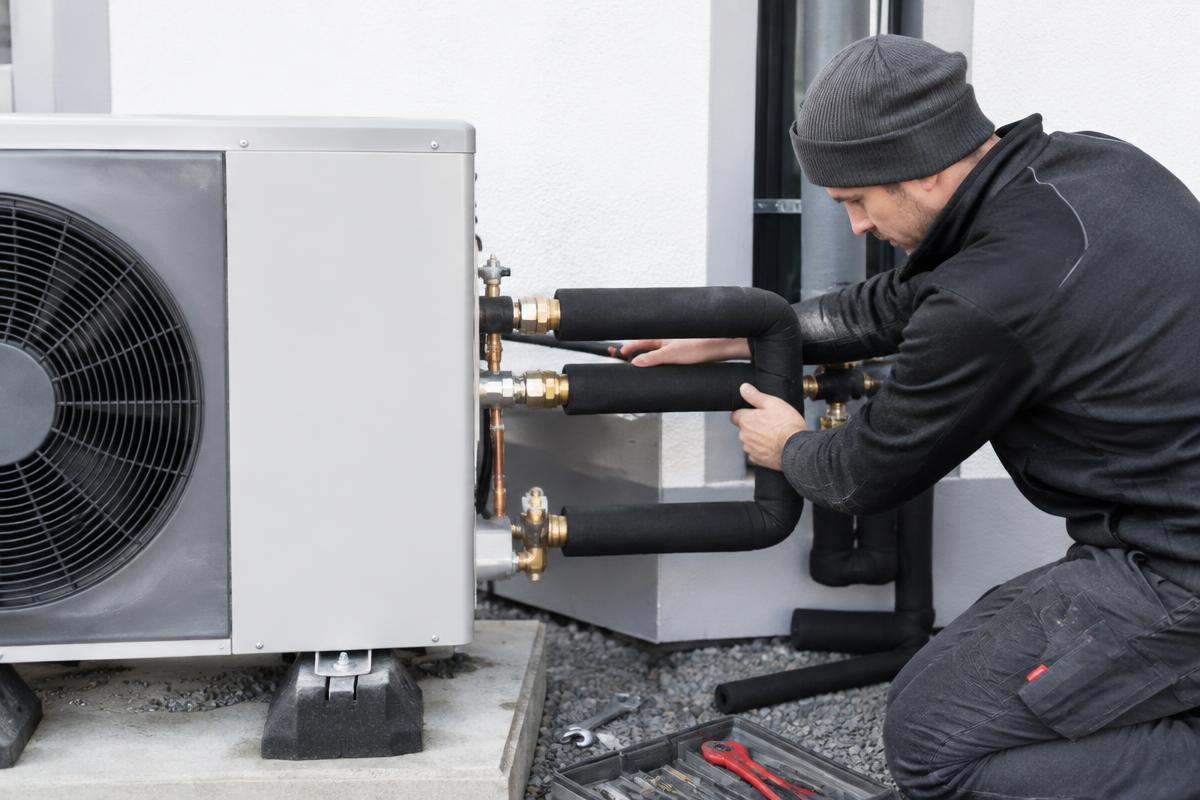
Introduction to heat pump technology
The heat pump is currently the most efficient solution for heating and domestic hot water production in Greece. With the energy crisis and the need to move away from fossil fuels, many homeowners are turning to this technology. However, installing a pump is not a simple replacement for an oil boiler. It requires careful planning, an understanding of technical specifications, and a proper assessment of the existing heating network.
1. The importance of the heat loss study
The first and most critical step before purchasing any equipment is to have a heat loss study conducted by a mechanical engineer. In Greece, there is a tendency to choose "larger" machines to be safe, but in the case of heat pumps, oversizing is a mistake.
- Power accuracy: A pump that is much larger than the house requires will cycle frequently, reducing the compressor's lifespan and increasing electricity consumption.
- Insulation: The study will show whether the priority is replacing the pump or insulating the building. If the house has high heat losses, the pump will operate under marginal conditions with low efficiency.
2. Choosing output temperature: Low vs. High temperatures
The choice of pump type depends directly on your heat emission system (radiators, underfloor heating, or fan coils).
Low Temperature Pumps (55°C)
These are ideal for new buildings with underfloor heating or homes with fan coils. They operate with a maximum outlet water temperature of 55°C and offer the highest Coefficient of Performance (COP).
Medium and High Temperature Pumps (65°C - 80°C)
If you intend to keep classic panel radiators or old cast-iron (AKAN) radiators, you need a pump capable of reaching 65°C or higher. Note, however: as the water supply temperature increases, the machine's efficiency decreases.
3. Understanding COP and SCOP efficiency ratings
Do not look only at the purchase price. The real value of a pump is hidden in its efficiency ratings:
- COP (Coefficient of Performance): The instantaneous efficiency rating. If a pump has a COP of 4, it means that for every 1 kWh of electricity consumed, it delivers 4 kWh of heat.
- SCOP (Seasonal COP): The seasonal efficiency rating. This is the most reliable indicator as it calculates efficiency throughout the entire heating season, taking into account fluctuations in outdoor temperature.
For the Greek territory, look for machines with a SCOP of at least 4.0 in medium-temperature climate zones.
4. Electrical preparation and three-phase power
An aspect that is often overlooked is the home's electrical capacity. Heat pumps, especially those 12kW and above, usually require a three-phase power supply.
- Fuses and wiring: A separate line from the electrical panel to the outdoor unit will be required, equipped with the appropriate fuse and a type A or B residual current device (according to the manufacturer's specifications).
- Power upgrade: If the house has single-phase power and requires a large pump, an application to DEDDIE (HEDNO) for an upgrade to three-phase may be necessary, which involves extra cost and time.
5. Positioning and noise levels
The outdoor unit of a heat pump includes a large fan and a compressor. Proper placement is key for your peace of mind and that of your neighbors.
Avoid placing it under bedroom windows or in narrow, uncovered spaces where noise can get trapped and amplified (resonance). Check the technical manuals for sound pressure levels at a distance of 1 and 5 meters. Quality pumps feature a "quiet mode" for nighttime hours.
Frequently Asked Questions (FAQ)
Do I need a buffer tank?
In most cases, yes. The buffer tank helps maintain a constant water flow and prevents frequent compressor starts, especially if you have thermostatic valves on radiators that close periodically.
Can the pump also produce cold water for cooling?
Most air-to-water pumps are reversible. However, to have cooling in the summer, you must have fan coils or underfloor heating. Simple panel radiators cannot be used for cooling as this would cause condensation.
How much does annual maintenance cost?
Maintaining a heat pump is simpler than a boiler. It includes cleaning the outdoor unit's coil, checking water filters, checking refrigerant pressures, and inspecting electrical connections. The cost in Greece usually ranges between €80 and €120.
Conclusion
Investing in a heat pump is a move that pays for itself in 4-7 years, depending on usage and subsidies (e.g., Exoikonomo). However, the success of the installation is determined by the details: a correct heat loss study, selecting a reputable machine with good technical support in Greece, and having the work performed by a specialized refrigeration technician or plumber with experience in heat pumps. Do not be lured by the lowest price; instead, seek the best balance of efficiency and reliability.