Introduction to the Heart of the Electrical Installation
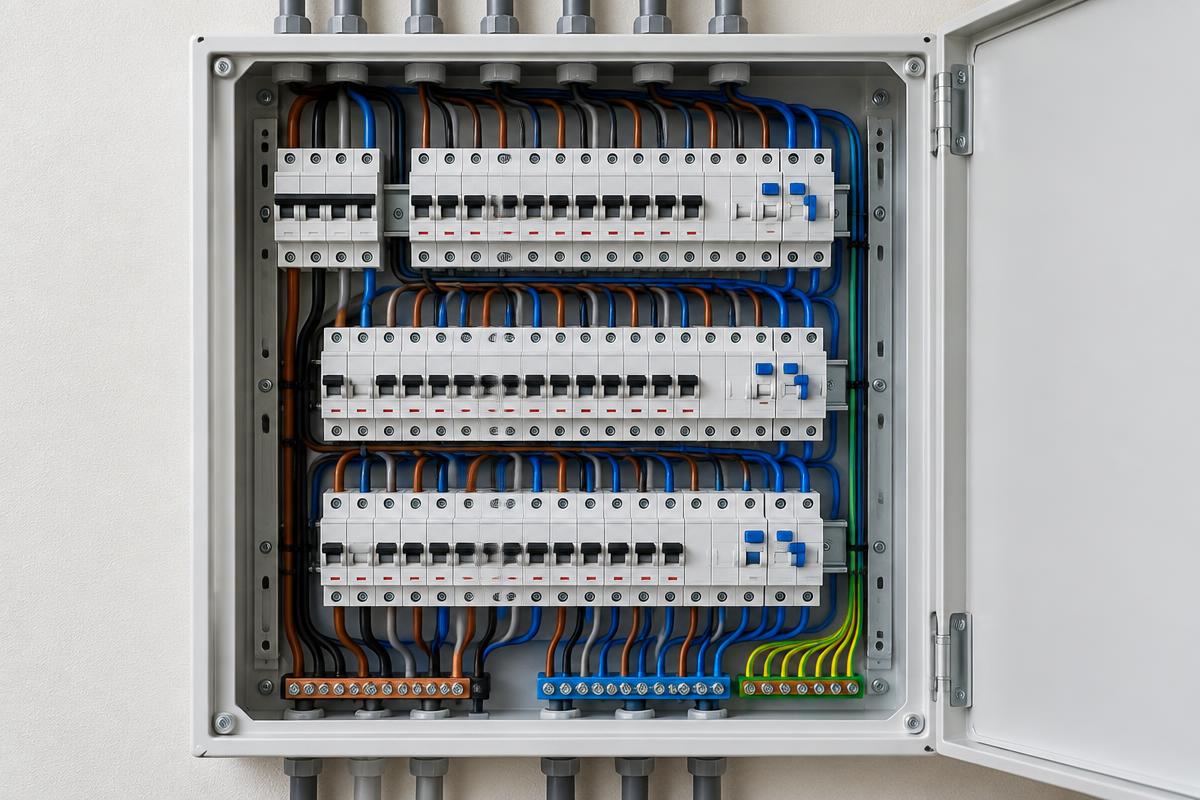
The electrical panel is the "control center" of every building. It is not just a place where cables meet, but the critical mechanism that protects the lives of occupants and the integrity of appliances. In Greece, compliance with the HD 384 standard is mandatory, and understanding the components that make up a modern panel is essential for both the property owner and the technician.
Circuit Breakers: Protection against Overload and Short Circuits
Automatic circuit breakers (MCB - Miniature Circuit Breakers) have long replaced the old "wire" fuses. Their role is twofold:
- Thermal protection: They disconnect the circuit when the power consumption exceeds the rated value of the breaker (e.g., 10A, 16A) for an extended period, preventing cable overheating.
- Magnetic protection: They instantaneously disconnect the supply in the event of a short circuit, where the current intensity spikes to hundreds of Amperes.
Characteristic Curves (B, C, D)
In residential installations in Greece, we use almost exclusively the curve C, which allows for a small tolerance during the startup of devices with motors (such as air conditioners or refrigerators). Curve B is more sensitive, while curve D is used in industrial applications with very high startup currents.
Residual Current Device (RCD): The Lifesaver
The Residual Current Device (RCD), commonly known as a "leakage relay," is the most important component of the panel. Its operation is based on comparing the current "leaving" the phase with the current "returning" from the neutral.
If there is a difference (leakage to earth or through a human body) greater than 30mA, the RCD trips in fractions of a second (under 40ms). Without it, simple contact with a faulty appliance can be fatal.
- Type AC: Suitable for simple ohmic loads (water heaters, lamps).
- Type A: Necessary for modern installations with electronics, as it also detects pulsating DC currents.
- Monthly Check: It is critical to press the "Test" button once a month to ensure that the mechanism has not "jammed" due to dust or moisture.
Surge Protection and Lightning Arresters
Many failures in air conditioner boards, televisions, and computers are due to sudden changes in the grid voltage. Here we need two different types of protection:
Surge Protective Devices (SPD)
Lightning arresters protect the installation from external phenomena or sudden grid switching by the public utility. Type 2 SPDs are installed in the panel and "ground" excess energy before it reaches our devices. They are consumable components and have a visual indicator (usually green/red) to show if they remain functional.
Voltage Monitors
A voltage monitor is a digital or analog device that cuts off the supply if the voltage drops below 180V or rises above 260V (in a single-phase supply). It is the best defense against a "cut ground" or "cut neutral" in the grid, conditions that can burn everything inside a house within seconds.
The Importance of Proper Wiring and Grounding
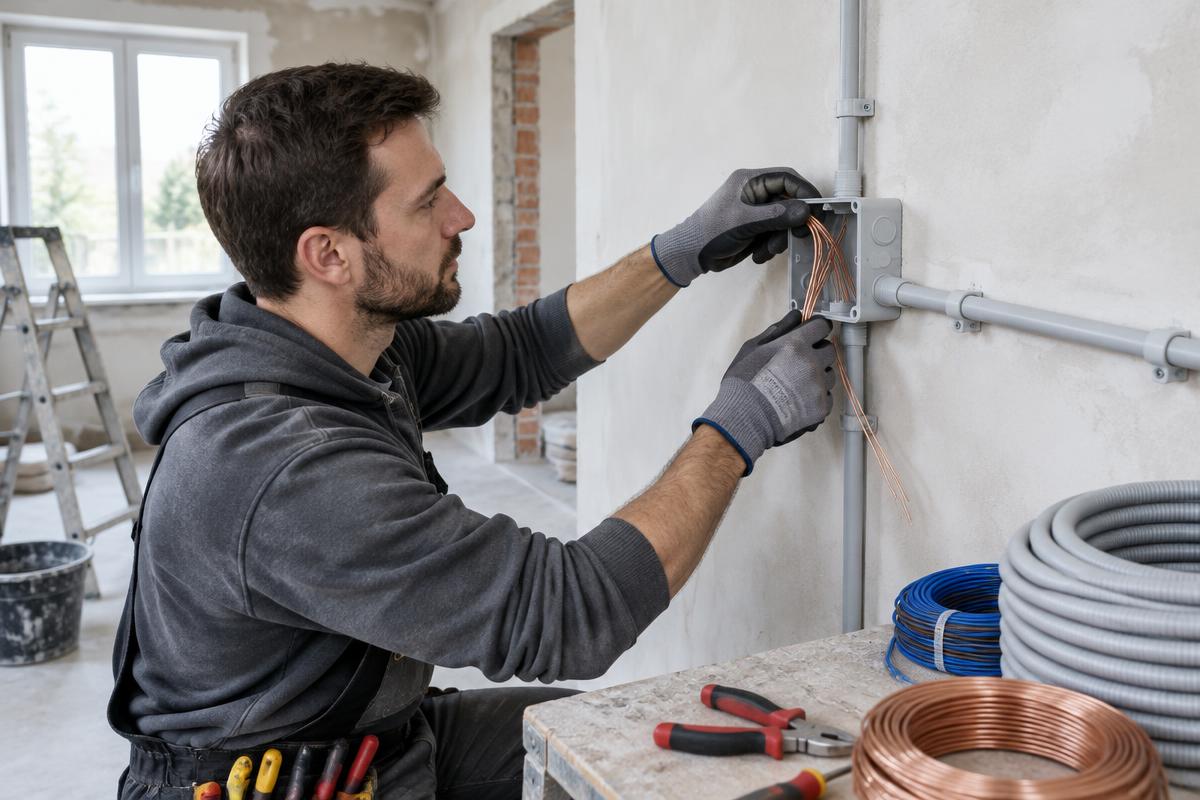
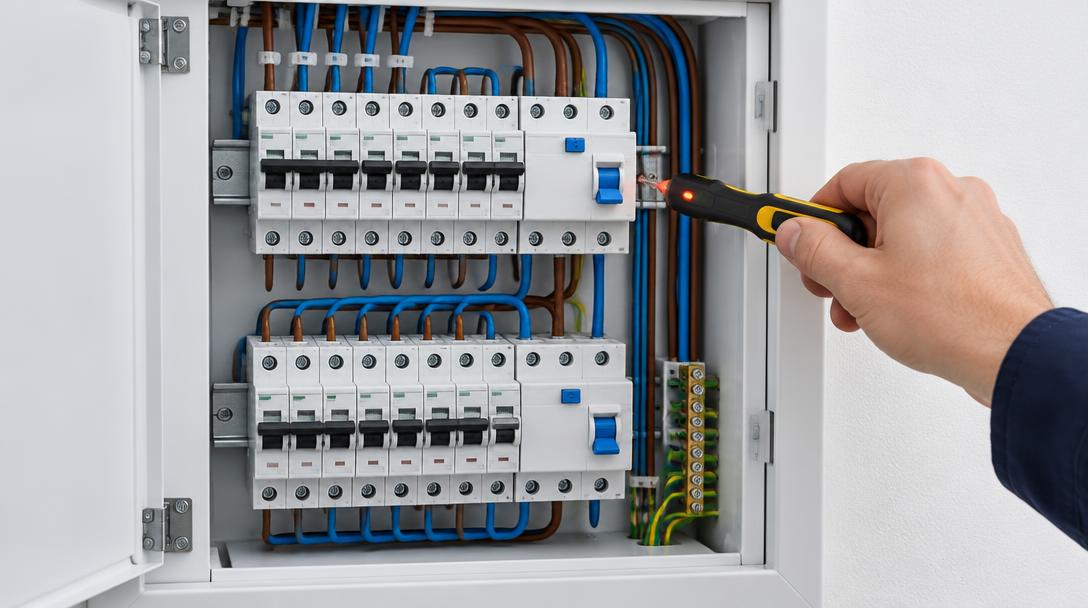
None of the above systems will function correctly if the building's grounding is faulty. Measuring ground resistance by a licensed electrician is the first step. Furthermore, connections in the panel must be tightened periodically. Loose contacts cause arc faults, which are the number one cause of fires in electrical panels.
Frequently Asked Questions (FAQ)
1. Why does the RCD trip without having any appliance turned on?
There may be moisture in an external socket or light fixture, or a device (e.g., the refrigerator) may be showing leakage during compressor startup. Also, the accumulation of micro-leakages from multiple computer power supplies can add up and "trip" the RCD.
2. How often should I change circuit breakers?
Automatic circuit breakers do not have a specific expiration date. However, if a breaker has "tripped" many times due to a short circuit, its contacts wear out, and it is advisable to replace it preventively after 10-15 years.
3. Is a voltage monitor necessary if I have a UPS?
The UPS only protects the device connected to it. The voltage monitor in the panel protects the entire house, including large home appliances (washing machine, oven, AC) that cannot be plugged into a UPS.
4. What does it mean when the lightning arrester turns red?
It means the component absorbed a strong surge and "sacrificed" itself to protect the installation. The cartridge must be replaced immediately, as protection is no longer active.
Conclusion
The safety of our electrical installation is not a luxury, but a necessity. A modern panel with correctly calculated circuit breakers, a certified Type A RCD, and surge protection offers peace of mind and longevity for our devices. Always trust a licensed electrician for any intervention, as electricity does not forgive mistakes or poor workmanship.