The Heart of the Electrical Installation: Why the Distribution Board is Critical
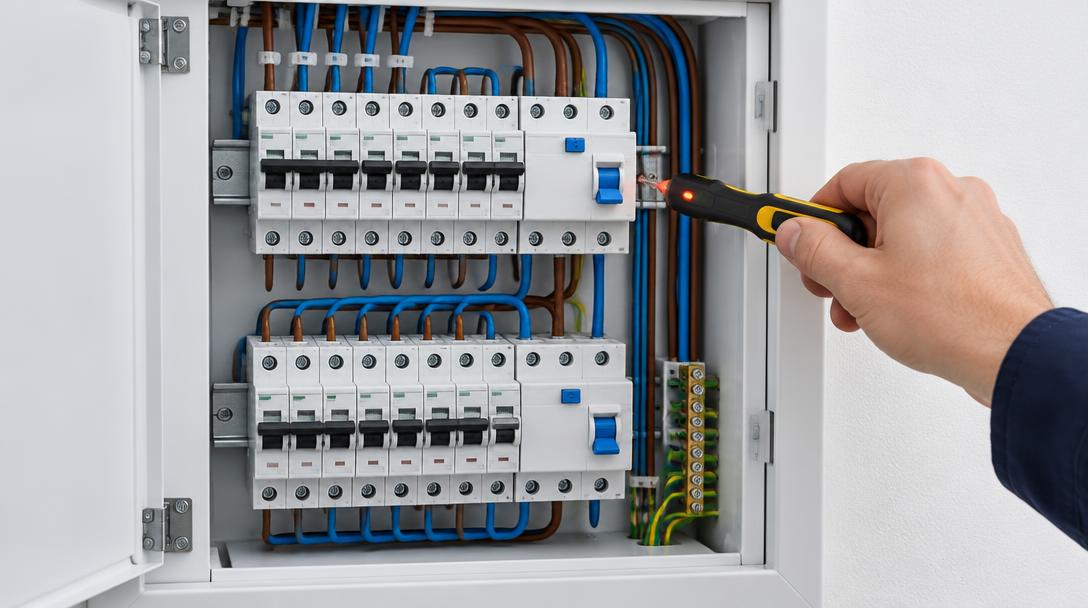
The electrical distribution board is the control center and the most important safety system of any building. It is not just a box with switches, but the mechanism that protects your appliances from short circuits, the wiring from overloads, and, above all, your life from electrocution. In Greece, most residences built before 1980 have obsolete distribution boards that do not meet the modern safety specifications of the ELOT HD 384 standard.
Understanding the components that a distribution board should contain is essential for both the owner and the technician to ensure the proper operation of the network over time.
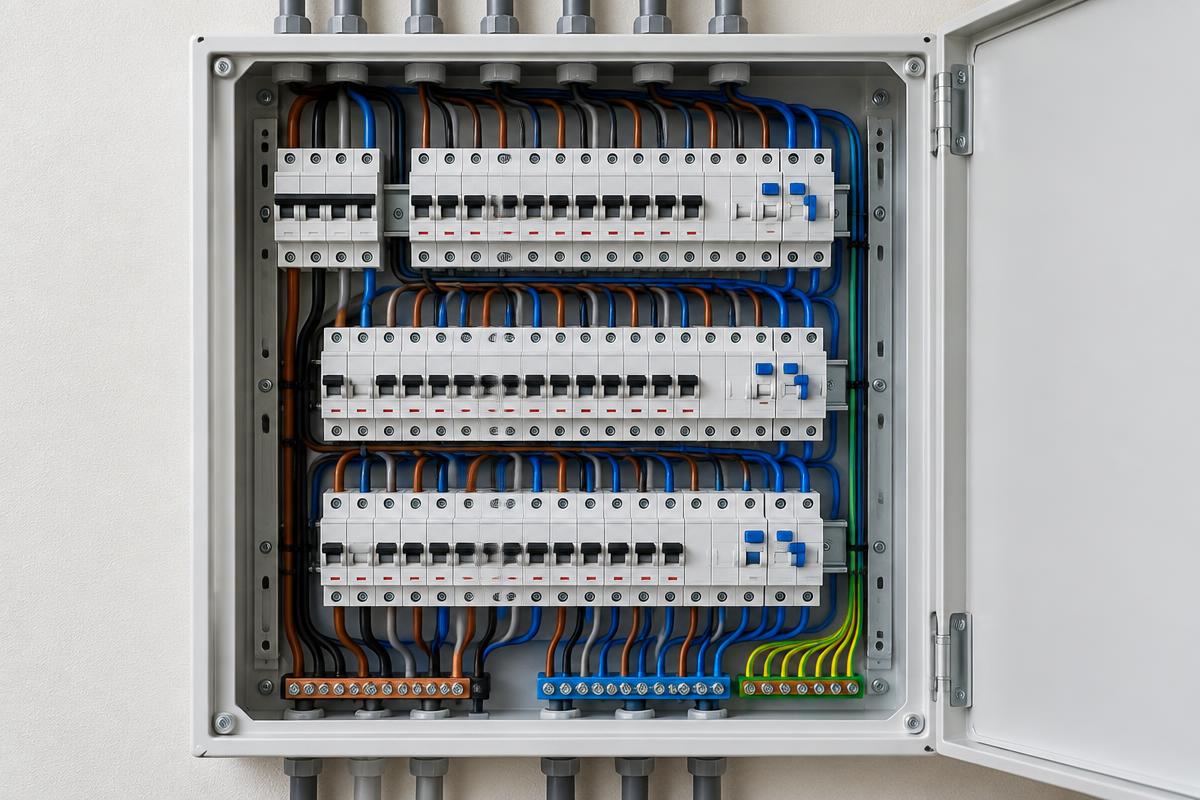
What a Modern Electrical Distribution Board Should Include
A well-equipped distribution board in a typical Greek home must have specific elements that ensure protection selectivity:
- Main Switch & Main Fuses: Allow for complete isolation of the installation from the HEDNO (DEDDIE) network.
- Residual Current Device (RCD): The most important component. It detects current leakage to the ground (above 30mA) and instantly cuts off the supply, preventing electrocution.
- Circuit Breakers (MCBs): Protect the wiring. Usually 10A for lighting and 16A for outlets.
- Indicator Lights: So you can visually know if there is voltage on the phases.
- Surge Protection Devices (SPDs): Protect sensitive electronic equipment from sudden voltage spikes due to lightning or network faults.
When is an Upgrade Mandatory?
1. Absence of a Residual Current Device (RCD)
If your distribution board does not have an RCD, an upgrade must be performed immediately. It is the only device that protects people in the event of contact with a bare wire or a faulty appliance. Greek legislation makes its presence mandatory.
2. Frequent Tripping of Fuses
If fuses "trip" frequently without having many appliances connected simultaneously, this indicates either material fatigue or poor load distribution. An old distribution board with legacy-style thermal fuses does not respond with the same accuracy as modern circuit breakers.
3. Addition of Large Loads (A/C, Heat Pumps, EV Chargers)
Old distribution boards were designed for the needs of the 1970s. The installation of an air conditioning system or an electric vehicle requires new, independent lines and reinforced fuses that often do not fit in the old board.
The Importance of Proper Wiring and Cross-Sections
A common mistake in old installations is the use of improper wire cross-sections for the corresponding fuses. For example, a kitchen line requires 6mm² wire and a 25A fuse. If the distribution board is old, contacts may have loosened, causing sparking and local overheating (Joule effect), which is the main cause of electrical fires.
During an upgrade, the technician must check the tightness of the contacts and the condition of the wires (if insulation has dried out). Also, using a busbar to connect the circuit breakers instead of cable "bridges" improves reliability and order within the board.
Cost and Upgrade Process in Greece
The cost to replace an electrical distribution board depends on the number of circuits (elements). For a typical apartment, labor and materials (from branded manufacturers such as ABB, Schneider, Legrand) usually range between 250€ and 500€.
The process includes:
- Disconnecting the old board and labeling the lines.
- Installing a new plastic or metal cabinet if the old one is damaged.
- Installing new materials and performing measurements with a special instrument (Gossen Metrawatt or similar) to check the RCD response time.
- Issuing a new Responsible Installer Statement (YDE) for HEDNO.
Frequently Asked Questions (FAQ)
How often should I check the RCD?
It is recommended to press the Test button on the RCD once a month. If the RCD does not trip when the button is pressed, it needs immediate replacement by an electrician.
Can I change a blown fuse myself?
Modern circuit breakers do not "blow" like old wire fuses; they simply reset. However, if a fuse has failed (it won't switch on), its replacement requires opening the distribution board cover, a task allowed only for a licensed electrician due to the risk of fatal electrocution.
Is a surge protector necessary?
Although not mandatory in all areas, it is extremely useful, especially in detached houses or areas with unstable networks, as it protects refrigerator boards, televisions, and computers that cost much more than the component itself.
Conclusion
The electrical distribution board is not a static component that lasts forever. Over the decades, materials wear out and the home's demands increase. A proper upgrade does not just offer convenience; it ensures that your home remains safe for you and your family. Do not neglect an inspection by a certified technician, especially if the building is over 25 years old.