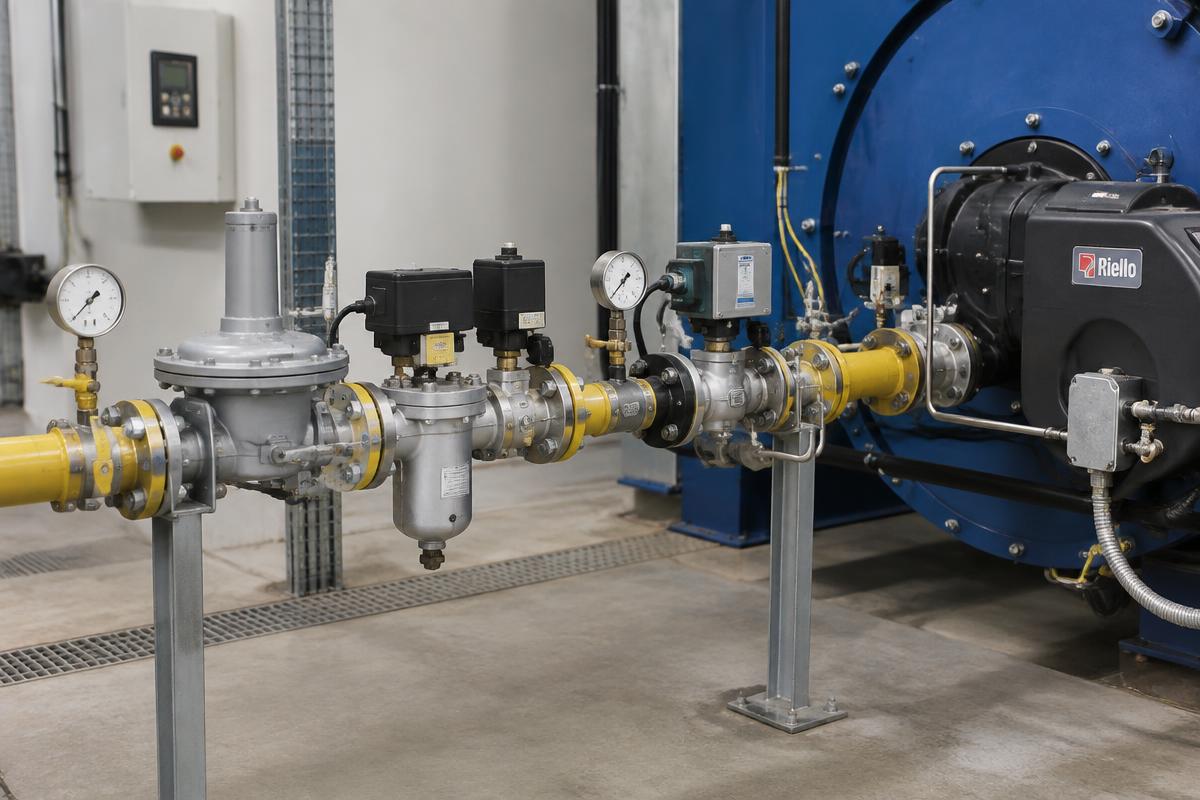
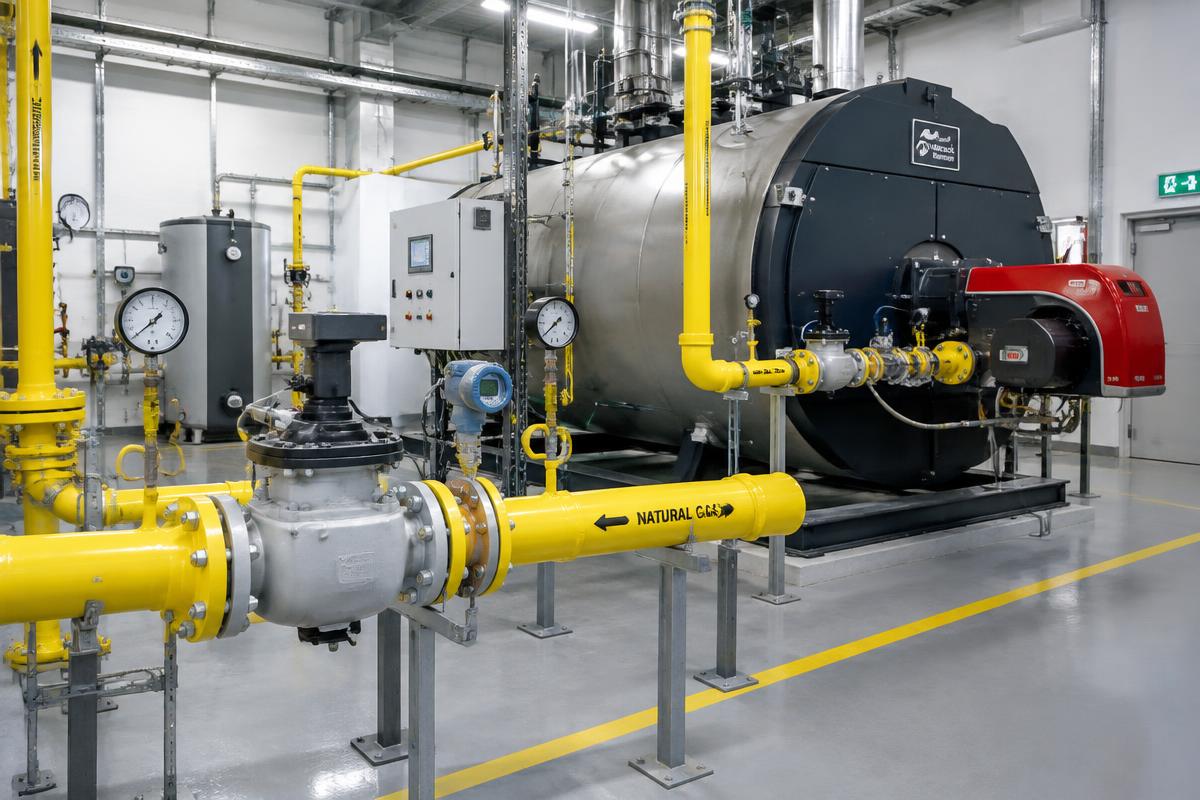
In industrial pressure regulating stations, a two-regulator setup is often used, where one acts as the main (active) and the second as a monitor. The purpose is to maintain pressure at safe levels even if the main regulator fails.
The role of the active regulator
The active regulator is the one that normally controls the outlet pressure. It adjusts its opening according to consumption so that the pressure towards the plant or burner remains close to the set value.
The role of the monitor
The monitor is set so that during normal operation it does not intervene significantly. If the active regulator fails and the pressure starts to rise, the monitor takes control and limits the pressure.
Coordination of settings
The settings for the active regulator, monitor, and safety devices must follow the correct sequence. Incorrect coordination can cause unstable pressure, frequent interventions, or unwanted trips.
Relation to slam-shut
The monitor does not necessarily replace the slam-shut valve. The slam-shut constitutes an independent protection that can fully close the supply in case of overpressure or another specified condition.
Maintenance
Regulators must be checked for cleanliness, the condition of diaphragms, pilot lines, impulse lines, and smooth operation. After any intervention, verification of the actual operating pressures and setpoints is required.
Why the correct sequence is important
In an industrial facility, regulation is not simply "setting the desired pressure." It is a coordinated control and safety system, where each device must act at the correct pressure and in the correct order.