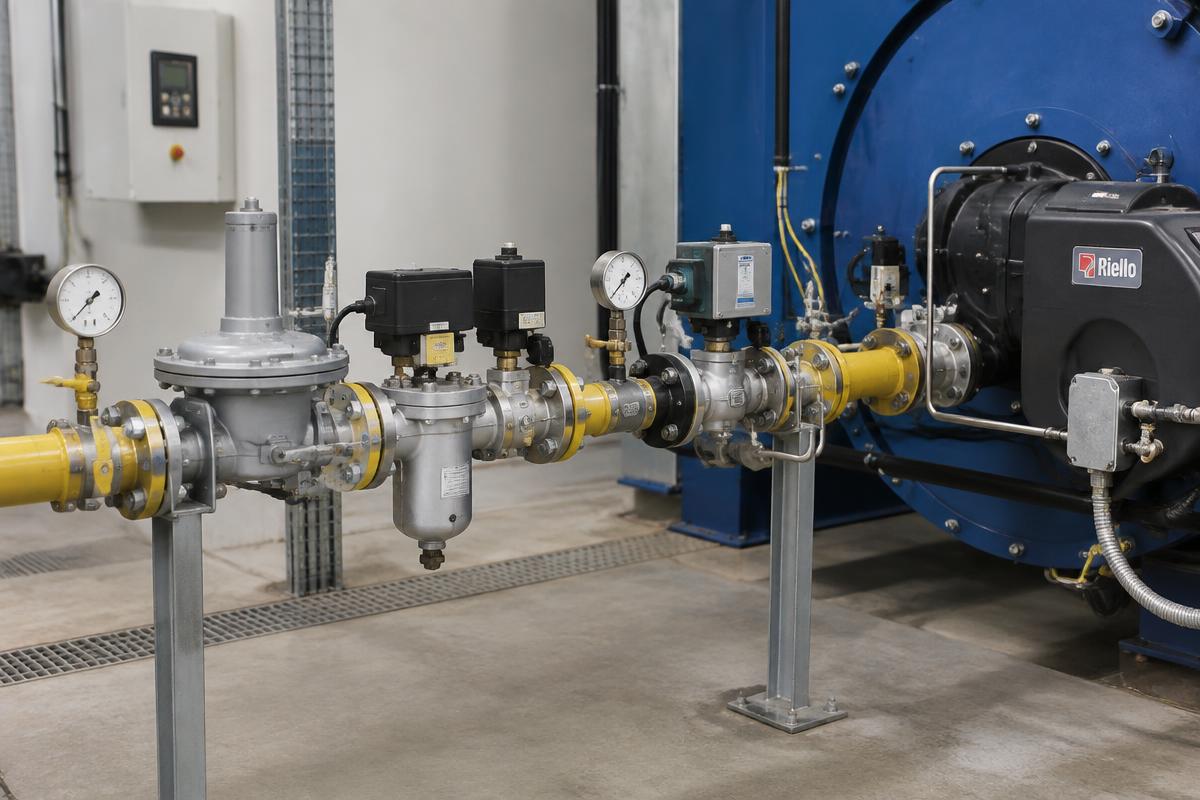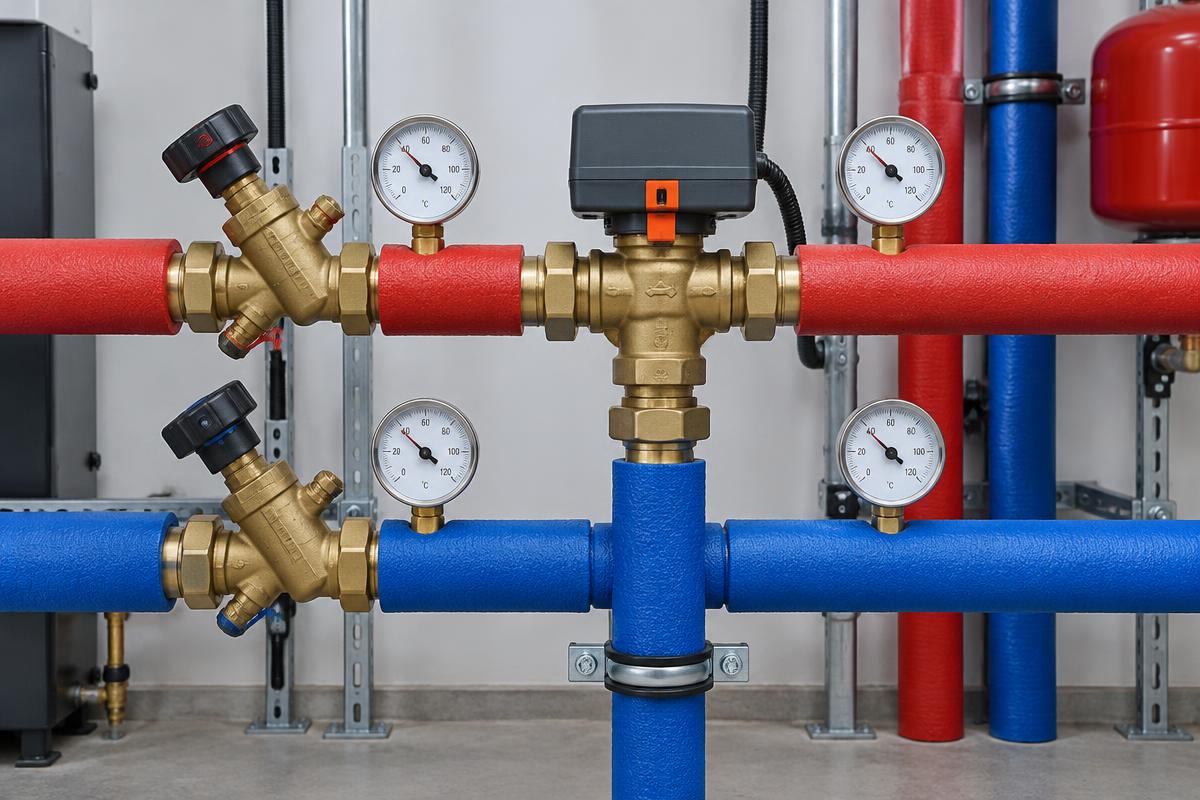
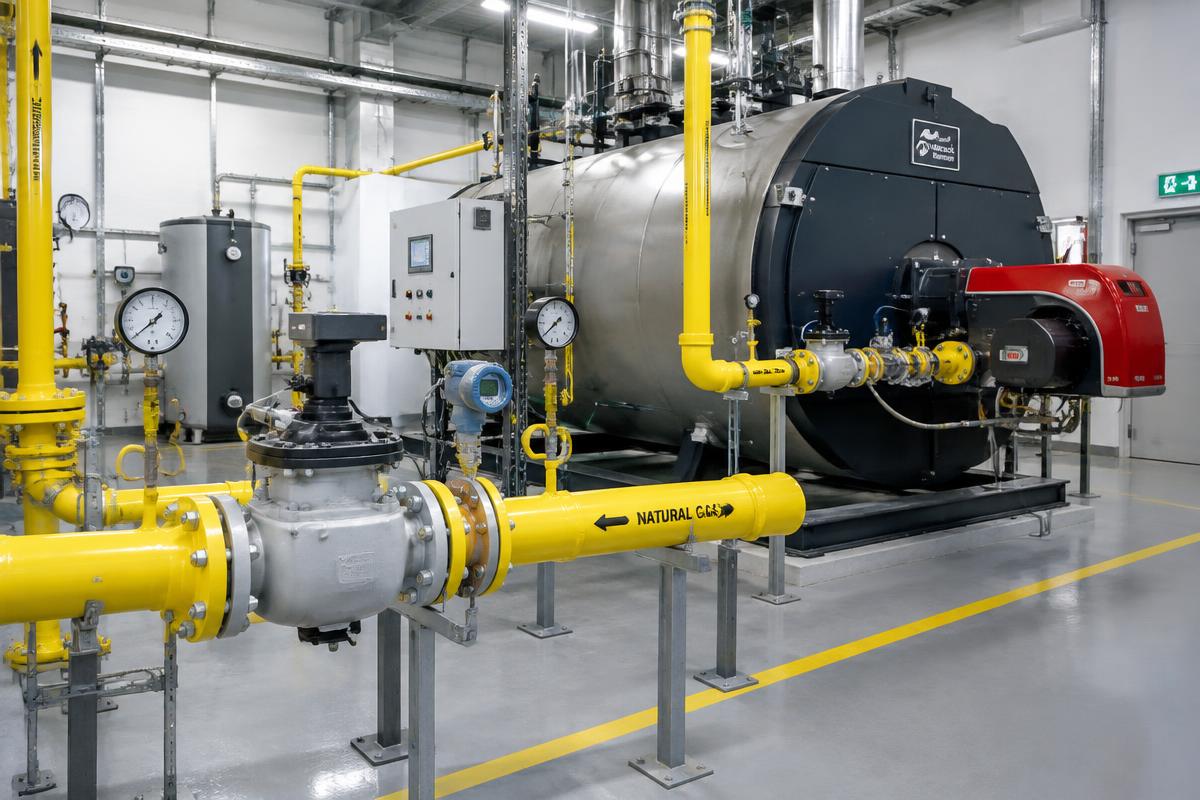
In many industrial facilities, the pressure of the natural gas arriving from the network is higher than what consumers require. The pressure reduction and regulation station is responsible for delivering gas at an appropriate and as constant as possible pressure to the internal network.
What the regulation station does
Its primary role is to reduce input pressure to a pre-set output level, keeping it as stable as possible when consumption varies. At the same time, it includes isolation, filtration, measurement, and protection devices.
Main components
Depending on the design, one may find filters, pressure regulators, safety valves, overpressure or underpressure devices, pressure gauges, pressure transmitters, and flow measurement instruments.
What constant output pressure means
The regulator must respond to changes in demand. When a large burner starts, the flow rate increases abruptly. If the regulator, filter, or supply from the network cannot respond, the output pressure may drop.
Conversely, when a large consumer shuts down suddenly, a temporary rise in pressure may occur. This behavior must be evaluated with measurements and under actual operating conditions.
Common problems
A restricted filter, wear in the regulator, incorrect flow selection, instability in input pressure, or very large sudden load changes can create problems for the entire factory.
Why diagnosis should start from the source
If many burners display low-pressure alarms simultaneously, it is likely that the problem does not lie within each individual gas train. Checking the pressure before and after the regulation station can indicate if the problem is central.
Preventive maintenance
The condition of filters, pressure readings, tightness, instrument operation, and the station's behavior under load changes must be monitored systematically. The adjustment of safety devices should not be changed arbitrarily just to clear an alarm.
The regulation station is a critical point of the installation. A malfunction there can affect all downstream consumers.