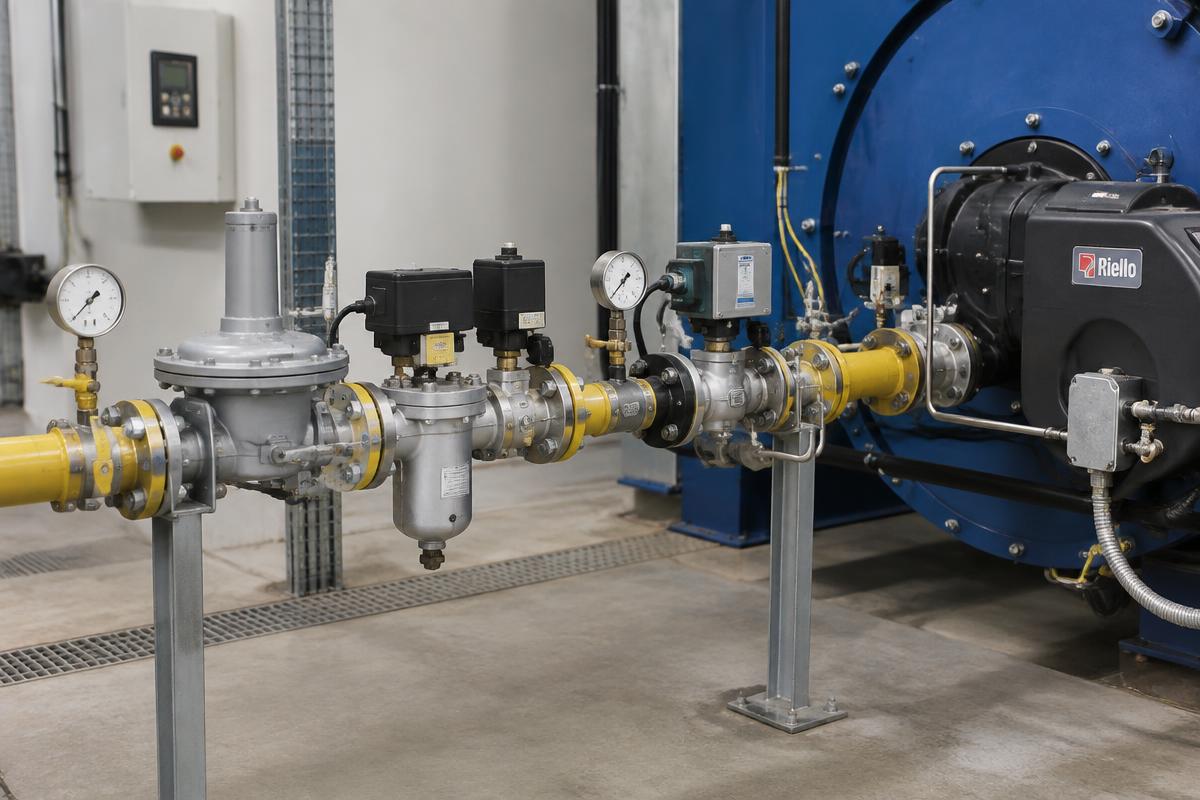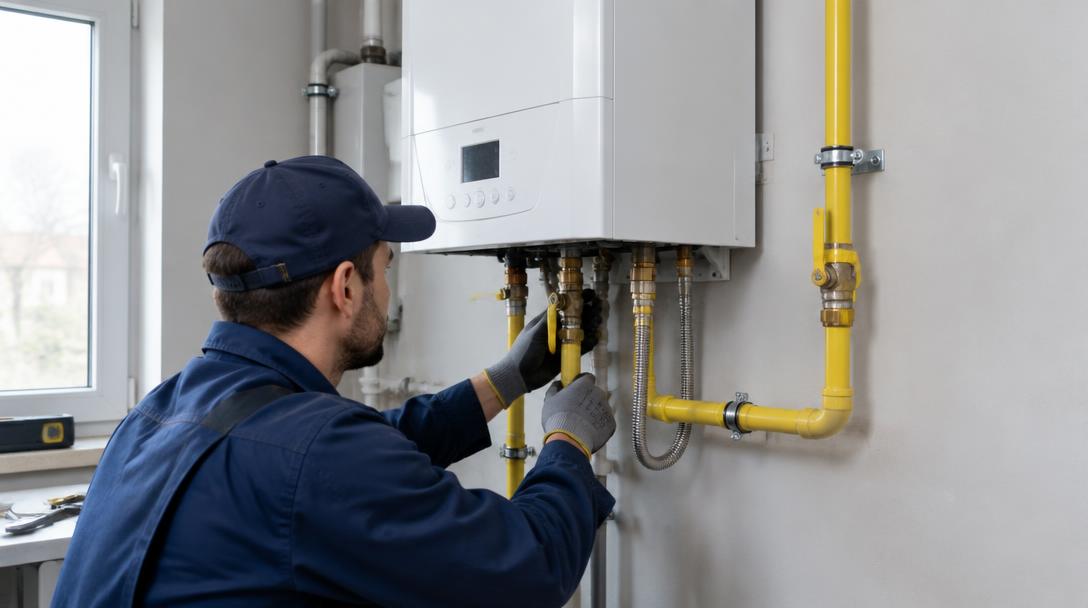
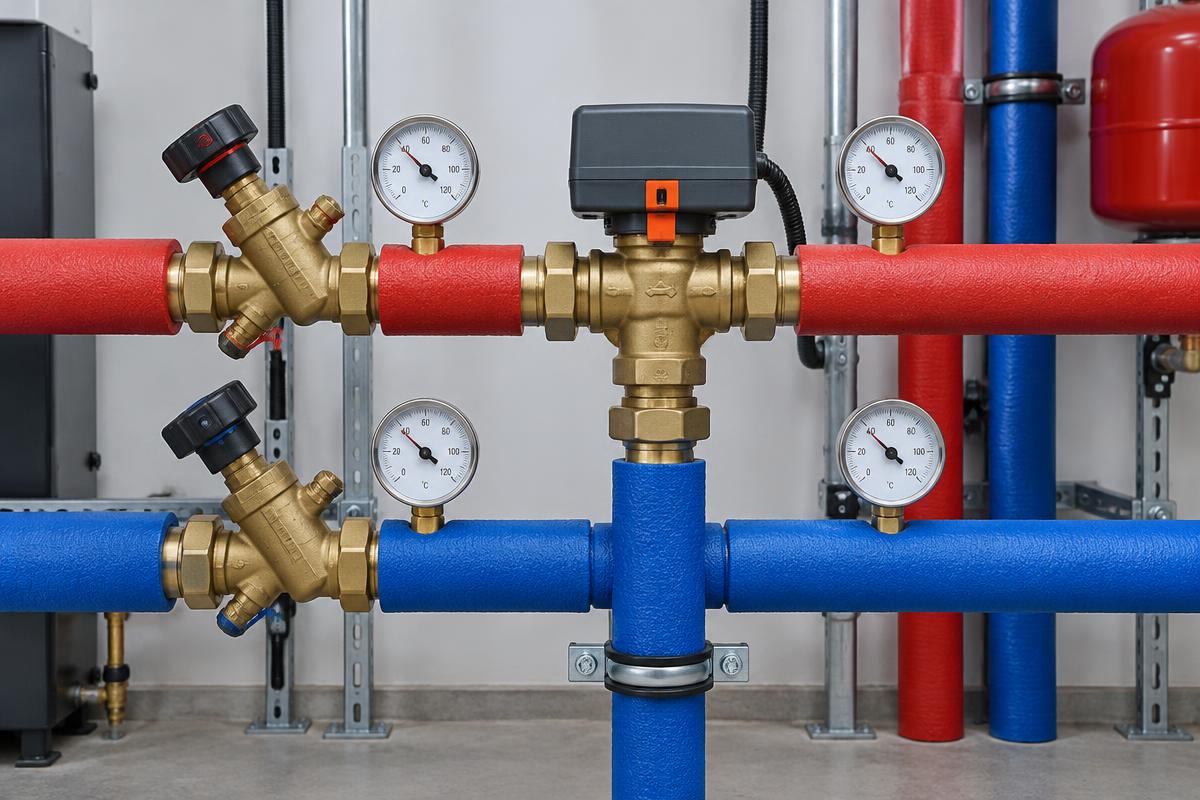
When the burner starts the sequence but never reaches normal ignition, the problem may lie with the gas supply, the pressure switches, or the solenoid valves. Diagnosis should be carried out systematically and not through random component changes.
1. Check if there is actual gas pressure
The first piece of information is whether there is sufficient pressure at the inlet of the gas train. The reading should also be monitored during the start attempt, as there may be a significant drop once flow is requested.
2. Check the low-pressure switch
If the pressure switch does not confirm sufficient pressure, the automation will not allow the valves to open. Check the setpoint and the electrical status of the contact.
3. Monitor the start-up sequence
You must know which stage the burner reaches: pre-purge, pressure checks, spark, valve command, or flame detection. The point where the sequence stops significantly narrows down the potential causes.
4. Check if there is a command to the solenoid valves
If there is no command, usually a previous safety interlock has not been satisfied. If there is a correct command but the valve does not open, then the problem is likely with the valve or its coil.
5. Check for a potential valve proving alarm
In systems with two valves, a failure of the leak test can prevent start-up even if the gas pressure is normal.
6. Do not bypass safety devices
Jumpers on pressure switches or direct powering of valves can create an unsafe situation. Proper diagnosis is based on sequence logic and actual measurements.