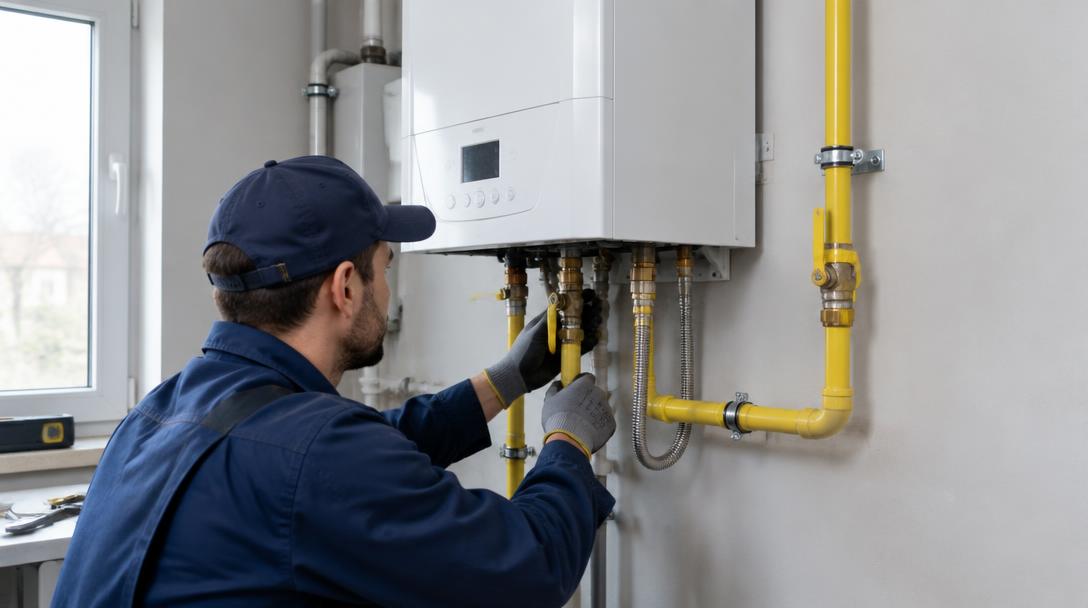
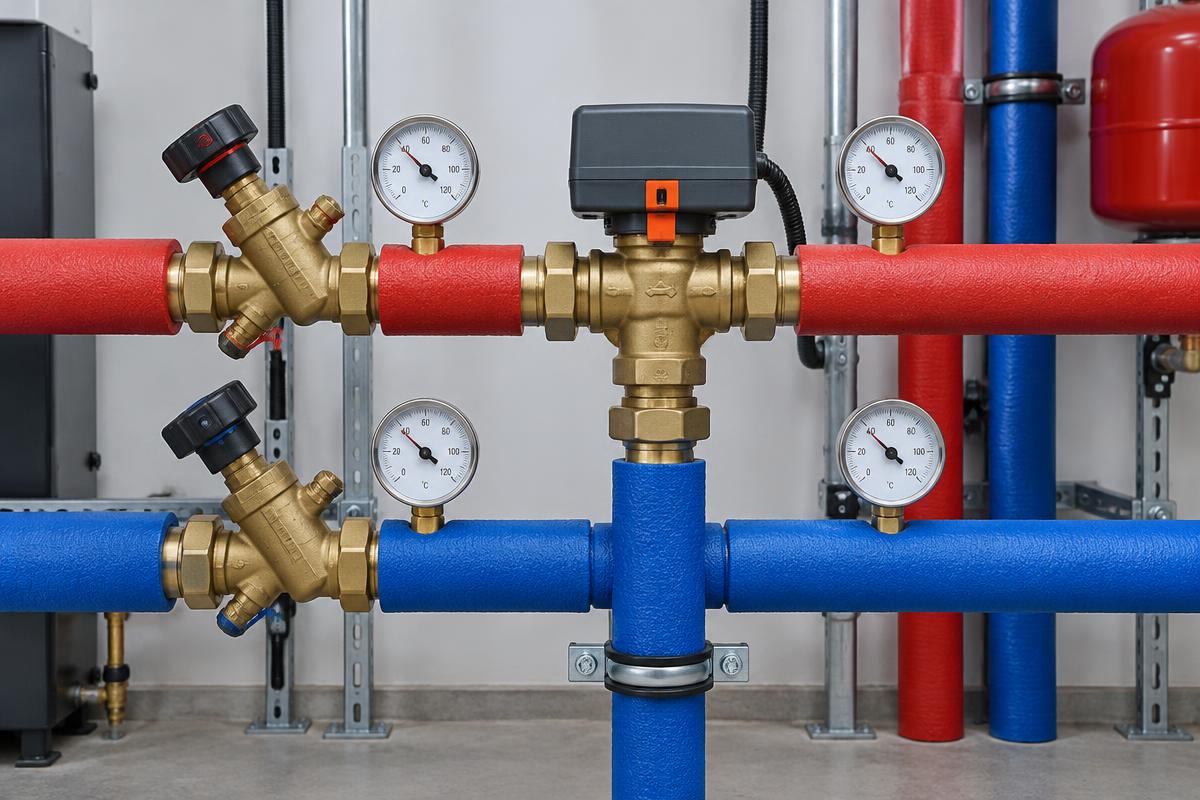
Faults in the gas train often appear with similar symptoms: the burner does not start, resets, displays low gas pressure, or stops immediately after an ignition attempt. Correct diagnosis requires linking the symptom to the specific stage of the operating sequence.
Symptom: no solenoid valve opens
Possible causes include an active pressure switch, lack of command from the automation system, emergency stop, pre-purge failure, or valve proving alarm.
Symptom: the valve sounds, but there is no flow
There may be a mechanical jam, a closed manual valve, a clogged filter, or insufficient inlet pressure.
Symptom: low gas pressure only when the burner starts
Static pressure may be normal, but dynamic pressure collapses when demand increases. Possible causes include a restriction in the line, a filter, a regulator, or insufficient network supply.
Symptom: high gas pressure at start-up
Check the pressure regulator, the high-pressure switch setpoint, the pressure behavior at zero flow, and potential transient spikes.
Symptom: recurring valve proving alarm
Check the two valves, the intermediate space, the system's pressure switch/sensor, and the testing times.
Diagnostic methodology
The most effective method is: recording the alarm, observing the sequence, measuring pressure at the correct points, checking electrical signals, and only then evaluating the component as faulty.
Conclusion
Valves, solenoid valves, and pressure switches work together as a unified safety chain. Understanding the operating sequence is more important than the piecemeal replacement of components.