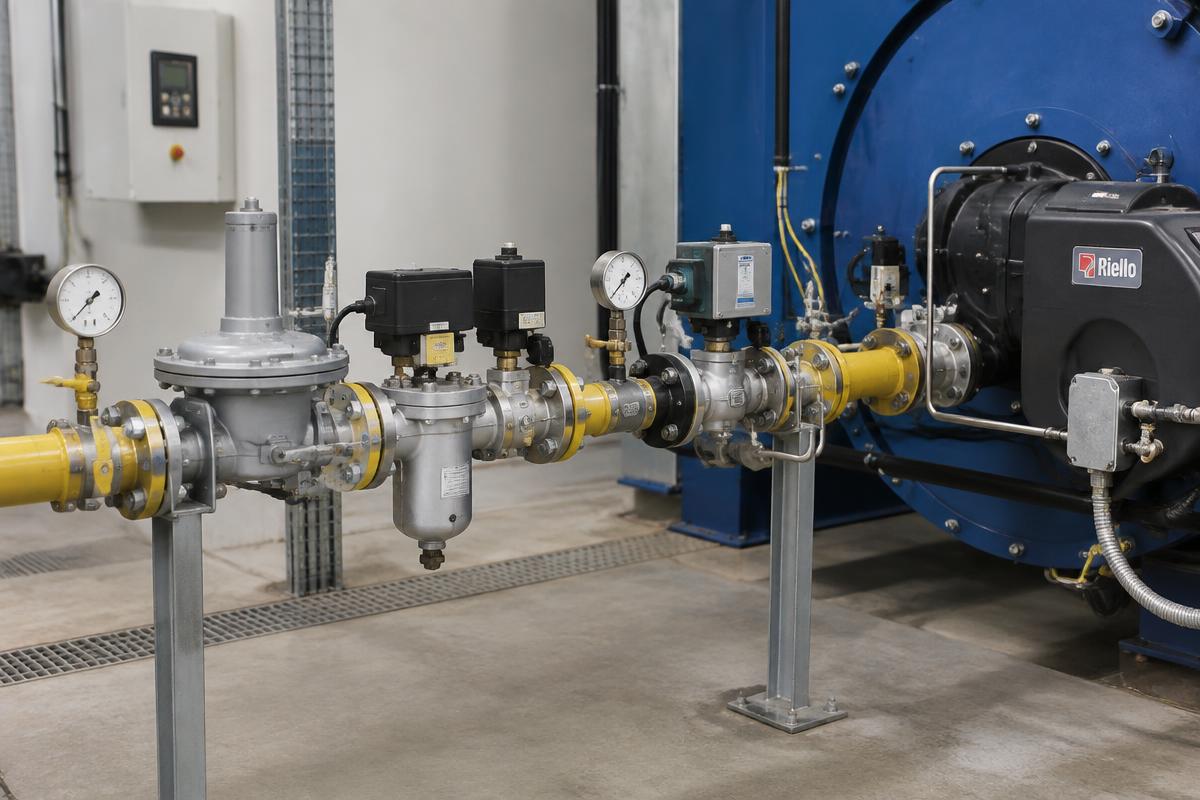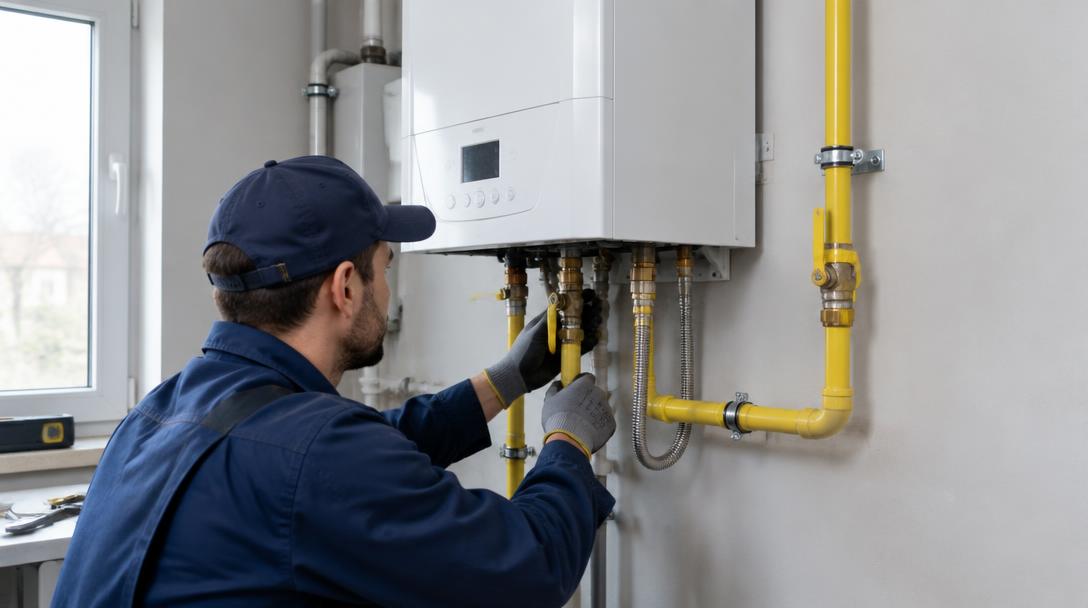
In many burners, especially those with higher capacities, we find two safety solenoid valves in series. They are often referred to as V1 and V2. This arrangement increases the level of safety and allows for a tightness test between the two valves.
Why two valves
If one valve does not close completely tightly, the second still acts as an independent barrier. This significantly reduces the possibility of unwanted gas flow when the burner is out of operation.
How they work
The valves are controlled by the combustion system according to a specific sequence. Depending on the manufacturer, they may open almost simultaneously or with a controlled time delay.
What is the space between V1 and V2
The small section of piping between the two valves is often used for tightness testing. The system can monitor whether the pressure increases or decreases in a way that indicates a leak.
Common problems
A valve may be slow to open, fail to close completely, or have a coil issue. In such cases, a valve proving alarm may appear or the startup sequence may fail to complete.
What should not be done
Do not remove or bypass one valve to keep the system running. The dual arrangement is part of the certified safety of the combustion system.