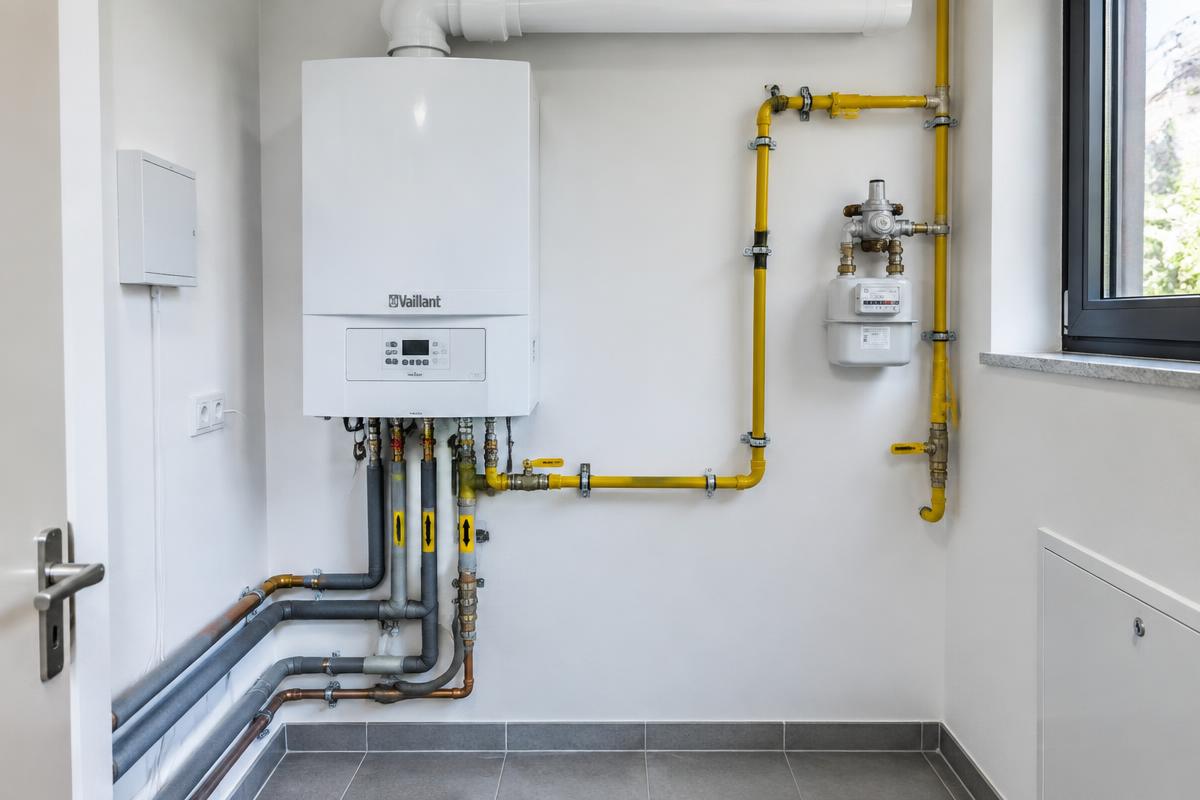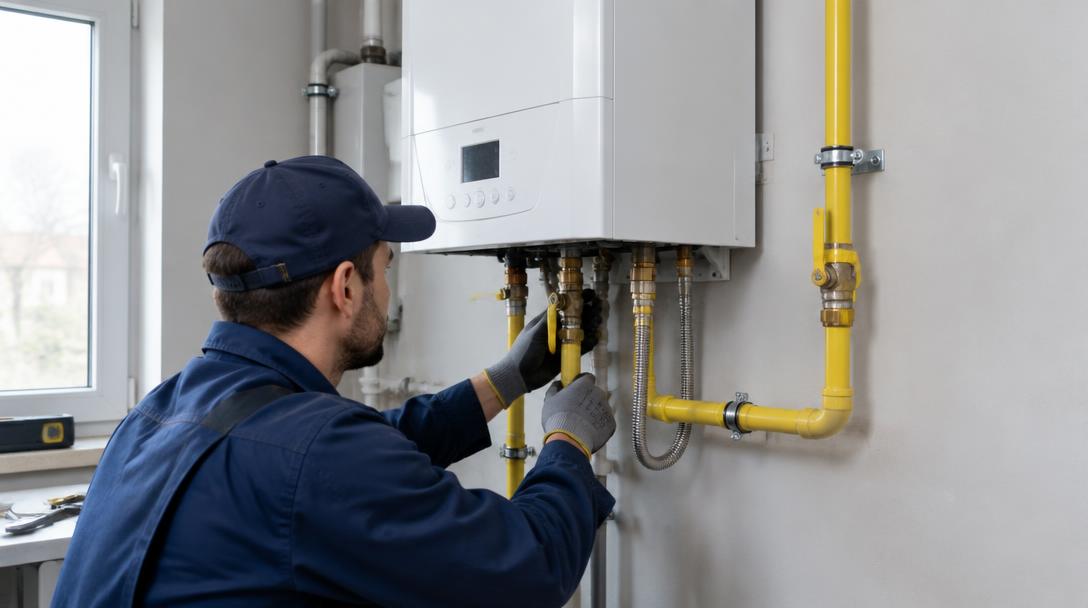
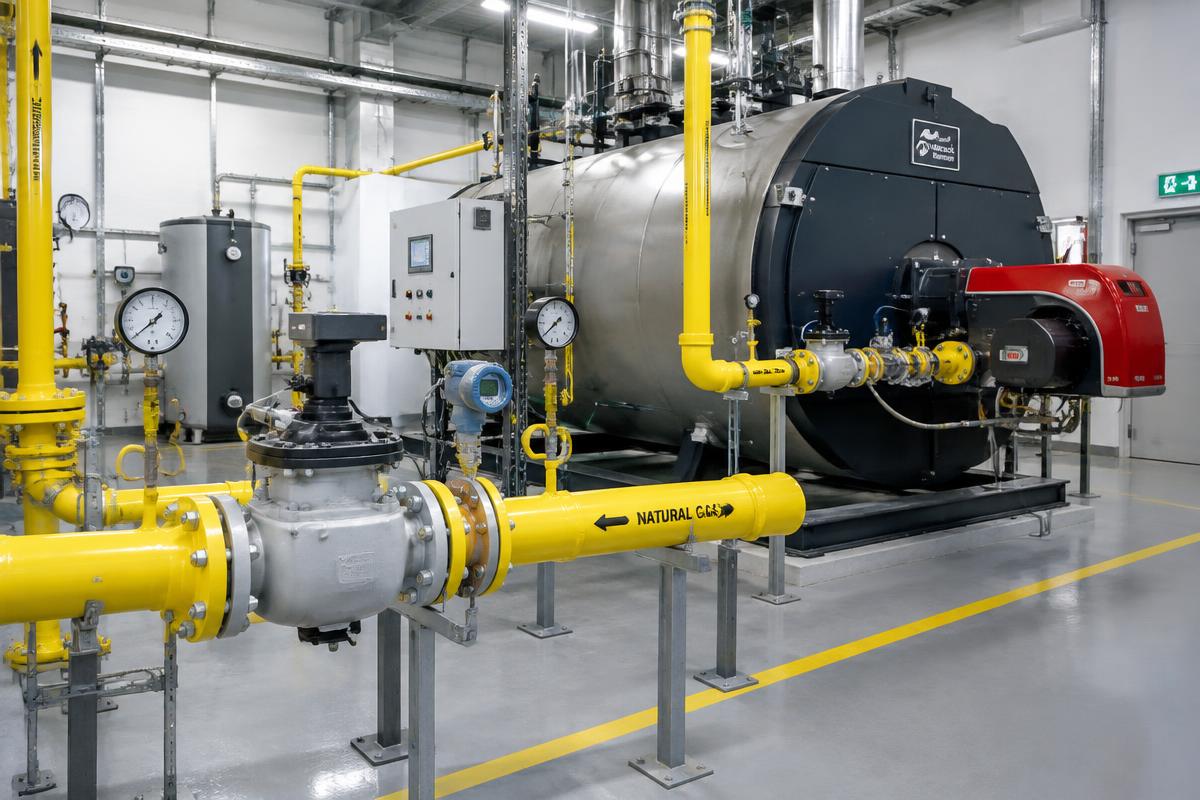
The mechanical condition of piping is just as important as proper pressure and flow. In an industrial environment, pipes may be exposed to moisture, chemical vapors, vibrations, mechanical stresses, and temperature fluctuations.
Suitable materials
Materials, connections, and components must be suitable for natural gas, the operating pressure, and the installation environment. They are selected based on the technical design and must not be arbitrarily replaced with components of unknown suitability.
Supports and mechanical stresses
Piping must be correctly supported so that it does not transfer undesirable loads to valves, regulators, or gas trains. Loose supports can allow vibrations, while overly rigid support may not allow for intended movements.
Thermal expansion
In large-scale piping, temperature fluctuations cause expansion and contraction. The installation must be designed so that these movements do not create dangerous stresses on the connections.
Corrosion
External corrosion is a common problem in areas with moisture or an aggressive environment. Areas near supports, wall penetrations, floors, and locations where water accumulates require special attention.
Painting and identification
Clear identification of piping assists in maintenance and safety. Lines must be marked according to facility requirements so that personnel know what medium they carry and in which direction.
What we check during a visual inspection
We examine for corrosion, impacts, deformations, the condition of supports, abnormal movements, the condition of paint, valve accessibility, and obvious signs of leakage or wear.
Why prevention is valuable
Many piping problems evolve slowly and can be identified before they cause serious damage. Periodic visual inspection and proper documentation of findings are a key part of maintenance.