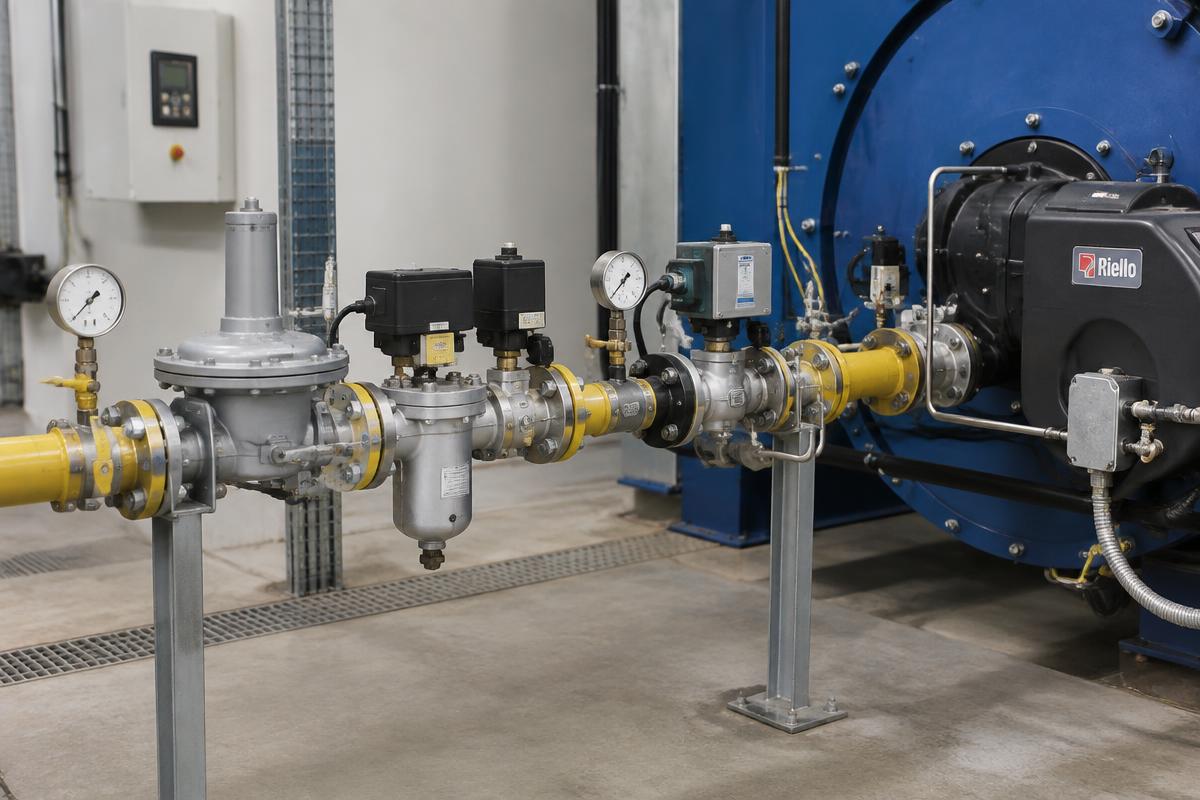
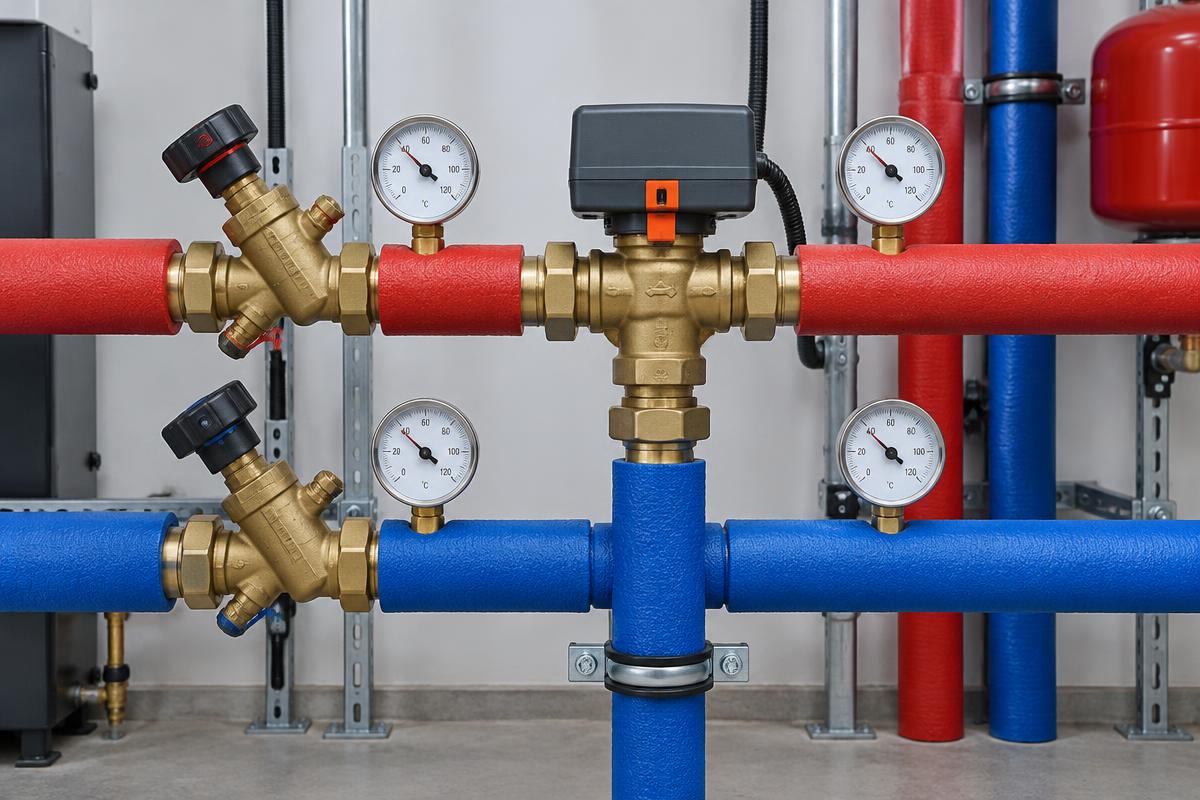
Pressostats and many regulators do not "know" the installation pressure if the pressure does not reach their sensing point correctly. Small pipes or orifices that carry the pressure are often called impulse lines and are of great importance in diagnostics.
What is a pressure sensing point
It is the point where the network pressure is transmitted to a pressostat, regulator, or instrument. If the sensing point is in an unsuitable location or is partially clogged, the instrument may "see" a different pressure than the actual line pressure.
Blockage or contamination
Small cross-sections can be affected by particles, moisture, or residues. In such cases, the response becomes slow or incorrect: the pressostat may delay changing contact or the regulator may react with a delay.
Kinking and mechanical stress
Flexible or thin pipes that have been kinked create a significant restriction. At the same time, loose connections can cause leaks or incorrect measurements.
Sensing location
The pressure before a filter, after a regulator, and in the mixing chamber can differ. This is why the sensing point is determined by the system design and should not be arbitrarily moved to a "more convenient" location.
Diagnostic example
If the manometer shows stable pressure but the pressostat behaves erratically, it must be checked whether both instruments measure at exactly the same point and whether the pressostat's impulse line is clean and leak-tight.
After maintenance work
After disconnecting or changing impulse lines, the correct connection, absence of leaks, and proper operation of the instrument must be confirmed. Do not blow into or pressurize sensors without knowing their permitted limits.
Conclusion: a healthy pressostat or a correct regulator can exhibit incorrect behavior if the pressure does not reach its sensing element correctly.