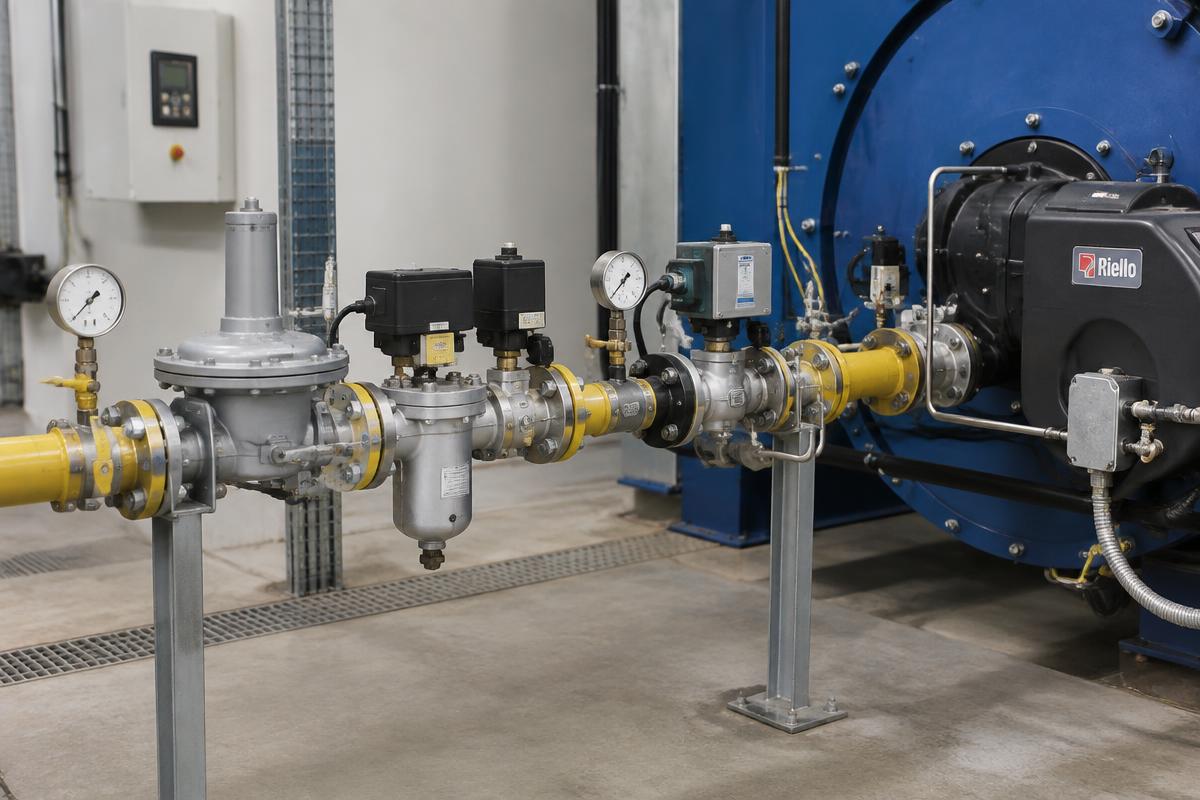
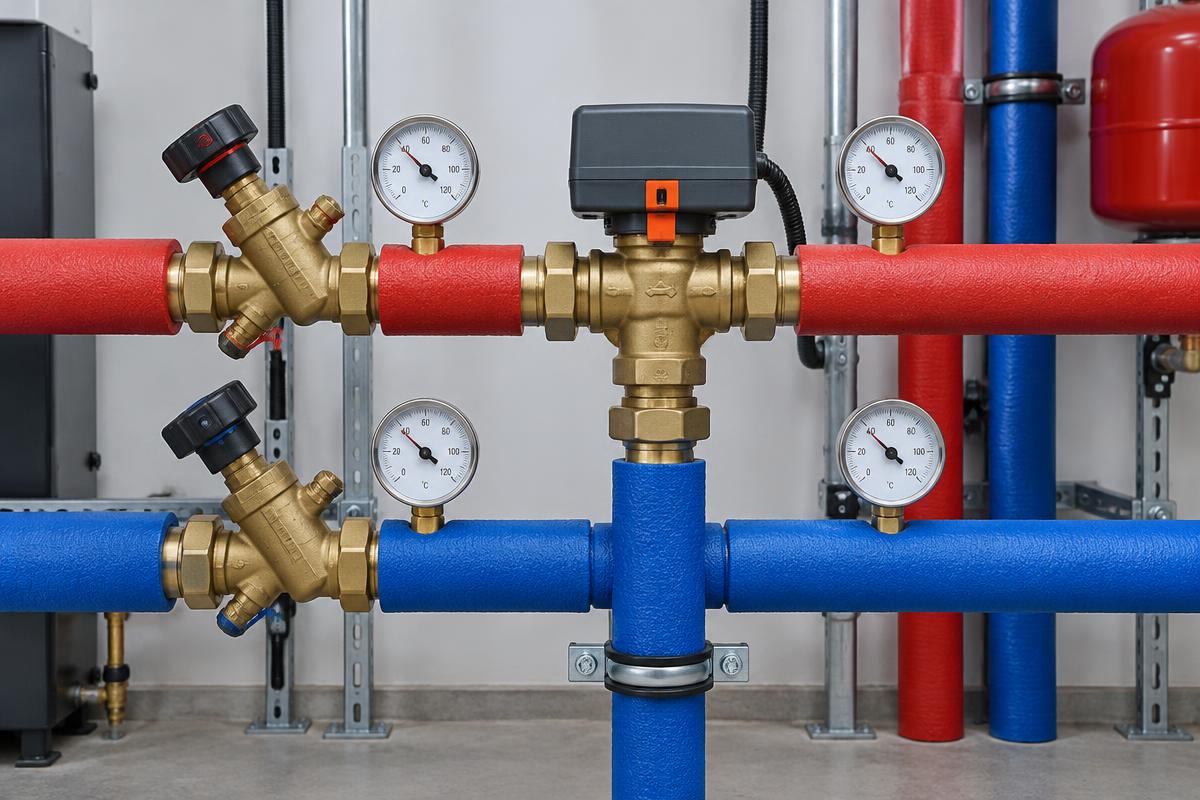
The high gas pressure switch monitors the upper permissible pressure limit in the gas train. Its role is to prevent burner operation when the pressure exceeds the allowed value.
Why high pressure is a problem
Excessively high pressure can increase the gas supply too much, affect the combustion mixture, and create unsafe conditions. This is why the high-pressure switch is connected to the safety chain.
Where it is located
The exact position depends on the gas train and the manufacturer. It is often installed after a regulation stage or at a point where it monitors the pressure directed to the valves and the burner.
Why it may trip during startup
A momentary pressure peak, slow regulator response, incorrect switch setting, or closed/restricted downstream flow can cause a temporary pressure increase.
What to check
We check the actual pressure before and during startup, the switch setting, the regulator's operation, and the proper condition of the valves. Observing the pressure dynamically, and not just while the burner is stopped, is particularly useful.
Static and dynamic pressure
The static pressure with zero flow can be different from the dynamic pressure when the burner is consuming gas. Therefore, a measurement only in standby mode is not always sufficient for diagnosis.
Incorrect setting
A setpoint too close to the normal operating pressure can cause frequent trips. Conversely, an excessively high setpoint may reduce protection. The setting must follow the system's technical data.