
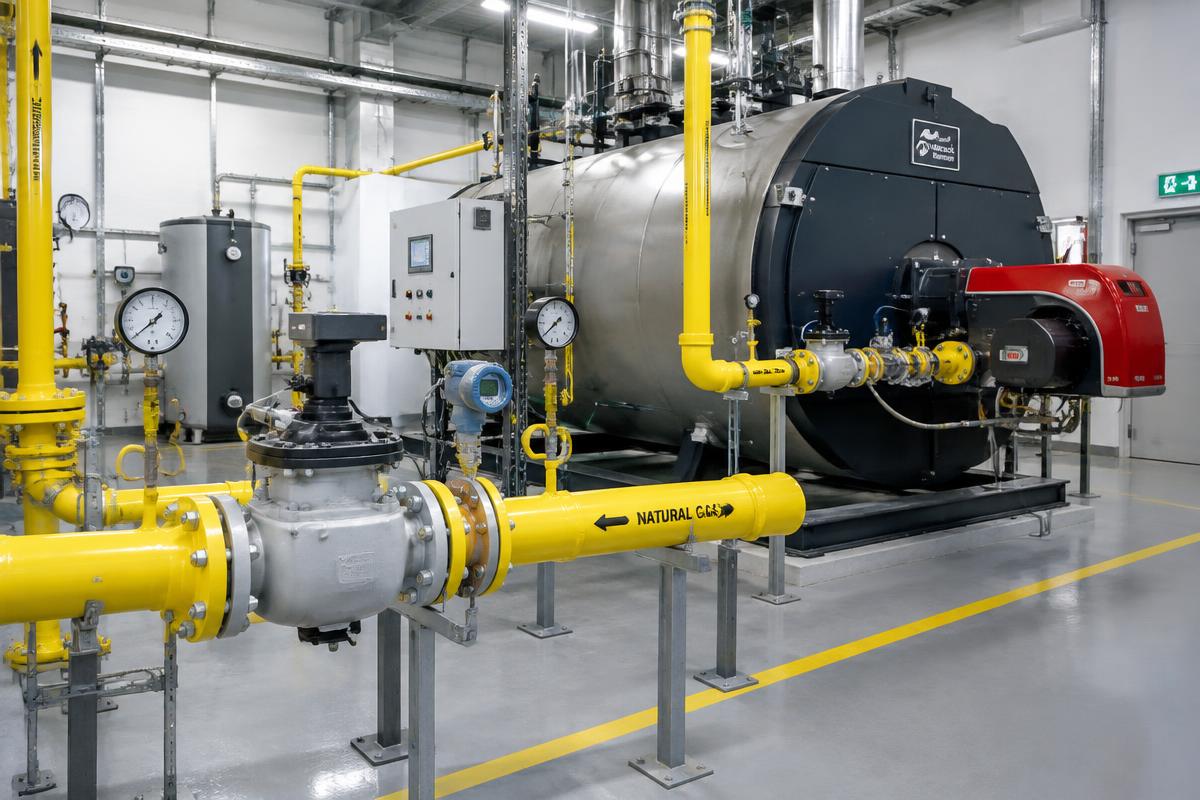
In industrial natural gas installations, earthing and equipotential bonding help reduce the risk of potential differences and static electrical charges. They are not a substitute for electrical protection, but part of the overall safety study.
What is equipotential bonding
Equipotential bonding ensures that metal parts that can acquire a different electrical potential are connected to each other in a controlled manner.
Static electricity
In some industrial processes, electrostatic charges can be generated. Proper earthing helps in discharging and reduces the likelihood of spark formation.
Pipe connections
Flanges, flexible connections, insulating gaskets, and pipe sections must be evaluated to maintain electrical continuity where required.
ATEX and earthing
In classified areas, earthing and equipotential bonding are part of the protection against ignition sources. Equipment and connections must comply with the installation study.
Periodic inspection
Connections are inspected for mechanical integrity, oxidation, and electrical continuity. A connection that appears visually correct is not always electrically reliable.
Basic principle
Every intervention on piping or equipment must take into account whether the earthing or equipotential bonding is affected.