Natural gas detectors provide an important layer of protection in areas where there is a potential for leaks. Their purpose is to detect the presence of gas before a dangerous concentration builds up and to trigger the system's required response.
What a detector measures
The sensor does not just measure if there is an "odor". It measures gas concentration and sends a signal to the control panel. The installation may have multiple alarm levels, depending on the design specifications.
Installation location
The location of the sensors is not chosen randomly. The physical properties of the gas, potential leak points, ventilation, room geometry, and manufacturer instructions are all taken into account.
Connection to ventilation and gas shut-off
Depending on the design, an alarm can trigger ventilation, audio-visual notification, a central supply shut-off, or a combination of actions. The exact logic must be documented.
Why periodic inspection is necessary
Sensors have a specific lifespan and requirements for calibration or operational testing. A sensor being powered electrically does not necessarily mean it is measuring correctly.
Common mistakes
Incorrect placement, covering the sensor, dirt, paint, lack of calibration, or a disabled alarm can significantly reduce the system's effectiveness.
What to do in case of an alarm
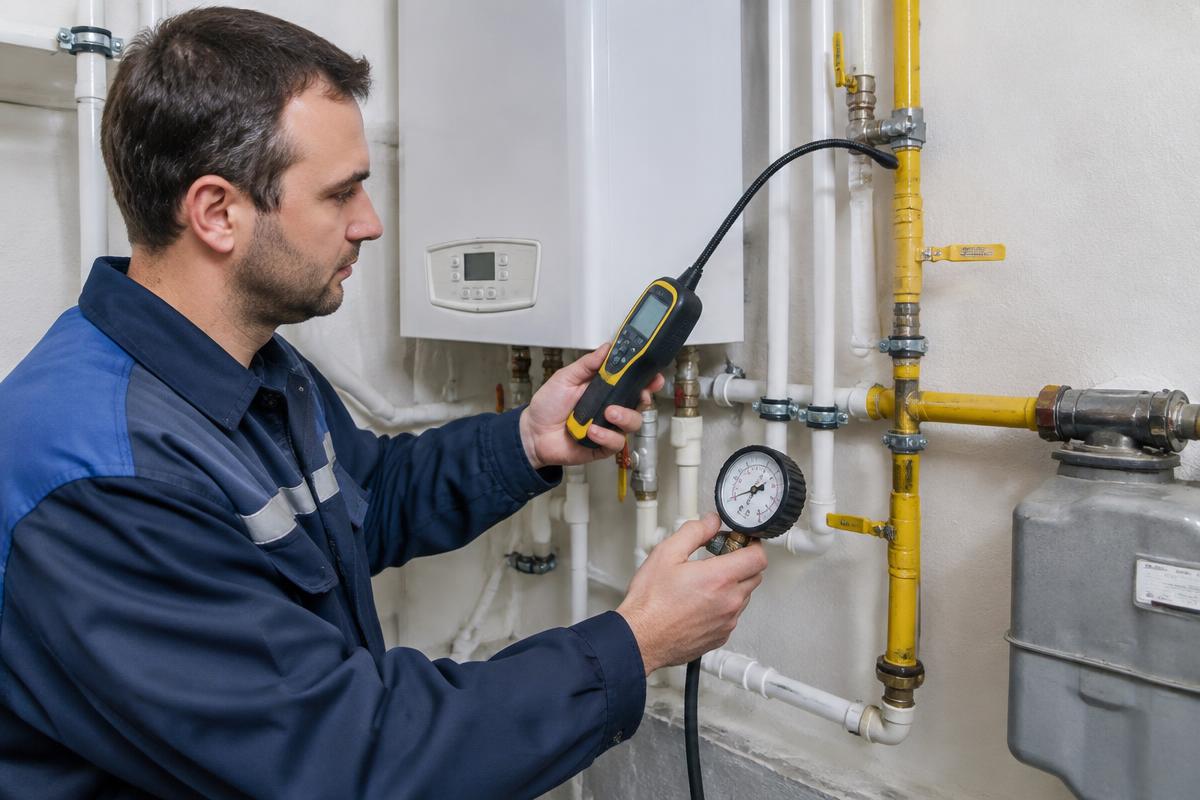
The alarm should be treated as real until proven otherwise. The facility's emergency procedure should be followed, and inspection should be performed by authorized personnel using appropriate instruments.
Gas detection is a complementary measure. It does not replace proper construction, leak tightness, ventilation, and network maintenance.