Introduction to Industrial Reverse Osmosis
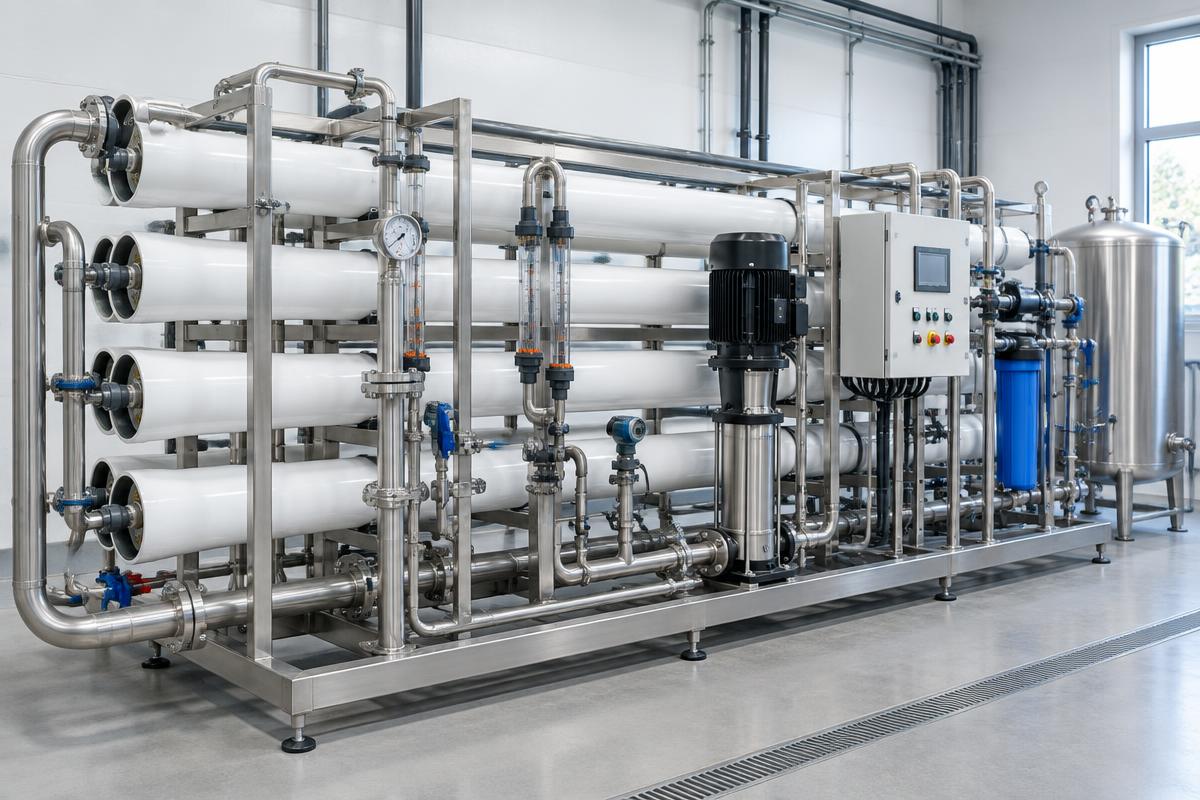
Industrial reverse osmosis (RO) is currently at the forefront of water treatment technology. It is not just a filter, but a sophisticated thermodynamic separation process where water is forced under high pressure through a semi-permeable membrane. In the Greek market, its application is critical, given that many regions face issues with high conductivity, hardness, or water brackishness.
For a technician or production manager, understanding the RO system is not limited to installation but extends to proper design and proactive maintenance, which are factors that determine operational costs (OPEX) and the longevity of the equipment.
Main Applications in Industry and Manufacturing
Reverse osmosis systems are used in a wide range of activities where water quality directly affects the final product or the protection of machinery:
- Boiler Feedwater: Removing salts (TDS) prevents scaling and corrosion, reducing blowdown and saving fuel.
- Food and Beverage Industry: Used for standardizing taste and ensuring microbiological purity in process water.
- Pharmaceutical Industry: As a pre-treatment stage for the production of Purified Water.
- Hotel Units: Desalination of brackish or seawater to meet needs in water-scarce regions.
- Dyeing and Laundries: Avoiding spots on fabrics and reducing detergent consumption.
System Design: Parameters and Critical Factors
Proper design of an industrial RO system starts with the analysis of the feed water. No system should be purchased "off the shelf" without a proper study.
Water Analysis and SDI Index
Before design, we must know the conductivity, hardness, iron, manganese, and silica levels. The SDI (Silt Density Index) is the most important indicator for estimating the tendency of membranes to clog from suspended particles and colloids. Ideally, the feed SDI should be less than 3.
Membrane Selection and Operating Pressure
The choice between Low Energy or High Rejection membranes depends on the desired result. The operating pressure usually ranges from 10 to 15 bar for brackish water and can exceed 55-60 bar in seawater desalination systems.
The Importance of Pre-treatment
90% of failures in reverse osmosis systems are due to inadequate pre-treatment. The membrane is the most expensive consumable and must be protected.
- Water Softening: Removing calcium and magnesium prevents scaling on the membrane surface.
- Activated Carbon Filtration: Essential for removing free chlorine, which oxidizes and irreversibly destroys polyamide membranes.
- Microfiltration (Cartridge Filters): 5μm or 1μm filters for retaining micro-particles before the high-pressure pump.
- Antiscalant Dosing: Chemical additives that prevent salt crystallization, allowing the system to operate at higher recovery rates.
Membrane Maintenance and Chemical Cleaning (CIP)
Maintenance is not just about changing pre-filters. Systematic monitoring of permeate flow and differential pressure is required.
When is cleaning required?
Chemical cleaning CIP (Clean-In-Place) should be performed when the following are observed:
- A 10-15% drop in production flow.
- A 10% increase in permeate conductivity.
- A 15% increase in differential pressure.
CIP Procedure
Special chemicals are used: alkaline to remove organic loads and biofilms, and acidic to remove inorganic deposits (scales). The temperature of the cleaning solution plays a key role, with ideal values between 30°C and 35°C, always within the limits specified by the membrane manufacturer.
Frequently Asked Questions (FAQ)
1. How often should I change the membranes?
With proper pre-treatment and regular CIP cleanings, industrial membranes can last from 3 to 5 years. Poor management can destroy them in a few months.
2. What is the Recovery Rate?
It is the percentage of input water that is converted into pure water. In industrial systems, it usually ranges between 60% and 75%. Higher rates increase the risk of membrane clogging.
3. Why did the conductivity in the permeate increase suddenly?
Possible causes include wear of O-rings in the membrane couplings, chemical oxidation of the membrane by chlorine, or natural aging of the material.
4. Is remote monitoring (Monitoring) necessary?
Yes, modern RO systems incorporate PLCs that allow real-time monitoring, preventing catastrophic damage to the pump or membranes.
Conclusion
Industrial reverse osmosis is a reliable and efficient solution for producing high-quality water, provided it is treated as a complete system and not as an individual device. Investing in a proper pre-treatment unit and following the maintenance schedule ensures the viability of the installation and the reduction of long-term operating costs.