Introduction to Steam Systems and the Importance of Condensate
Steam is one of the most effective thermal energy transport media, used extensively in industrial facilities, large building complexes, and central sterilization systems in Greece. However, the efficiency of a steam network is judged not only by its boiler production but primarily by the management of "condensate." Condensate is the water that forms when steam releases its latent heat and liquefies.
For a heating technician, the proper removal of this water is critical. If condensate remains in the piping, it causes a drop in thermal efficiency, corrosion, and the dangerous phenomenon of water hammer, which can destroy valves and components.
Steam Traps: The Guardian of the Network
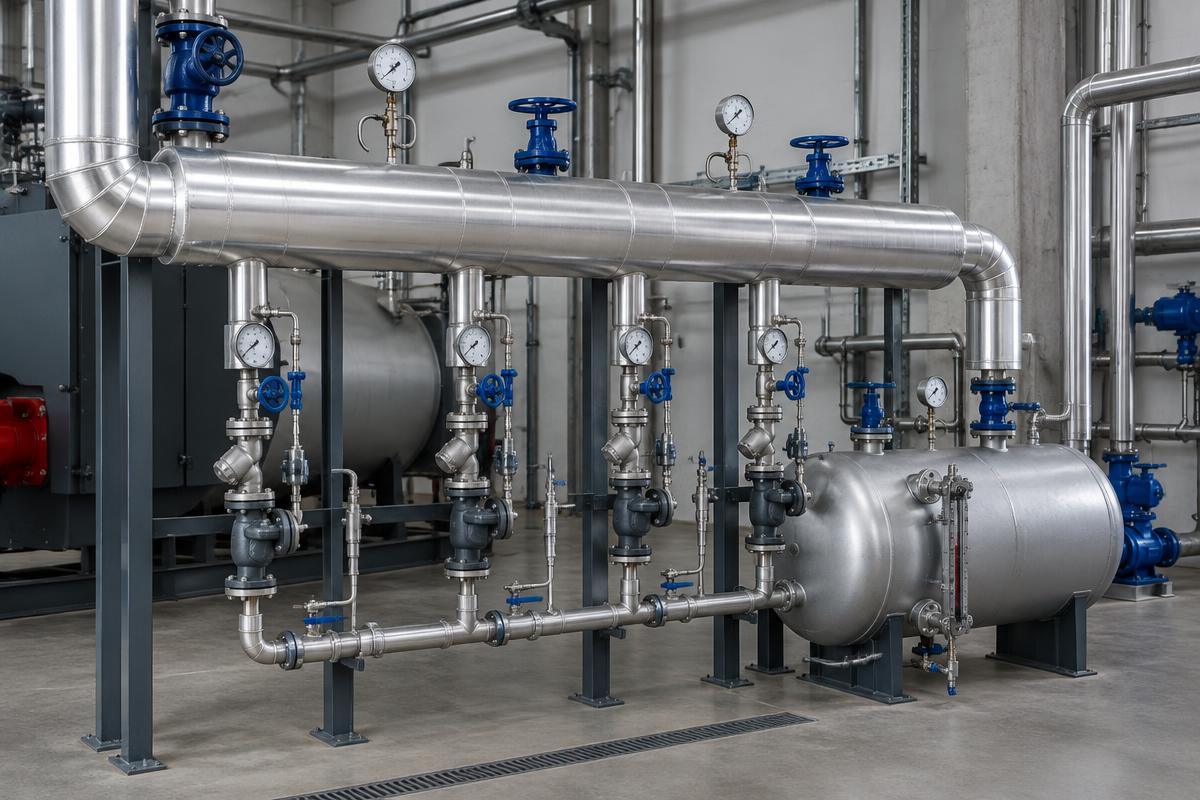
A steam trap is an automatic valve with a very specific mission: to allow the passage of condensate and non-condensable gases (such as air) while preventing the escape of live steam.
Types of Steam Traps and Their Use
- Mechanical (Float): Operate based on the density difference between steam and water. They are ideal for heat exchangers where continuous drainage is required.
- Thermodynamic: Based on steam velocity. They are extremely durable, compact in size, and preferred in outdoor installations in Greece due to their resistance to freezing.
- Thermostatic: Operate based on temperature difference. They are often used for venting the network during startup.
A faulty steam trap that is "stuck open" can cost thousands of euros in lost energy annually, as steam escapes directly into the drain or the condensate tank without performing any work.
Drainage and Return Network Design
Correct pipe slope is the number one rule for every installer. Steam lines must have a slope of at least 1% in the direction of flow, with drain pockets every 30 to 50 meters.
In condensate drainage, the network pressure must be taken into account. If the condensate needs to be lifted to a higher level, sufficient differential pressure is required at the steam trap, or mechanical condensate pumps that operate with steam or compressed air should be used, avoiding electric pumps in high-temperature environments that cause cavitation.
Energy Recovery: Economy in Practice
Condensate is not waste; it is high-temperature distilled water (often 80-95°C). Recovering it offers a triple benefit:
- Fuel Savings: Every 6°C increase in boiler feed water temperature reduces fuel consumption by approximately 1%.
- Chemical Reduction: Condensate is already treated water. By returning it, we reduce the need for softening and chemical additives in the boiler.
- Blowdown Reduction: Less minerals in the water mean fewer losses due to boiler purges.
An advanced recovery technique is the use of Flash Steam. When high-pressure condensate is released into a lower-pressure environment, a portion turns back into steam, which can be used for water preheating or in low-pressure networks.
Maintenance and Troubleshooting
Steam trap inspection should be performed at least twice a year. Experienced technicians use three methods:
- Visual inspection: Via special flow sight glasses.
- Thermography: Measuring the temperature before and after the trap with an infrared pyrometer.
- Acoustic inspection: Using ultrasonic detectors to identify the characteristic sound of steam leakage.
Frequently Asked Questions (FAQ)
1. Why do steam pipes "bang" during startup?
This is due to the accumulation of cold condensate that is swept away by steam at high speed. The solution is a slow startup and the proper installation of startup steam traps.
2. How often should I replace a steam trap?
With proper water quality and strainer cleaning, a high-quality steam trap can last 5-10 years. However, failure can occur at any time due to sediment buildup.
3. Can I discharge condensate directly into the building's drain?
Not directly. The water temperature can destroy plastic PVC pipes. An expansion and cooling tank must intervene first or, ideally, it should return to the boiler.
4. What is the "white smoke" coming out of the condensate tank?
It is usually flash steam. If it is excessive, it may indicate that one or more steam traps have failed and are "blowing" live steam into the return network.
Conclusion
Steam and condensate management is not just a matter of operation, but a question of economic viability and safety. Investing in proper steam traps and heat recovery systems often pays off in less than a year of operation. For the owner, it means lower fuel bills. For the technician, it means a system that operates quietly, efficiently, and without failures.