Introduction to Heating Network Components
The efficient operation of a central or autonomous heating system does not depend solely on the quality of the boiler or heat pump. Valves, switches, and auxiliary components constitute the "nervous system" of the installation. They are what regulate flow, ensure safety, and allow for maintenance without the need to drain the entire network. In this guide, we will analyze the critical components that every owner and technician should know, with an emphasis on choosing the appropriate material for each point.
1. Radiator Switches and Valves
Radiator switches are the user's point of contact with the system. The right choice here directly affects comfort and fuel consumption.
Manual vs. Thermostatic Valves
- Manual valves: The classic switches that open or close by turning clockwise. They are economical but do not offer room temperature precision.
- Thermostatic valves: Composed of the valve body and the thermostatic head. They allow for per-room temperature regulation (e.g., 20°C in the living room, 18°C in the bedroom), saving up to 20% in energy.
Single-Pipe and Two-Pipe System Valves
In Greece, installations are primarily divided into single-pipe (series connection) and two-pipe systems. For the single-pipe system, special valves with a "bypass" are required, which allow water to continue to the next radiator even if the current one is closed.
2. The Manifold (Collector) and its Components
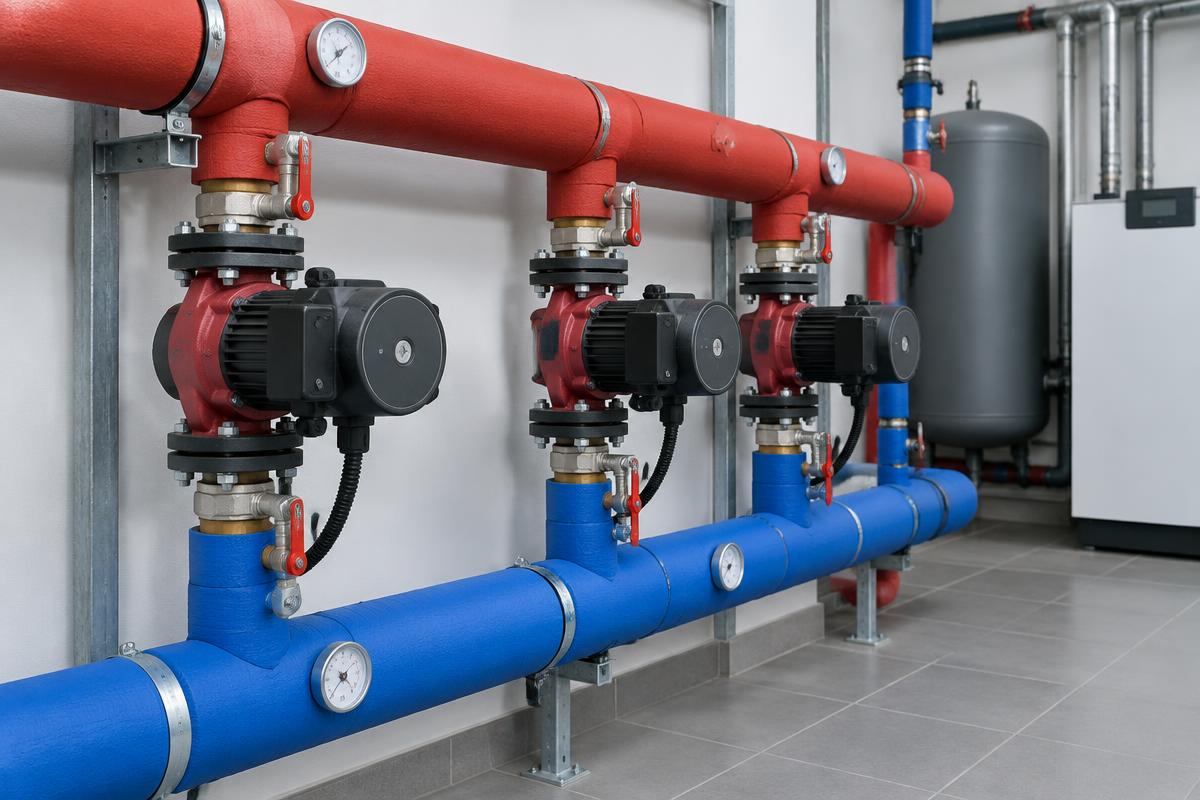
The manifold is the heart of distribution in a modern home. It is usually placed in a central location inside a metal cabinet.
- Manifold isolation valves: These are large-diameter ball valves (usually 1" or 1 1/4") that isolate the entire apartment from the main riser.
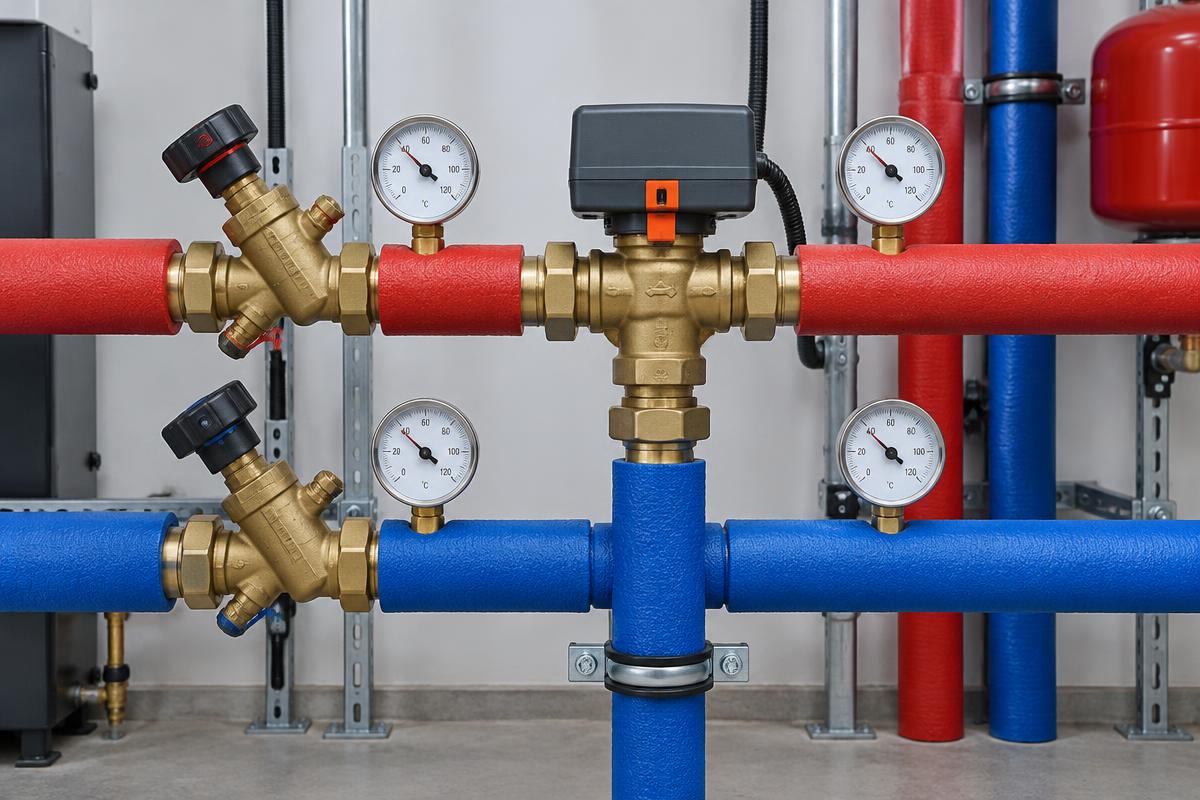
- Flow meters: Essential in underfloor heating for circuit balancing.
- Automatic air vents: Placed at the top of the manifold to remove trapped air that causes noise and reduces efficiency.
3. Safety and Regulation Components in the Boiler Room
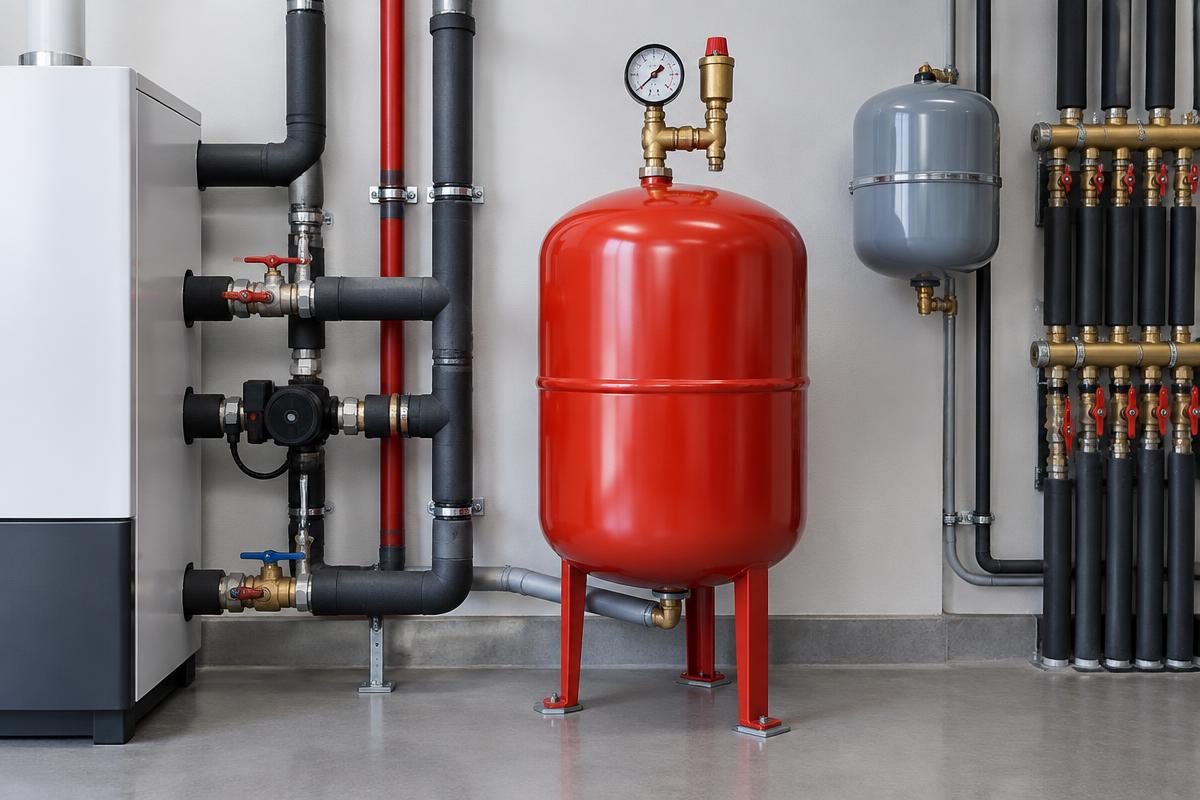
In the boiler room, valves and components have a more technical role, focusing on equipment protection.
Automatic Filling Valve
This is the valve that ensures the water pressure in the network remains constant (usually 1.5 bar for a typical residence). It includes a pressure gauge and a check valve to prevent heating water from returning to the water supply network.
Safety Valve
One of the most critical components. It is set to open (usually at 3 bar) if the pressure rises dangerously, protecting the boiler from explosion or cracks.
Ball Valves
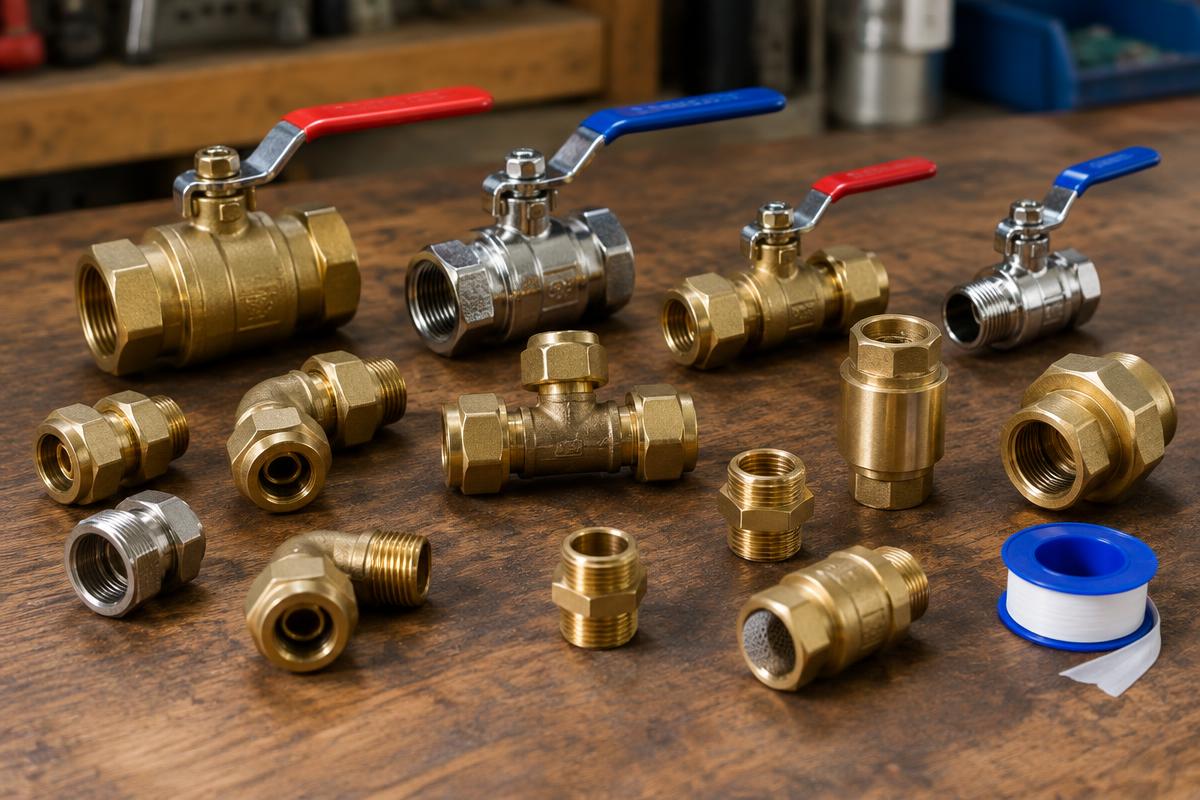
Used for isolating the circulator, the boiler, or the expansion vessel. Prefer valves with a reinforced body (heavy type) and a brass ball for resistance to scale and high temperatures.
4. Construction Materials and Quality
The choice of materials determines the service life of the installation. The following dominate the Greek market:
- Brass (Bronze): The standard material for valves and fittings. It must comply with the EN 12165 (CW617N) standard.
- Nickel: Valves are often nickel-plated for better aesthetics and protection against oxidation.
- Stainless steel: Mainly used in underfloor heating manifolds for top-tier corrosion resistance.
Important detail: Avoid cheap components of unknown origin, as a valve failure can cause flooding and severe damage to masonry or floors.
5. Common Mistakes in Selection and Installation
Many owners and untrained technicians make mistakes that cost in performance:
- Wrong diameter: Using a valve smaller than the piping causes pressure drops and flow noise.
- Omission of a check valve: Can lead to incorrect water circulation (bypass phenomenon) between different heating zones.
- Not using unions: Every valve should be connected with a union, so it can be easily replaced without cutting pipes.
Frequently Asked Questions (FAQ)
How often should heating valves be checked?
The check should be performed annually during burner maintenance. Special attention should be paid to signs of leakage (green or white scale) at the joints.
Why does the radiator valve "stick" in the summer?
This is due to scale buildup. A good practice is to open and close the valves 1-2 times during the summer to keep them functional.
Can I put a thermostatic head on any radiator?
Yes, provided the existing valve is replaced with a compatible thermostatic valve. Attention: Do not install thermostatic heads in the room where the home's central thermostat is located.
What is the difference between a butterfly valve and a lever valve?
The difference is only in the shape of the handle. The butterfly is used in tight spaces (e.g., manifolds), while the lever offers greater ease of handling due to leverage.
Conclusion
Heating valves and components may seem secondary, but they are the guarantors of proper operation and economy. Investing in branded, high-quality components and proper technical study for their selection ensures that the heating system will remain reliable for decades. Before any purchase, consult a licensed plumber or mechanical engineer to confirm the correct diameters and types of components required for your specific installation.