
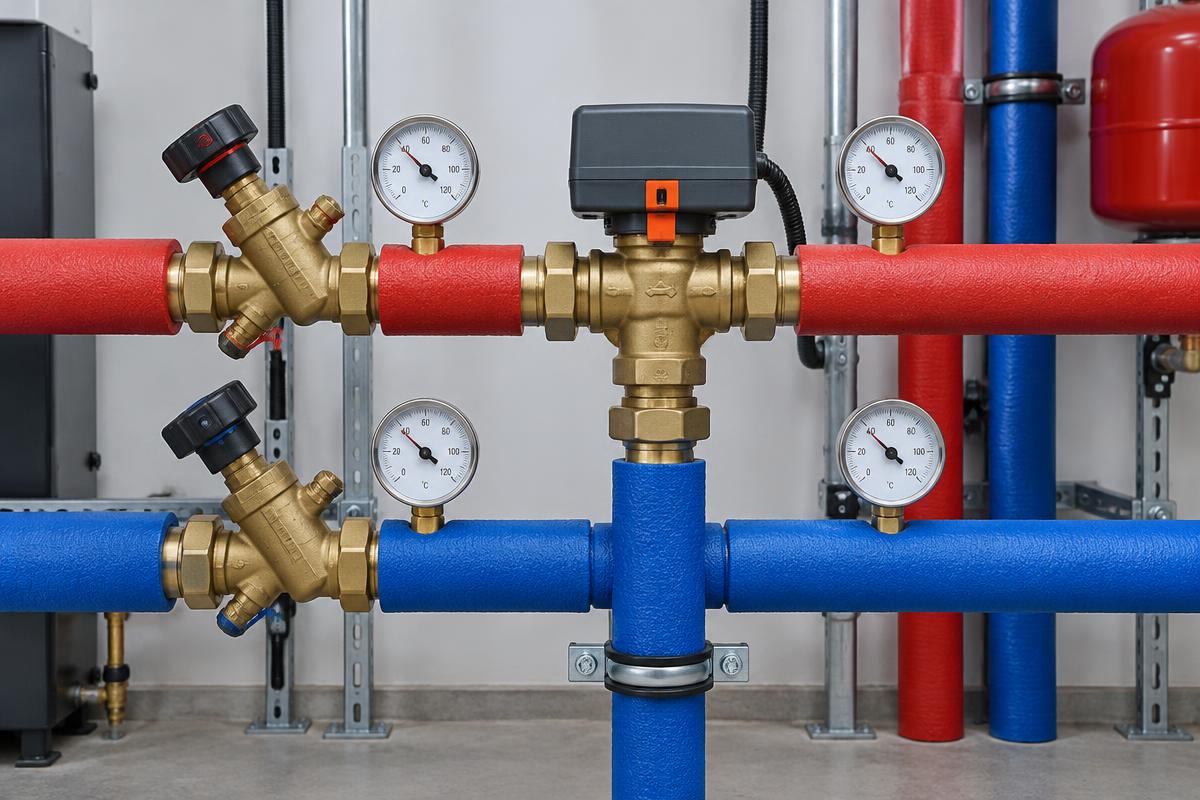
What is hydraulic balancing and why does it concern us?
Hydraulic balancing is the process of regulating the hot water flow in a central or autonomous heating system so that every radiator (or underfloor circuit) receives exactly the amount of heat it needs. In Greece, the majority of installations – especially in older apartment buildings – operate without any regulation, resulting in uneven temperature distribution and unnecessary fuel waste.
Water, following the law of least resistance, tends to circulate more in radiators located close to the boiler or the pump, while remote radiators (usually on the top floors or at the ends of branches) remain lukewarm or cold.
The symptoms of an unbalanced network
How can you tell that your system needs intervention? The signs are usually clear:
- Uneven heating: Some rooms are too hot, while others never reach the desired temperature.
- Flow noise: A constant "whistling" sound is heard in the radiator valves located near the pump, due to excessive supply and pressure.
- High consumption: The burner operates for longer periods trying to heat the cold rooms, while the hot rooms "throw away" energy.
- High return temperature: Water returns to the boiler very hot, which reduces efficiency in modern natural gas or oil condensing boilers.
How the balancing process is carried out
Proper hydraulic balancing is not a simple task "by eye," but requires technical knowledge and, ideally, specialized tools. The steps followed by an experienced technician are:
1. Calculation of heat loss
Before touching the valves, we need to know how many Watts each space requires. This depends on the square footage, insulation, and openings (windows) of each room.
2. Selection and setting of valves
Balancing is achieved primarily through the radiator valves. There are two ways:
- Via the lockshield valves: At the bottom of the radiator, there is a small valve that is adjusted with an Allen key. We tighten the lockshields on nearby radiators and open them fully on the remote ones.
- Via pre-settable thermostatic heads: Modern valves allow for the adjustment of flow (Kv value) directly at the radiator inlet.
3. Use of Inverter pumps
A modern variable-speed pump is essential. It can adjust pressure according to how many radiators are open, preventing noise and electricity waste.
The benefits for the owner and the environment
Investing in professional hydraulic balancing pays off very quickly, often within one or two heating seasons. The main advantages include:
- Fuel economy: Reduction of consumption from 5% to 15%, as the boiler operates more rationally.
- Thermal comfort: Constant temperature throughout the house, without "cold zones."
- Longer equipment life: The pump and boiler are subjected to less strain.
- Noise reduction: Elimination of annoying sounds in pipes and radiators.
Frequently Asked Questions (FAQ)
Can I do the balancing myself?
Although you can try to slightly close the valves on very hot radiators, accurate regulation requires flow calculations. Without the proper instruments, you may cause more imbalance in the network.
How much does hydraulic balancing cost?
The cost depends on the size of the installation and whether old valves need to be replaced with new pre-settable ones. For a typical apartment, the task of adjusting existing valves is economical, while installing thermostatic heads has a higher initial cost but greater performance.
Is it necessary if I have an individual natural gas boiler?
Yes, it is equally necessary. In fact, for condensing boilers, it is critical, because if the water returns very hot (due to a lack of balancing), the boiler does not condense and you lose the main advantage of its technology.
Is it always a balancing issue if a radiator is cold?
Not always. Before concluding that flow distribution is the issue, we must ensure there is no air in the radiator (bleeding) and that the radiator valve is working normally and is not stuck.
Conclusion
Hydraulic balancing is not a luxury, but a technical necessity for every modern home. If you are facing problems with radiators that do not heat up or you hear noises from the pipes, consult a qualified plumber or mechanical engineer. Proper regulation will provide you with the level of comfort you pay for, while simultaneously reducing utility costs or your fuel bill.