
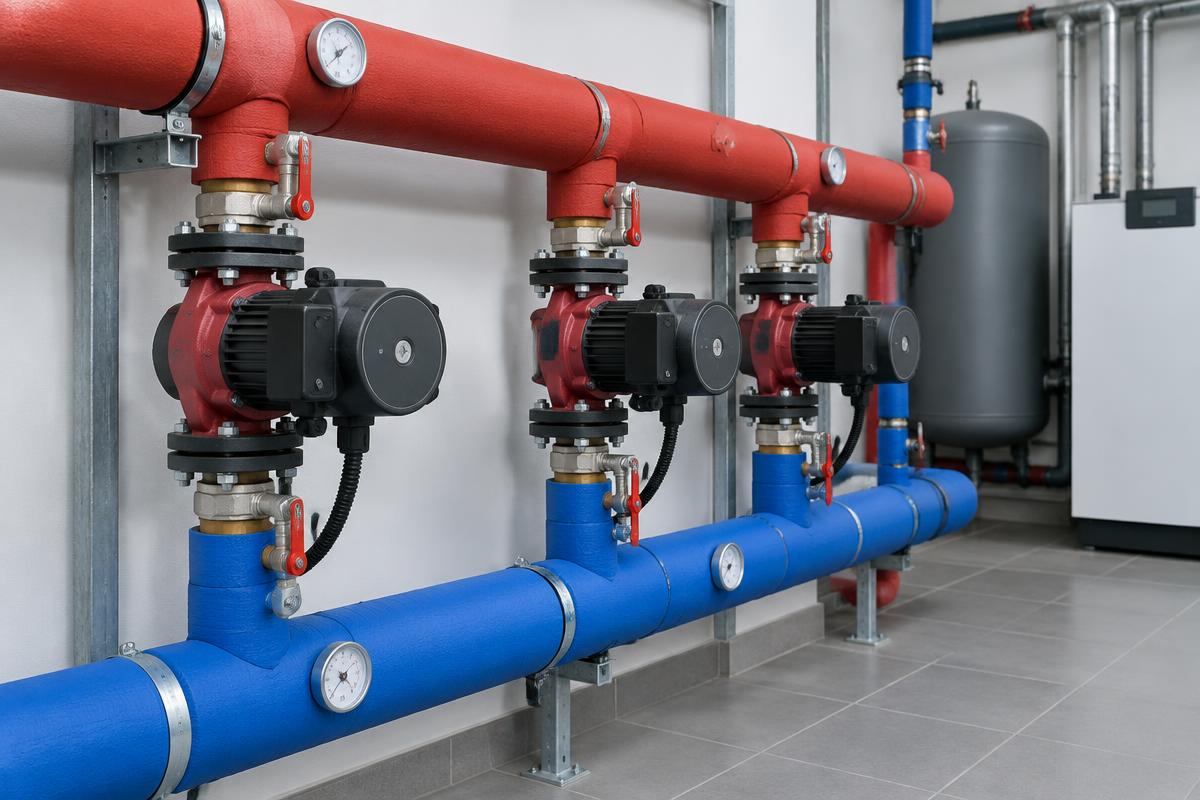
The importance of the circulator in a central heating system
The circulator is the "heart" of the heating installation. Its job is to move hot water from the boiler to the radiators (panels, cast iron, or underfloor) and return it for reheating. A wrong choice can lead to noisy piping, radiators that do not heat up evenly, or unjustifiably high electricity bills.
In modern installations in Greece, legislation (ErP Directive) now mandates the use of high energy-efficiency circulators. Old three-speed constant-speed circulators are a thing of the past, as their consumption can be up to 80% higher than a modern electronic circulator.
Technical selection criteria: Head and Flow rate
Before purchasing any model, you must understand the two basic dimensions that define a circulator's capacity:
- Flow rate (Q): Measured in cubic meters per hour (m³/h), it expresses the volume of water that must be moved to meet the thermal needs of the space.
- Head (H): Measured in meters water column (m.w.c.), it expresses the pressure the circulator must exert to overcome the friction (resistance) of the pipes and components.
Practical calculation rule
For an average two-story detached house of 120-150 sq.m. in Greece, a circulator with a 6-meter head (e.g., 25-60 type) is usually sufficient. For smaller apartments, a 4-meter one (25-40) covers the needs, while for large installations or networks with many branches, an 8-meter one may be required.
Electronic vs. Conventional Circulators
Modern electronic circulators (Inverters) have an integrated pressure sensor and adjust their speed according to demand. Why is this important?
- Constant Pressure (Δp-c): Ideal for underfloor heating.
- Variable Pressure (Δp-v): Ideal for classic radiators with thermostatic heads. When the heads close, the circulator "cuts" speed, reducing noise and consumption.
- AutoAdapt function: Many models from leading companies like Grundfos or Wilo "learn" the network and self-regulate.
What to watch out for during purchase and installation
It is not enough to choose a brand-name model. You must pay attention to certain technical details that often escape private buyers:
Union Dimension and Body Length
Most domestic circulators have a body length of 180mm or 130mm. If you are replacing an old one, measure the distance between the two unions. Also, the connection diameter (usually 1" or 1 1/2") must match the existing valves.
Construction Quality
Prefer models with a cast-iron body (for heating) and ensure they have easy access to the shaft unlocking plug. In Greece, due to water quality in some areas, scale can block the impeller during the summer.
Frequently Asked Questions (FAQ)
1. Why is my circulator making noise?
The noise is usually due to trapped air (needs bleeding), too high a flow velocity for your pipes, or cavitation due to low pressure in the network (the manometer should show at least 1.5 bar when the system is cold).
2. How much electricity does a modern circulator consume?
An old circulator can consume 60-100W continuously. A new Inverter in normal operation consumes from 5W to 25W, paying back its purchase cost in about 2-3 seasons.
3. Do I need an Inverter circulator if I don't have thermostatic heads?
Yes, because even without heads, the permanent magnet motor technology they use is much more efficient and reliable over time, while offering protection against overheating and blocking.
4. What does the EEI index mean?
It is the Energy Efficiency Index. The smaller it is, the less electricity the device consumes. Top models have an EEI ≤ 0.20.
Conclusion
Choosing the right circulator is not a matter of luck but of technical study. For a typical Greek home, investing in a 6-meter electronic circulator (e.g., 25-60 180) is the golden ratio between performance, quiet operation, and economy. Always consult a licensed plumber or mechanical engineer for the final selection and setting of the operating curve to ensure the maximum lifespan of your equipment.