
Introduction to Natural Gas Connection
Switching to natural gas has become one of the most popular choices for Greek property owners in recent years. The promise of savings on heating, the comfort of instant hot water, and the elimination of dependence on oil deliveries are strong incentives. However, the connection process involves specific technical and bureaucratic steps that require attention. In this guide, we will analyze the stages from the application to the final activation, the actual cost, and the necessary documents.
1. Availability Check and Initial Application
The first step is to ensure that there is a natural gas network on your street. In Greece, the responsible entities (EDA Attica, EDA THESS, DEDA - now under the Enaon umbrella) provide online coverage maps.
- Connection Application: Submitted to the Distribution Network Operator. This is where you request the installation of the meter.
- Site Inspection: A technician from the operator visits the site to determine the meter installation point (usually on an external wall or the front yard).
- Connection Agreement: After approval, you sign the agreement and pay the connection fees (which are often 100% subsidized through promotional offers).
2. Internal Installation and Equipment
Once the meter is installed, the responsibility shifts to the property owner. You will need a licensed gas technician for the internal installation.
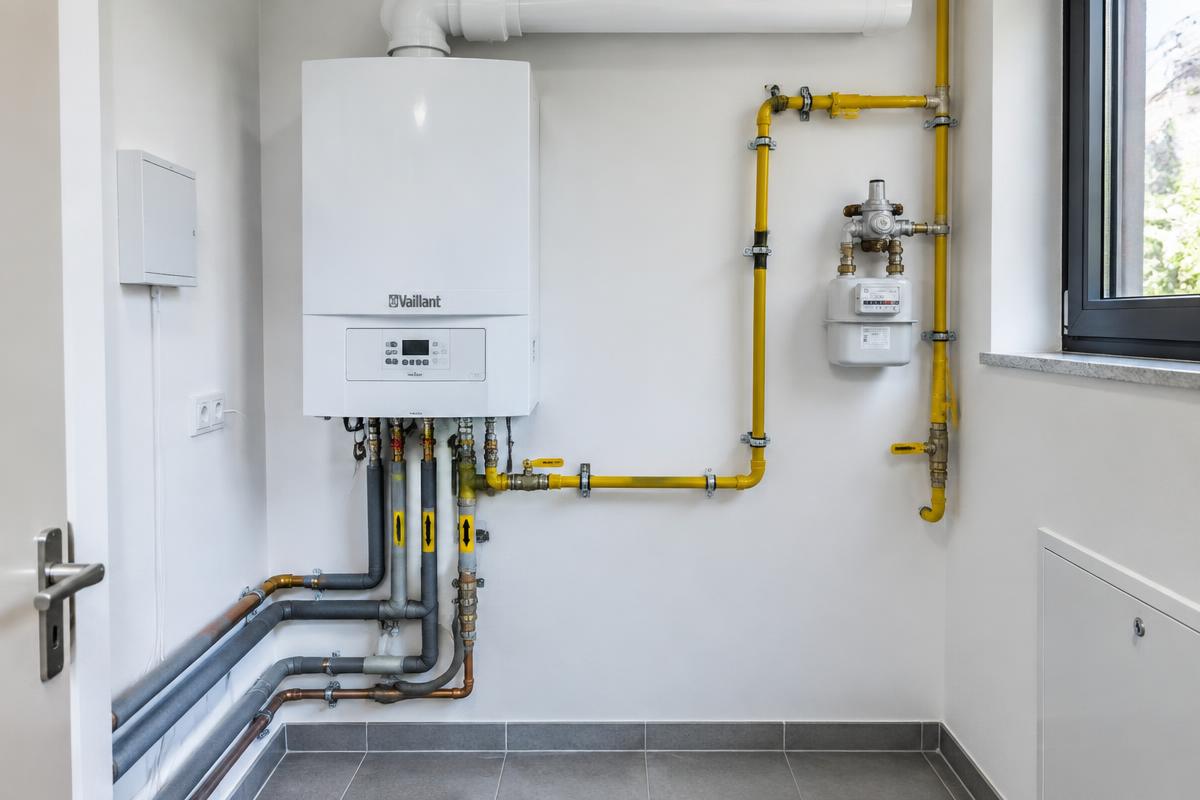
Condensing Boiler
Today, only condensing boilers are installed, which utilize the heat of the exhaust gases, offering efficiency of up to 108%. The power of the boiler (usually 24kW for an average 80-100sqm apartment) ensures sufficiency for heating and abundant hot water.
Piping and Safety
The connection from the meter to the boiler is usually done with copper pipes (with mechanical compression or hard soldering) or steel pipes. The design must provide for proper room ventilation and the installation of a gas detector if the boiler is located in an enclosed space, although modern boilers are "sealed chamber" units.
3. Required Documentation
Bureaucracy is the part that often confuses owners. To proceed with the connection, you need:
- Copy of property title deed or E9 form.
- Co-owner Consent: According to Law 4495/2017, for an independent connection in an apartment building, the approval of the majority (50%+1) is no longer required; informing the others is sufficient, provided that energy upgrade requirements are met.
- Technical Study: Prepared by a Mechanical Engineer and submitted to the Network Operator.
- Re-inspection Certificate: After the work is completed, the technician issues the Responsible Declaration of Good Execution (Inspection Sheet).
4. Installation Cost Analysis
The cost varies depending on the distance between the meter and the boiler and the needs of the home. Indicatively for 2024 in Greece:
- Wall-mounted Boiler: 900€ - 1,600€ (depending on brand and warranty).
- Labor & Materials (Piping): 800€ - 1,500€.
- Engineer's Study: 150€ - 300€.
- Connection Fees: 0€ (usually during promotions) to 500€.
In total, a complete installation for an apartment ranges between 2,000€ and 3,500€. Note that programs such as "Exoikonomo" can cover a significant portion of this amount.
5. Activation Process
After the work is finished, the final inspection follows. The Network Operator comes to check the tightness of the pipes. If everything is in order, the seal is applied and the supply is turned on. Then, your technician proceeds to ignite the boiler and calibrate the burner, issuing the final combustion analysis sheet.
Frequently Asked Questions (FAQ)
1. Do I need to change my radiators?
In most cases, no. Existing radiators (panels or sectional) work perfectly with natural gas. A thorough cleaning (chemical network cleaning) is only required for better efficiency.
2. How long does the whole process take?
From the application to activation, the time ranges from 1 to 3 months, depending on the workload of the Network Operator in your area.
3. Is natural gas safe inside the home?
Yes, it is perfectly safe provided that the installation is done by a licensed technician and ventilation standards are followed. Natural gas is lighter than air, and in the event of a leak, it dissipates upwards; it also contains a special odorant to make it detectable.
4. What maintenance does the boiler need?
The law and manufacturers require annual maintenance by a qualified technician to clean the combustion chamber and check safety devices.
Conclusion
Connecting to natural gas is an investment that upgrades the property's value and offers immediate payback through reduced heating bills. The key to a successful installation is selecting experienced professionals and properly adhering to technical specifications. With the right planning, you can permanently get rid of the stress of oil and enjoy a cleaner, more efficient form of energy.