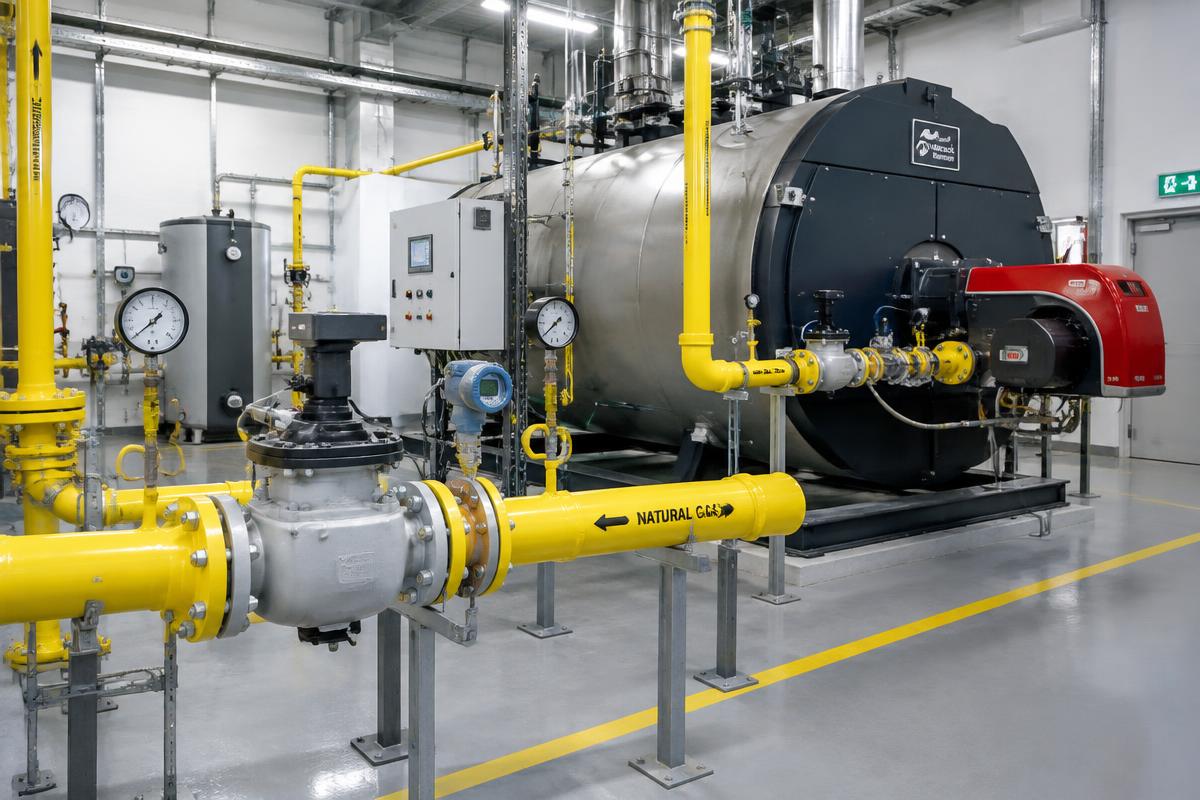
In a large industrial facility, instantaneous readings from a pressure gauge are often not enough. Logging pressure, flow, valve positions, and alarms in a SCADA or historian can reveal problems that appear only for a few seconds or under specific load conditions.
Variables worth logging
Useful data points include station inlet pressure, outlet pressure, pressure before the burner, flow rate, positions of key valves, burner load, and pressostat states.
Correlation of pressure and load
When a low-pressure trip occurs, the trend can show whether the drop preceded the increase in load, coincided with the startup of a second burner, or resulted from regulator instability.
Short-term events
A pressure gauge may appear normal when the technician arrives on-site. However, the history may have captured a pressure spike or dip lasting only a few seconds that explains the trip.
Alarm sequence
The sequence in which alarms occur is particularly important. The first alarm is usually closest to the root cause, while subsequent ones may be consequences of the shutdown.
Measurement limits and quality
Trends are reliable only when sensors are properly calibrated, have an appropriate range, and are logged at a sufficient frequency. An incorrect sensor can lead to a wrong diagnosis.
Practical value
Systematic logging helps identify recurring patterns, compare operation before and after maintenance, and document whether the problem lies in the supply, the regulating station, or the burner itself.