An installation may show normal pressure when burners are off and experience a severe drop as soon as consumption increases. This is a characteristic dynamic pressure problem and requires systematic diagnosis.
Static and dynamic pressure
Static pressure is measured when there is no or very little flow. Dynamic pressure is measured while the burner is consuming gas. A network may appear correct statically but may not be able to deliver the required flow rate.
First check: pressure before and after the regulator
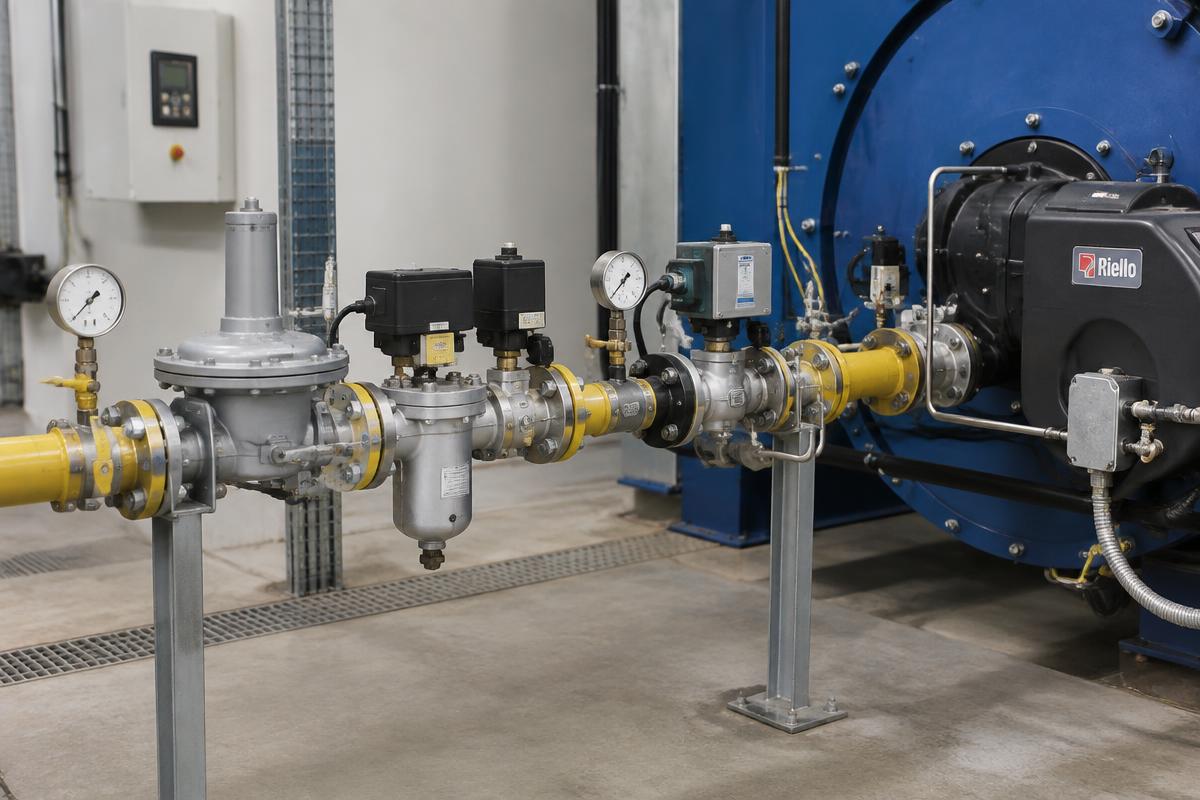
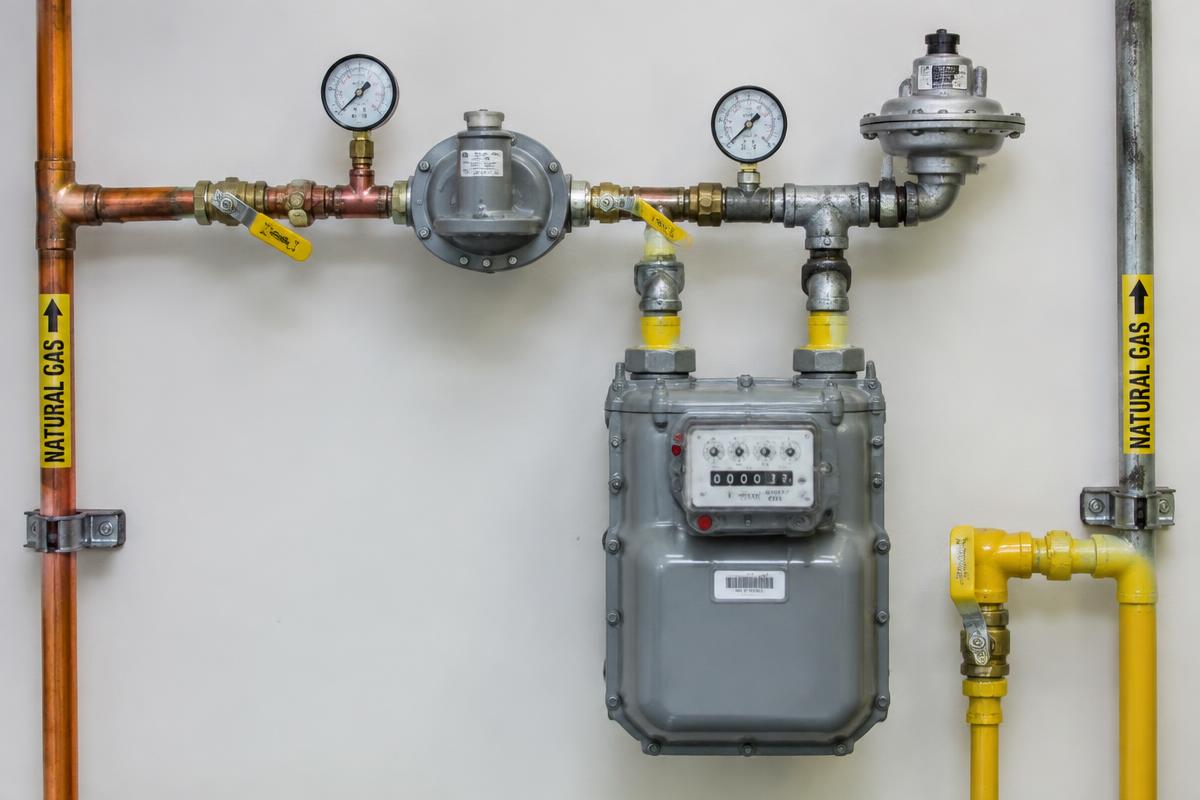
Measurements before and after the regulator indicate whether the problem stems from the supply or the regulation station itself. If the inlet pressure drops sharply, the upstream network is examined. If the inlet remains stable but the outlet drops, the regulator and its equipment are checked.
Filter and pressure loss
A clogged filter can cause a small pressure difference at low load but a large loss at high flow. Measuring differential pressure before and after the filter is much more useful than a simple visual inspection.
Pipe diameter and length
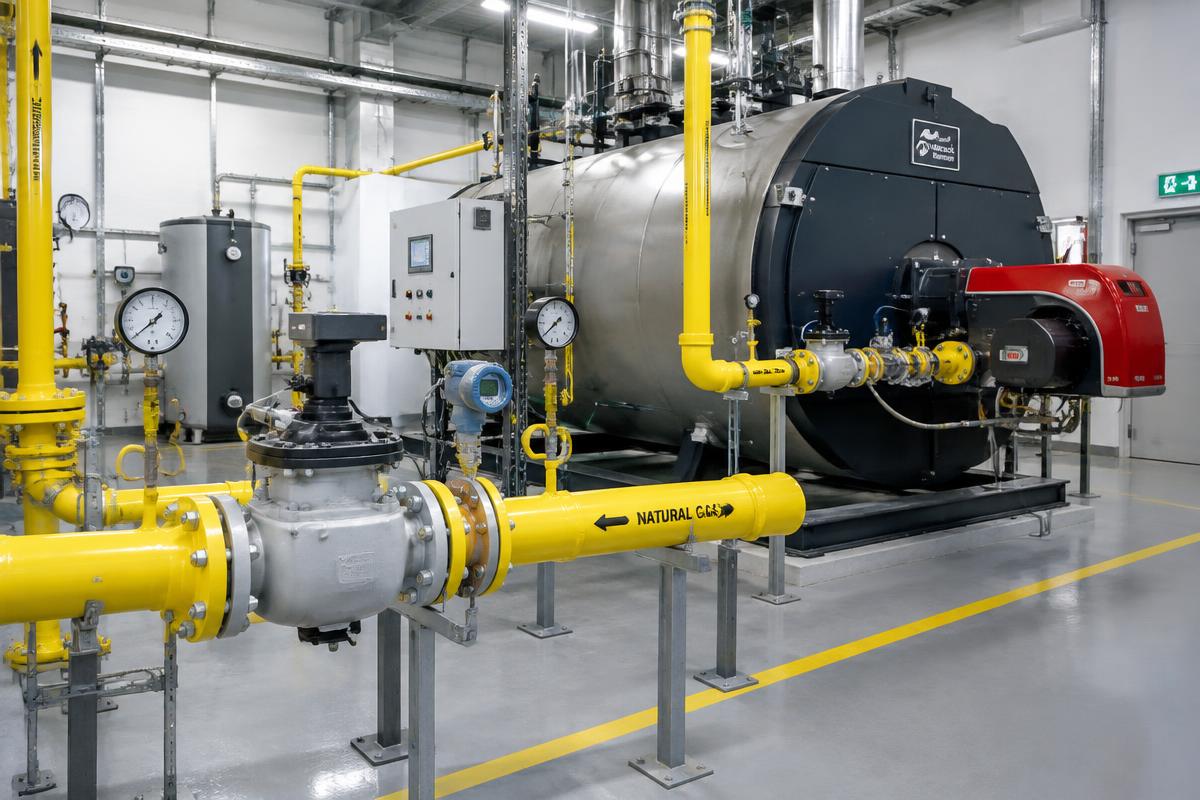
Under-sized piping, too many fittings, abrupt passages, or long distances can cause significant pressure drop. The problem appears mainly when many consumers operate simultaneously.
Valves not opening fully
A manual valve, solenoid valve, or control valve that does not open fully can create a restriction. Its position must be confirmed mechanically and electrically where an end switch is present.
Proper diagnosis
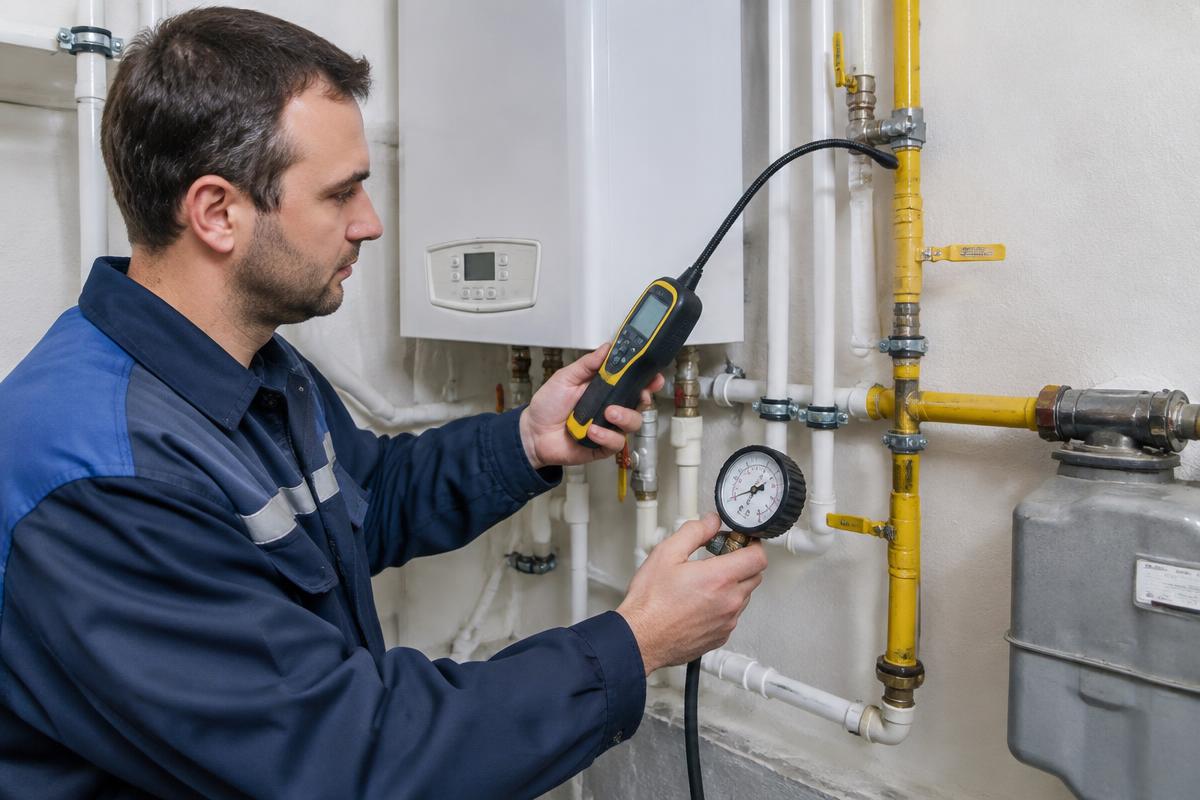
The best method is recording pressures at successive points in the network while the load increases. This identifies the point where the greatest drop occurs and avoids random component replacements.