The heart of modern heating: The refrigeration circuit
The heat pump is currently the most efficient solution for heating and cooling homes in Greece. Despite its widespread adoption, many owners and new technicians often wonder: how is it possible for a device to produce 4 kW of thermal energy while consuming only 1 kW of electricity? The answer lies in the refrigeration circuit and the physical properties of the refrigerants.
The refrigeration circuit does not produce heat through combustion, like an oil boiler, but transfers it from the environment to the inside of the house. This process is based on the phase changes of a special fluid, which can boil at very low temperatures, absorbing energy even when it is freezing outside.
The four main components of the circuit
Every heat pump, regardless of size or manufacturer, consists of four basic components that form a closed loop:
- Evaporator: Here, the refrigerant enters in liquid form at low pressure. As it comes into contact with the outside air (via the fan), it absorbs heat, warms up, and turns into a gas.
- Compressor: The gas is sucked in by the compressor, which sharply increases its pressure and temperature. It is the only component that consumes significant electrical energy.
- Condenser: The hot gas passes through a heat exchanger (usually a plate heat exchanger for radiator water). There, it releases its heat to the home's heating system and liquefies again.
- Expansion Valve: The liquid refrigerant, at high pressure, passes through this restriction. The pressure drops sharply, its temperature plummets, and the liquid is ready to re-enter the evaporator for a new cycle.
The importance of refrigerants
The refrigerant is the "blood" of the system. It must have specific characteristics, such as a low boiling point and high latent heat of vaporization. In recent years, EU legislation (F-Gas Regulation) has mandated the gradual phase-out of older agents due to their impact on the greenhouse effect.
R410A: The old acquaintance
Widely used in the previous decade. It is a mixture of two refrigerants, but it is now being replaced as it has a high GWP (Global Warming Potential).
R32: The current standard
R32 is the most prevalent agent in modern air-to-water heat pumps in Greece. It has a 67% lower GWP than R410A, is more efficient, and requires a smaller charge in the circuit.
R290 (Propane): The future
R290 is a natural refrigerant with almost zero environmental impact (GWP=3). It allows heat pumps to achieve high supply temperatures (up to 75°C), making them ideal for replacing boilers in homes with old radiators.
How the refrigeration circuit affects performance (COP)
The Coefficient of Performance (COP) shows how effectively the circuit works. The smaller the temperature difference between the source (outside air) and the heating system (water in the radiators), the less work the compressor needs to do.
- Underfloor heating: Requires 35°C water. The compressor operates at low pressures, achieving a COP > 4.5.
- Classic radiators: Require 55-65°C water. The compressor works harder, reducing the COP to around 2.5 - 3.0.
Technical maintenance and troubleshooting
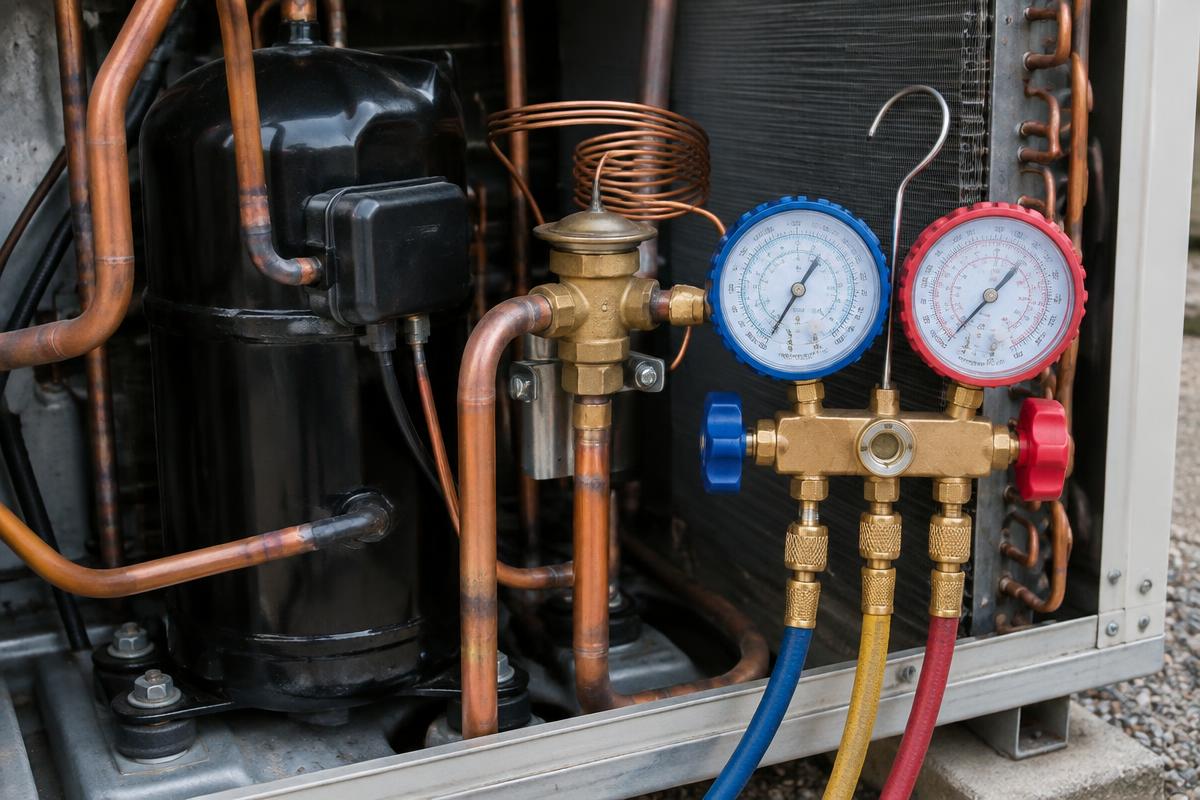
For a technician, understanding the pressures and temperatures in the circuit is the key to proper operation. "Superheat" and "subcooling" are the two parameters that confirm if the amount of refrigerant is correct.
Common problems affecting the circuit include:
- Lack of refrigerant: Usually due to a leak in fittings or welds. Symptoms: low suction pressure and reduced performance.
- Dirty heat exchanger (outdoor unit): Dust and leaves block heat exchange, forcing the compressor to work overtime.
- Moisture in the circuit: A very dangerous phenomenon that can destroy the compressor. A proper vacuum with a vacuum pump is always required during installation.
Frequently Asked Questions (FAQ)
1. Does the heat pump need a refrigerant top-up every year?
No. The refrigeration circuit is hermetically sealed. If a top-up is needed, it means there is a leak that must be identified and repaired before refilling.
2. What is the four-way valve?
It is the component that allows the heat pump to reverse the flow of the refrigerant. Thus, in the summer, the indoor unit becomes an "evaporator" and absorbs heat from the house, providing cooling.
3. Are new refrigerants like R290 dangerous?
R290 (propane) is flammable. However, heat pumps using it are designed with strict safety standards, are installed outdoors, and the amount they contain is too small to cause danger under normal conditions.
4. Why does the outdoor unit freeze in winter?
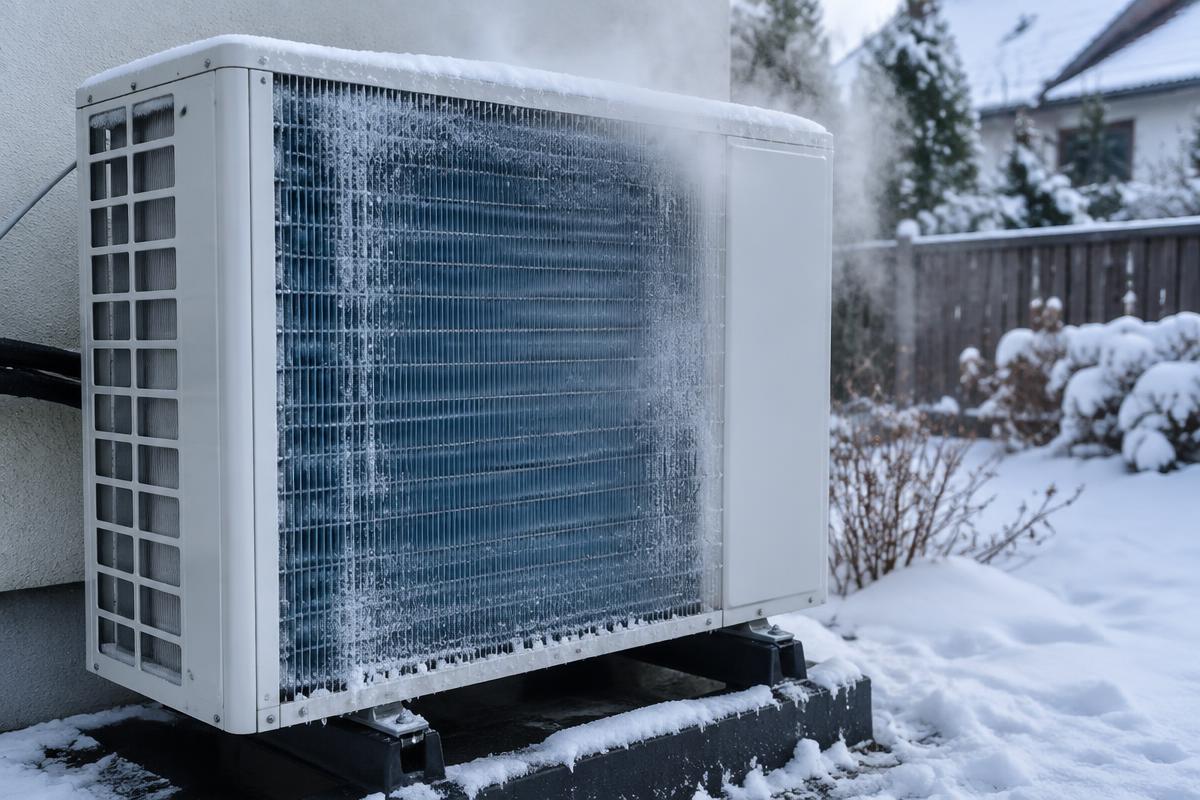
It is a normal phenomenon. When air moisture comes into contact with the very cold evaporator, it turns into ice. The pump then starts the defrosting process, reversing the circuit for a few minutes to melt the ice.
Conclusion
The refrigeration circuit is a remarkable application of thermodynamics that allows for energy savings and emission reduction. Choosing a pump with a modern refrigerant (R32 or R290) and properly studying operating temperatures ensure that your investment will perform optimally for many years. Whether you are an owner or a technician, understanding these basic principles is the first step toward an efficient home.