What the refrigerant does in a heat pump
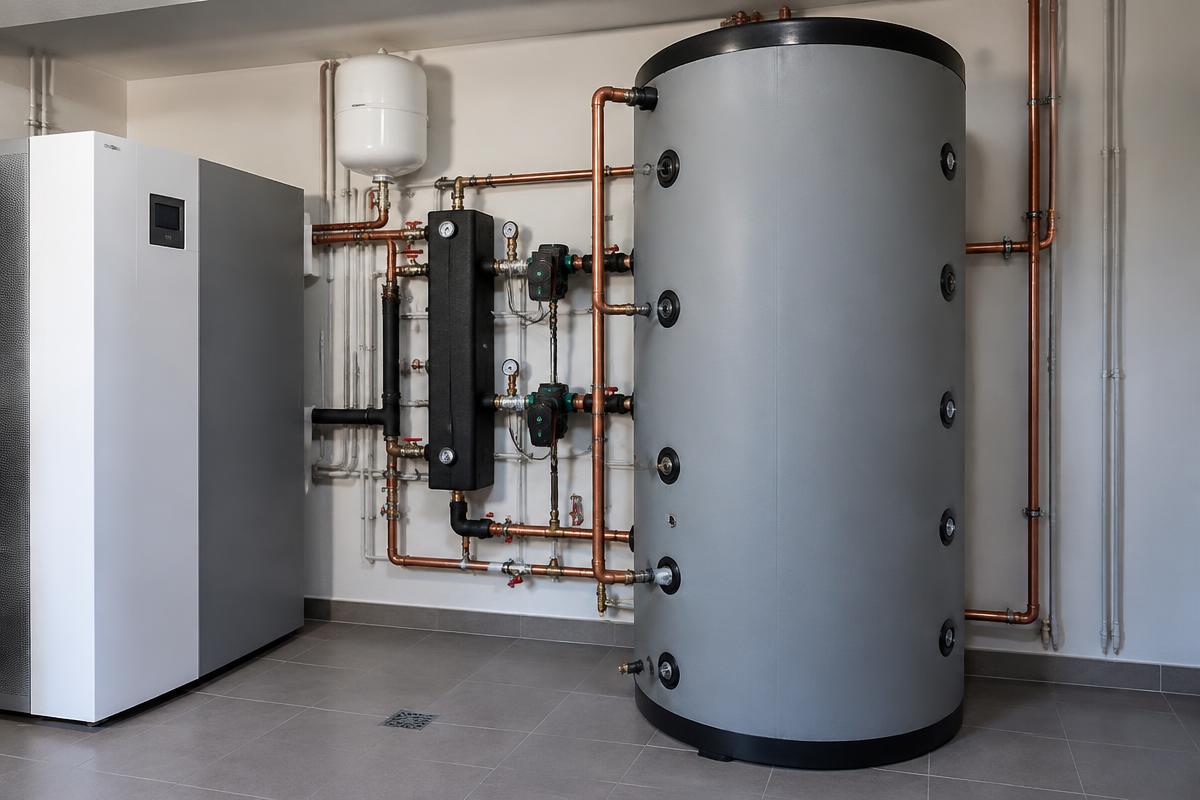
The refrigerant is the fluid that circulates within the closed refrigeration circuit of the heat pump and transfers energy. It is not the water passing through radiators or underfloor heating. In air-to-water heat pumps, the two fluids remain separated and exchange heat through an exchanger.
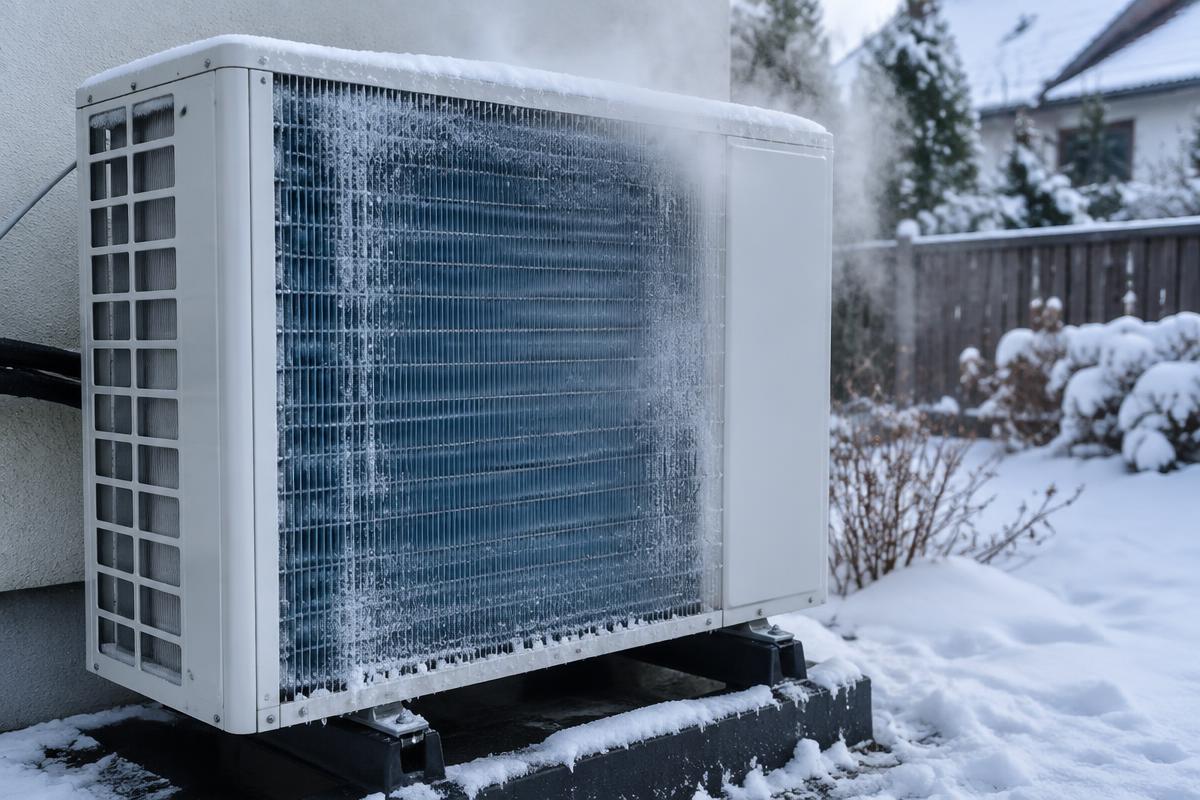
During heating, the refrigerant absorbs heat from the outside air, even when its temperature is low. The compressor increases its pressure and temperature, and the refrigerant then releases heat into the installation water. Expansion follows so that the cycle can repeat. In reversible systems, the operation is reversed to produce cooling.
The properties of the refrigerant affect operating pressures, compressor design, heat exchangers, and safety requirements. This is why every heat pump is manufactured and approved for a specific refrigerant and a specific charge quantity. The choice is not made independently of the machine's design.
What is R32 and how does it differ from R410A
R32 is difluoromethane, a single-component refrigerant of the hydrofluorocarbon family, known as HFCs. It is used in air conditioners and heat pumps specifically designed for it. It contains no chlorine and has an ozone depletion potential (ODP) of zero. However, it remains a greenhouse gas.
R410A is a mixture of R32 and R125 in a 50/50 ratio by mass. Therefore, R32 did not suddenly appear as a completely unknown material; it was already a component of a widely used refrigerant. Utilizing it as a single component requires equipment with corresponding technical specifications.
The fundamental environmental difference is reflected in the GWP (Global Warming Potential). Using widely accepted 100-year reference values, R32 has a GWP of 675, while R410A has a GWP of approximately 2,088. For an equal mass released into the atmosphere, R32 corresponds to an approximately 68% lower climate impact.
- R32: single-component, lower GWP than R410A, safety class A2L.
- R410A: two-component mixture, higher GWP, safety class A1.
- Common feature: neither destroys the ozone layer, but both require proper management to avoid emissions.
The GWP concerns the refrigerant itself, not the overall environmental performance of the heat pump. The latter accounts for electricity consumption, filling quantity, potential leaks, and recovery at the end of its life.
Why it became prevalent in many applications instead of older refrigerants
The transition to R32 is mainly linked to the need to limit fluorinated gas emissions. The European F-gas framework gradually reduces the availability of HFCs on the market in CO₂ equivalents and provides restrictions for new equipment based on their category. Regulation (EU) 2024/573 reinforces this direction.
At the same time, R32 possesses thermodynamic properties that allow for efficient and compact constructions. In properly designed models, a smaller mass of refrigerant may be required compared to similar R410A applications. However, this is not a fixed percentage nor does it apply automatically to every machine.
It is not technically correct to conclude that every R32 heat pump consumes less than every R410A heat pump. Actual efficiency depends on the compressor, heat exchangers, control system, outdoor temperature, and supply temperature. For a comparison, COP and SCOP data under identical reference conditions are required.
Also, R32 did not replace all old refrigerants in a single transition. R22 was phased out primarily due to its impact on the ozone layer, while the move away from R410A is mainly related to its high GWP. Today, other solutions are being developed, such as R290, as demands for a lower climate footprint increase.
R32 safety: what the A2L class means
The A2L class indicates lower toxicity in the relevant classification and low flammability with a low burning velocity. R32 should be treated neither as non-flammable nor as harmless. Its safe use is based on proper design, limiting potential leaks, and adhering to installation instructions.
Depending on the appliance type, refrigerant quantity, and installation location, there may be requirements for room area, ventilation, or additional protective measures. Requirements arise from the manufacturer's manual and applied standards, such as EN 378 and EN IEC 60335-2-40. There is no single universal rule for square footage for all R32 heat pumps.
In a typical monobloc outdoor unit, the refrigerant circuit is located inside the unit, and water pipes are connected to the building. In a split system, the connection between the outdoor and indoor unit includes refrigerant piping. The difference affects installation and risk assessment without ever eliminating safety requirements.
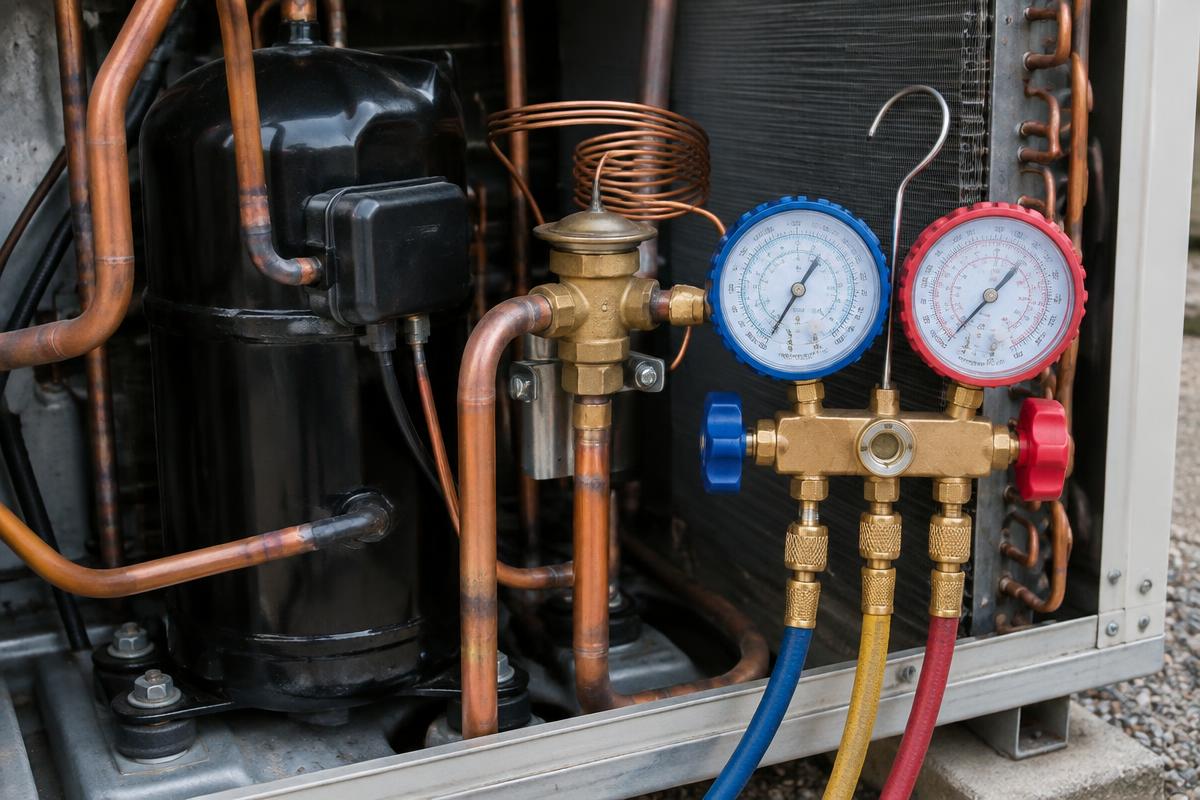
Work on the circuit must be performed by a suitably certified professional using equipment compatible with R32 and A2L. Charging, recovery, and leak testing are not DIY tasks. If a leak is suspected, flames and ignition sources should be avoided, and the manufacturer's safety instructions followed.
What to check before purchase or maintenance
The refrigerant is an important selection criterion, but it does not replace a heat loss study and a compatibility check with the heating system. A properly selected heat pump must cover the building's needs at actual operating temperatures, not just under the favorable conditions of a sales brochure.
- Check the nameplate for the refrigerant type, charge quantity, and exact model.
- Compare output and efficiency at the outdoor air and water temperatures required by the installation.
- Request an inspection of the installation site and safety requirements before purchase.
- Consider technical support, availability of spare parts, and current regulatory requirements for the specific category.
Refrigerant is not naturally consumed like fuel. If repeated refilling is needed, a potential leak must be investigated and the cause rectified. Simply adding refrigerant without a diagnosis is not proper maintenance and can negatively affect performance, the compressor, and the environment.
Frequently asked questions
Can I use R32 in a heat pump that runs on R410A?
Not as a direct replacement. Despite the relationship between the refrigerants, safety and operating requirements differ. Using R32 in a machine designed for R410A without the manufacturer's express approval can be dangerous and invalidate the equipment's compliance.
How often does R32 need to be changed?
Periodic replacement is not required just because some years have passed. In a sealed circuit, the refrigerant remains in operation. Intervention is required when there is a technical reason, such as a leak, contamination, or repair, in accordance with the technician's diagnosis.
Is R32 better than R290?
There is no universal answer. R290 has a much lower GWP but belongs to the higher A3 flammability class. The choice concerns the entire heat pump: performance, water temperatures, installation site, and safety measures, not just the refrigerant.
Should I immediately replace an existing R410A heat pump?
Not solely because of its refrigerant. Restrictions on the availability of new equipment do not automatically imply a ban on the operation of every installed unit. Its condition, efficiency, any leaks, and the specific maintenance requirements applicable to the specific equipment should be evaluated.