Introduction to proper heating management
The question "what temperature should I set the thermostat to?" is the most frequent one I receive as a technician during annual burner maintenance in Greece. Many homeowners wrongly believe that by turning the thermostat up to 25°C, the house will warm up faster, while others turn it off completely when they are away, ultimately spending more to reheat the walls. Correct adjustment is not just about comfort, but also about the longevity of the heating system and, of course, your wallet.
The ideal temperature for hours spent at home
For the hours when the family is active at home, the sweet spot between comfort and economy is between 19°C and 21°C. According to international studies and our experience with the Greek climate, every degree above 20°C increases fuel consumption (oil, gas) or electricity (heat pump) by about 6% to 8%.
- Living Room: 20°C is the most recommended temperature.
- Kitchen: Due to the operation of appliances (oven, hobs), 18-19°C is often sufficient.
- Bathroom: An instantaneous increase to 22°C may be required during a bath, but maintaining this temperature all day is wasteful.
What to do during sleeping hours and when away
One of the biggest mistakes is maintaining the same temperature 24/7. The human body performs better in a sleep environment that is slightly cooler.
Settings for sleep
The recommended temperature for the bedroom is 16°C to 18°C. Sleeping in a very hot room often causes dryness of the mucous membranes and restless sleep.
When you are at work
If you are away for 8-10 hours, do not turn the thermostat off completely (unless the house has excellent insulation and does not lose heat). Set it to 15-16°C. This is called "maintenance temperature." If the temperature drops too low, the structural elements of the house (walls, floors) freeze and the boiler will need to run continuously for hours in the evening to restore comfort, consuming huge amounts of energy.
Factors affecting the sensation of heat
It is not just the number shown on the thermostat. The sensation of thermal comfort depends on:
- Relative Humidity: In Greece, high humidity makes the cold "seep into your bones." A house at 20°C with 50% humidity is much more pleasant than a house at 20°C with 70% humidity. Use a dehumidifier if necessary.
- Insulation and Frames: If there are drafts from old window frames, the thermostat will be "fooled" and you will feel cold even if the radiator is on.
- Thermostat position: The thermostat must be placed on an internal wall, away from doors, windows, kitchens, or direct sunlight to provide an accurate reading.
The importance of digital and programmable thermostats
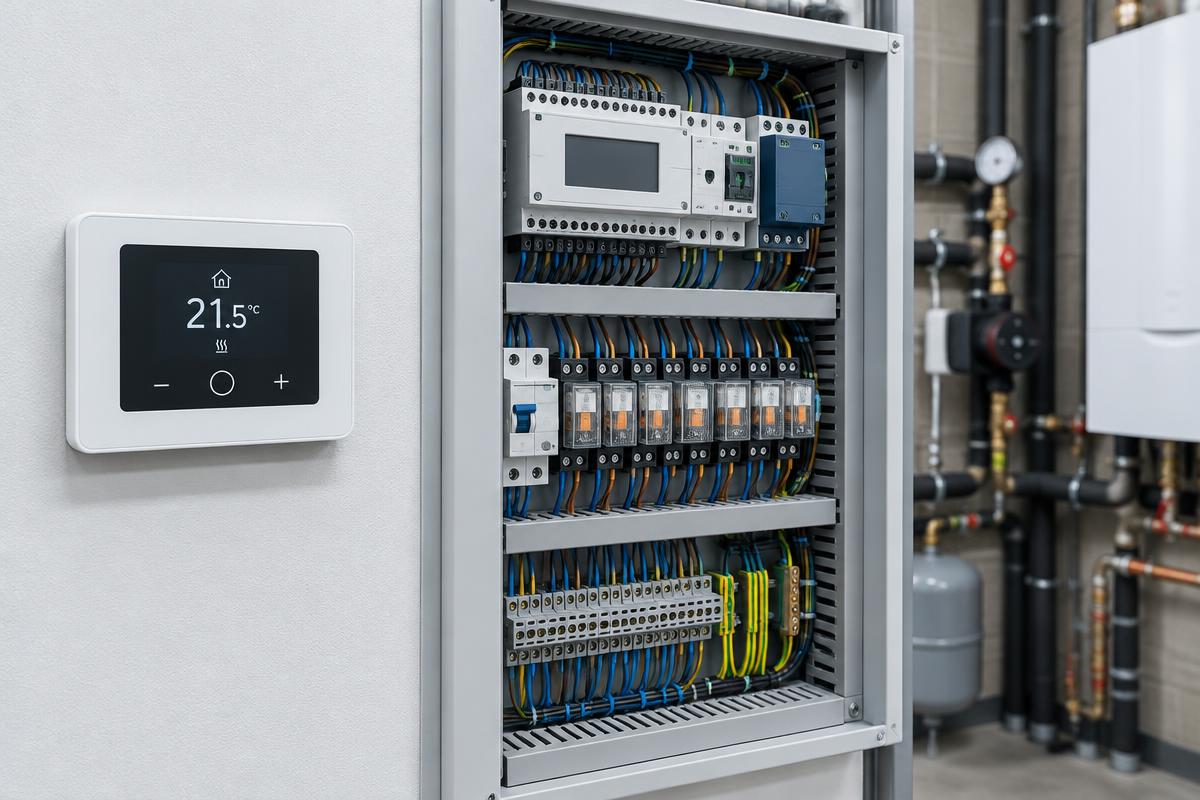
If you still have an old analog thermostat with a wheel, replacing it is the cheapest and most effective upgrade you can make. Analog thermostats have high hysteresis (a deviation of 2-3 degrees), while digital ones have an accuracy of 0.5 degrees.
With a programmable thermostat, you can set the house to reach 20°C half an hour before you wake up and drop to 16°C half an hour after you leave for work. This ensures you never forget the heating turned on at a high temperature.
Frequently Asked Questions (FAQ)
1. Is it more economical to leave the heating on all day at a constant temperature?
Not exactly. The most economical solution is variation: 19-20°C when you are inside and 15-16°C when you are away or sleeping. Completely turning it off is recommended only if you are away for more than 24 hours.
2. Why does the thermostat show 21°C but I feel cold?
This is usually due to "cold drafts" from poor insulation or high humidity. Also, if the thermostat is near a heat source (e.g., in the kitchen), it shuts off the system while the rest of the house is still cold.
3. What is the minimum temperature to prevent pipes from freezing?
In areas of Greece with frost (e.g., Northern Greece), the thermostat should never drop below 5-7°C (anti-freeze protection mode) to avoid pipe bursts.
4. How much will I save if I lower the thermostat by 1 degree?
On average, for every degree you lower the thermostat, you save about 7% on annual fuel consumption.
Conclusion
The ideal thermostat setting in winter is a balancing act. Aim for 20°C for the hours you are at home and do not let the temperature fall below 15°C while away. Invest in a good digital thermostat and take care of the annual maintenance of your burner to ensure that the energy you pay for is actually converted into heat for your space.