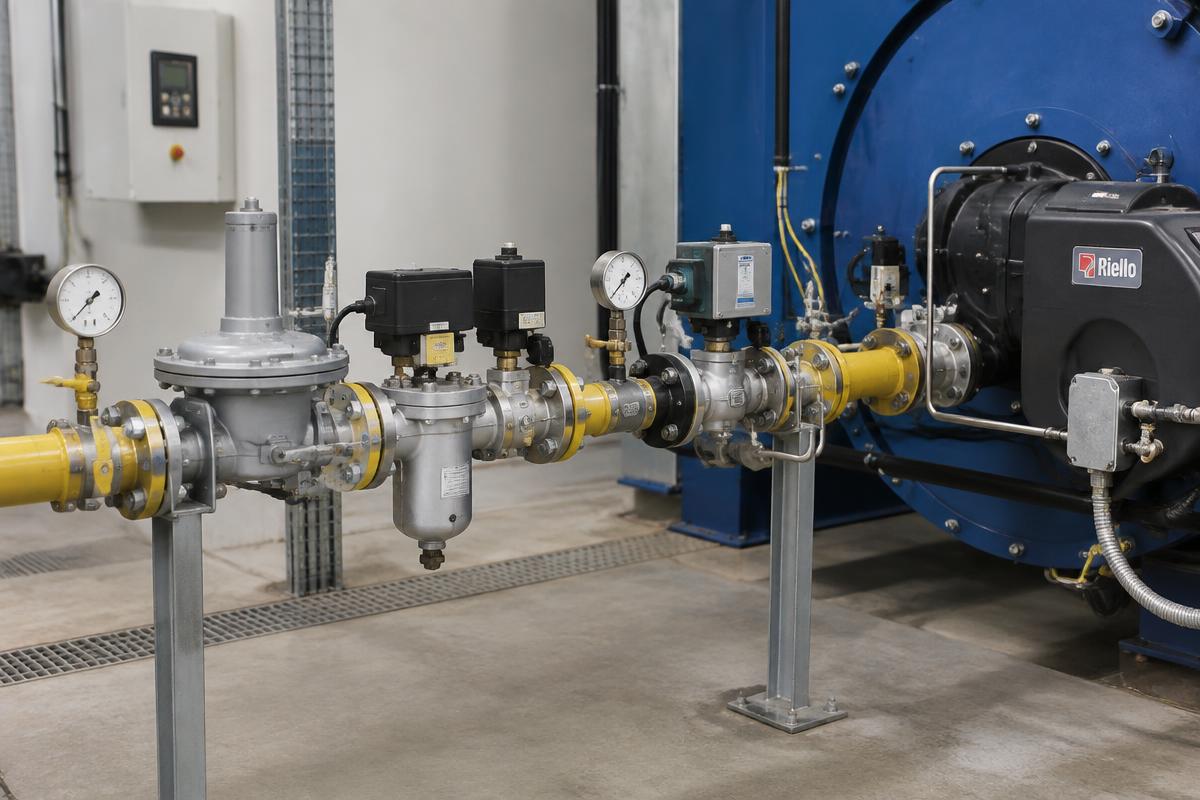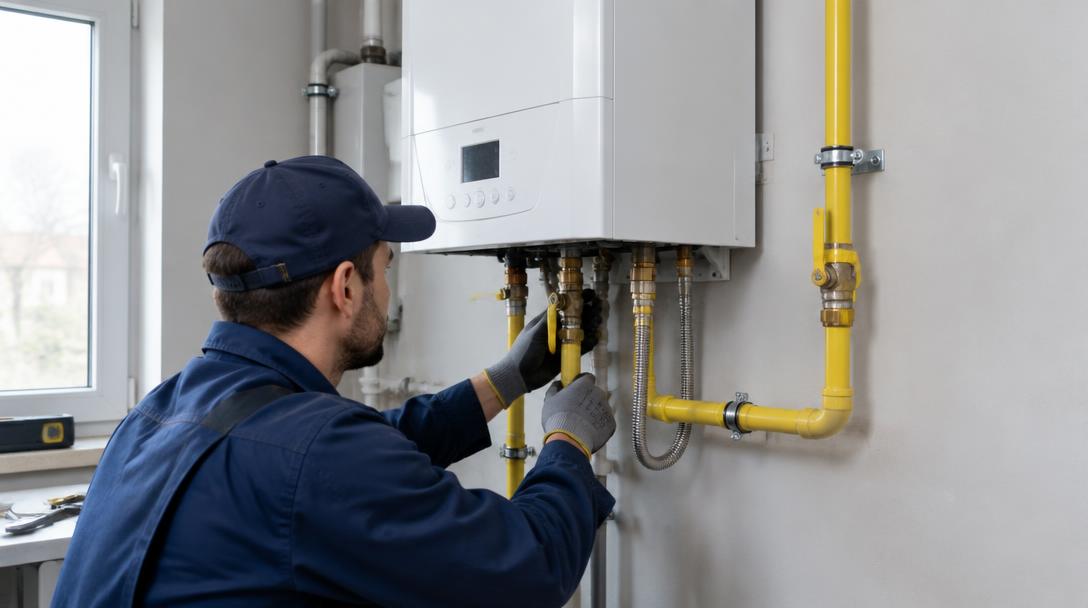
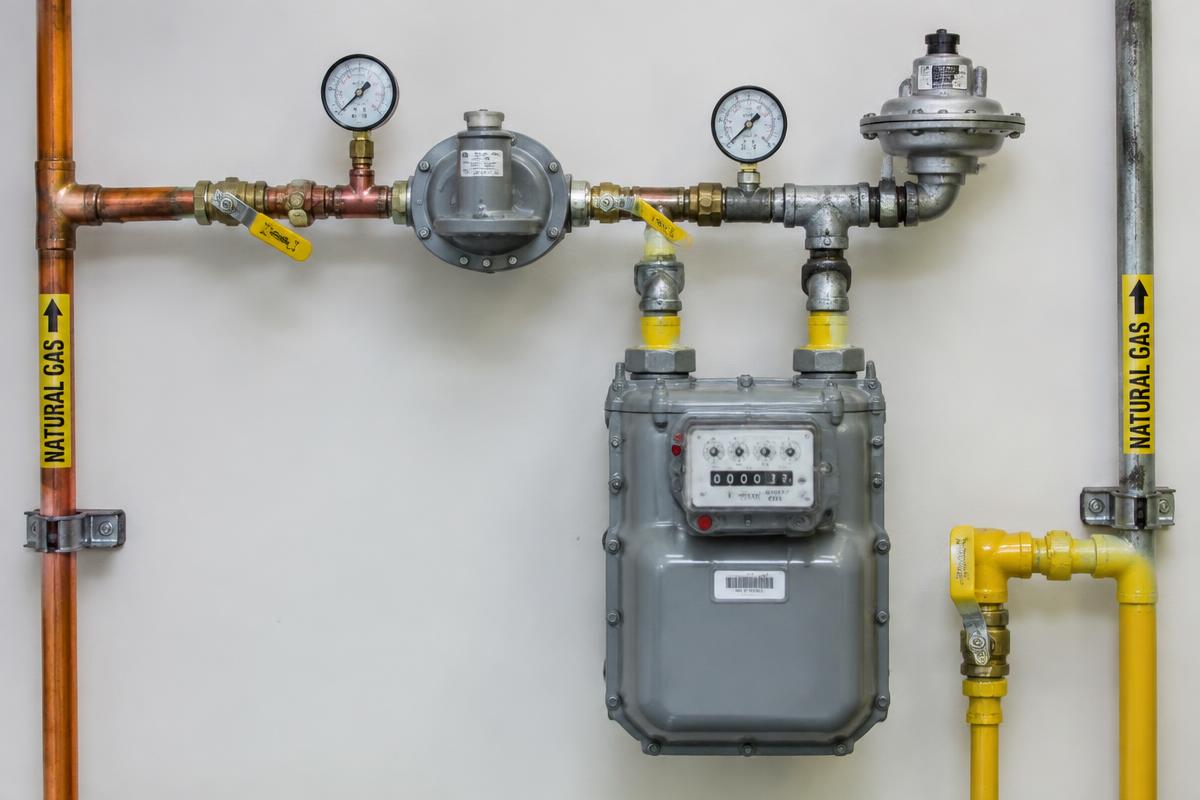
Ice on a natural gas regulator causes reasonable concern, especially when accompanied by heating interruptions. However, it does not mean the "gas has frozen." In the conditions of a residential installation, natural gas does not solidify due to winter cold. What we usually see is moisture that has frozen on the external surface of the equipment.
The correct response depends on the location of the ice, the extent of the icing, and the operation of the installation. Surface frost on an exposed metal body is different from ice that obstructs the regulator's ventilation or is accompanied by insufficient supply. In any case, the regulator is not a component for improvised defrosting or adjustment.
1. Why does ice form on the regulator?
The regulator reduces network pressure to the required supply pressure of the installation. During expansion, the gas temperature can decrease due to the Joule–Thomson effect. Cooling depends primarily on the pressure difference and operating conditions, while the flow rate affects the thermal behavior of the assembly. Not every small pressure drop causes visible icing.
External moisture and low temperature
When the regulator surface falls below 0 °C, the moisture present on it can freeze. High relative humidity, fog, rain, and snow favor the phenomenon. Water from gutters, air conditioners, or washing the patio can also wet the meter cabinet and create ice at night.
Internal moisture or operational problem
Utility natural gas is delivered with controlled quality and humidity characteristics. Therefore, internal icing is not an expected phenomenon in a properly functioning residential installation. If there is water, a mechanism jam, or suspected internal obstruction, an investigation by the responsible operator or a licensed technician is required, depending on the component.
- Increased gas demand can intensify equipment cooling.
- Improper sizing may cause supply problems, but this is not proven by ice alone.
- LPG (propane) regulator freezing has different parameters due to fuel storage and evaporation. The two cases should not be confused.
2. When does frost require immediate inspection?
A thin layer of frost without other symptoms does not indicate a fault. However, its new, persistent, or recurring appearance is worth reporting to the competent authority. Evaluation is not based solely on external appearance: data on weather, consumption, and appliance behavior are needed.
Particular attention is required when:
- Ice covers the ventilation or breather vent of the regulator, if present in the specific layout.
- The boiler shows repeated failed ignitions or flame loss errors.
- Decreased performance or interruption occurs simultaneously in multiple gas appliances.
- Ice formation is extensive or persists in relatively mild weather conditions.
- There is a smell of gas, unusual continuous hissing, or visible damage to the equipment.
Boiler indicators do not, by themselves, constitute a diagnosis of regulator failure. Similar symptoms may be due to ignition electrodes, gas valves, combustion problems, or other causes.
3. What to do if you find ice?
When a leak is suspected
The smell of gas takes priority over freezing. Do not light a flame, do not smoke, and do not activate or deactivate switches and electrical appliances in the area. Do not use a phone near the suspected point. Move away and notify the network operator's emergency service from a safe location. In case of immediate danger, call 112.
Close the supply valve only if you know where it is and can reach it without risk. Do not approach a potential leak to handle it. If the smell is inside the house, open doors or windows only if this can be done safely while leaving, without delaying evacuation.
When there is no smell of gas
- Do not attempt to break or scrape the ice.
- Do not use a blowtorch, hairdryer, heat gun, electric heater, or hot water.
- Do not tamper with adjustment screws, seals, reset mechanisms, or vent openings.
- If appliances malfunction, stop using them via their regular controls and request an inspection.
- Record the time, outside temperature, and any error code. A photo from a safe distance helps the initial report.
The meter and supply regulator usually fall under the responsibility of the network operator, but the exact boundaries are defined by the installation and connection terms. Contact the operator first for supply equipment, not just the supplier issuing the bill. For internal installation, a licensed installer is required, and for the boiler, the responsible technician.
4. Prevention: protection without dangerous interventions
Prevention is based on avoiding water ingress, proper installation, and keeping openings clear. It is not based on "dressing" the regulator with any insulating material.
- Check water sources: repair gutters and leaks that wet the cabinet, without intervening in the gas installation.
- Keep the area clear: do not stack objects in front of the meter and do not block ventilation grilles.
- Do not add makeshift covers: bags, cloths, polyurethane foam, and closed boxes can obstruct ventilation, the regulator's breathing, and access.
- Request approved protection: where a protective cabinet or canopy is required, the solution must comply with the operator's and manufacturer's instructions.
- Report load changes: adding a boiler or other appliance requires checking the available supply and sizing.
What does the professional check?
The check includes the suitability and condition of the regulator, installation location, breather vents, potential water ingress, and supply pressure under load. Measurements are compared with the study's requirements and appliance specifications. As an indication, many household natural gas appliances have a nominal inlet pressure of 20 mbar, but this is neither a universal value nor an adjustment instruction.
Specific anti-freeze protection is applied only when it is intended for the specific equipment and is installed by the responsible professional. A common heating cable is not automatically suitable for use near gas equipment.
5. Frequently Asked Questions
Can natural gas freeze from the cold?
Not at the winter temperatures encountered by a residential installation in Greece. Visible ice usually concerns water on the outer surface, not solidified natural gas.
Should I pour lukewarm water to remove the ice?
No. Water can penetrate sensitive areas and freeze again. Removing ice from the regulator requires instructions from the competent authority, not improvisation.
Does the regulator always need replacement?
No. Addressing external water ingress or another installation problem may be sufficient. Replacement is decided after a technical inspection, not solely based on a photo.
Should I continuously reset the boiler?
No. Repeated resets do not fix a supply problem. Follow the appliance manual, and if the error persists, stop attempting and call a technician.
6. Conclusion
Freezing of the natural gas regulator requires calm assessment, not hasty defrosting. Limit external water sources, keep openings clear, and report any recurring phenomenon promptly. If there is a smell of gas or malfunction, safety and communication with the responsible operator or technician take priority.