Why do we measure in cubic meters but pay in kWh?
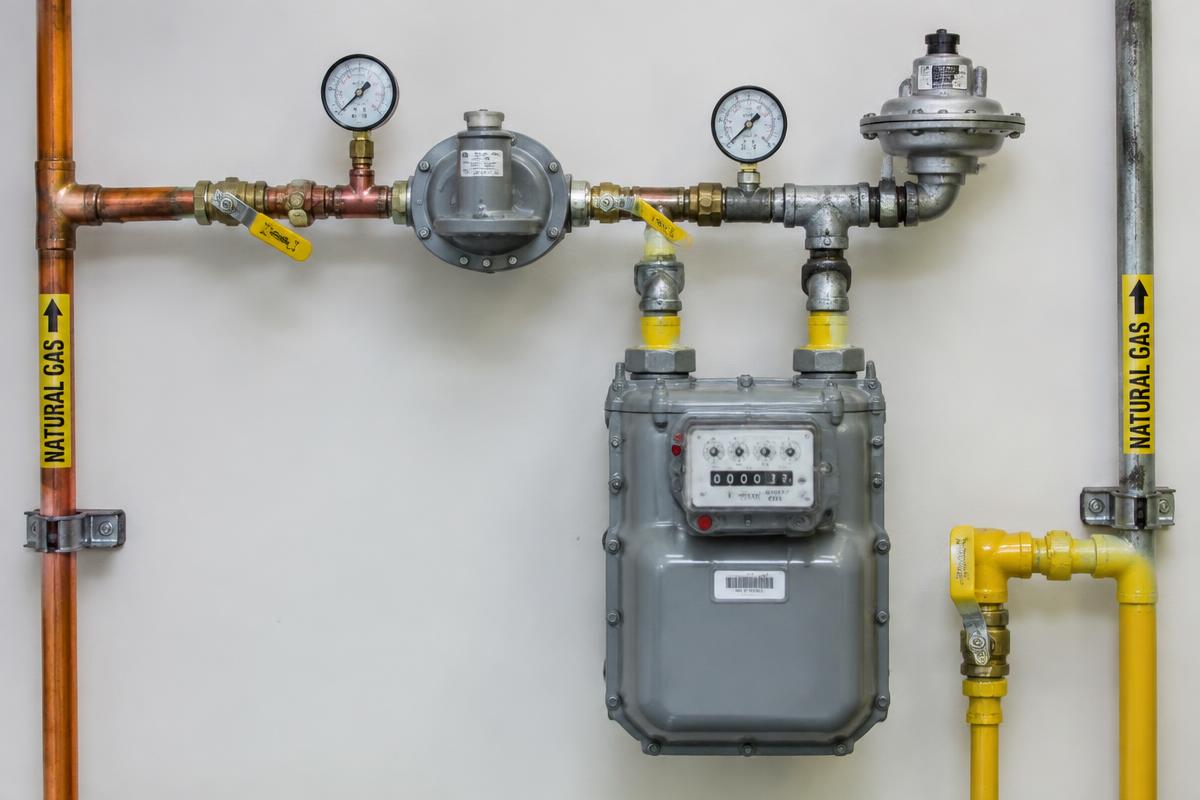
When you look at the natural gas meter on your balcony or in your building's entrance, you see a number in cubic meters (m³). However, when your bill arrives from the provider, you are charged in kilowatt-hours (kWh). This difference often causes confusion for consumers, but there is a very logical technical explanation.
Natural gas is a mixture of hydrocarbons. Depending on its origin (e.g., Russia, Algeria, LNG), its energy efficiency varies. A cubic meter of "high quality" gas produces more heat than a cubic meter of lower quality. To ensure fair billing, the consumer does not pay for the volume of gas that "passed" through the meter, but for the energy that this gas yielded during combustion.
The basic calculation formula
To convert the recorded cubic meters into energy, the following formula is used:
Energy (kWh) = Volume (m³) × Volume Correction Factor (VCF) × Gross Calorific Value (PCS)
What is the Volume Correction Factor (VCF)?
The volume of gases changes according to temperature and pressure. Because meters are exposed to external conditions, the Distribution Network Operator (in Greece, Eda Attikis, Eda Thess, etc.) applies a correction factor (Volume Correction Factor). In Greece, this factor usually fluctuates between 1.02 and 1.06, depending on the altitude of the area and the average temperature of the month.
What is the Gross Calorific Value (PCS)?
This is the most critical parameter. It expresses the amount of heat released from the complete combustion of one cubic meter of gas. Its value is not fixed but changes monthly based on measurements taken at the entry points of the transmission system. For the Greek network, this value usually fluctuates between 11.1 and 11.7 kWh/m³.
Practical calculation example
Let us assume that your meter showed a consumption of 100 m³ for one month. To find the kWh, you should look at your bill for the specific values of that period.
- Meter consumption: 100 m³
- Volume Correction Factor (VCF): 1.0350
- Calorific Value (PCS): 11.45 kWh/m³
The calculation will be: 100 × 1.0350 × 11.45 = 1,185.07 kWh.
This is the number of kilowatt-hours that will be multiplied by the current supply price per kWh to arrive at the cost of your consumption.
How to check the efficiency of your boiler
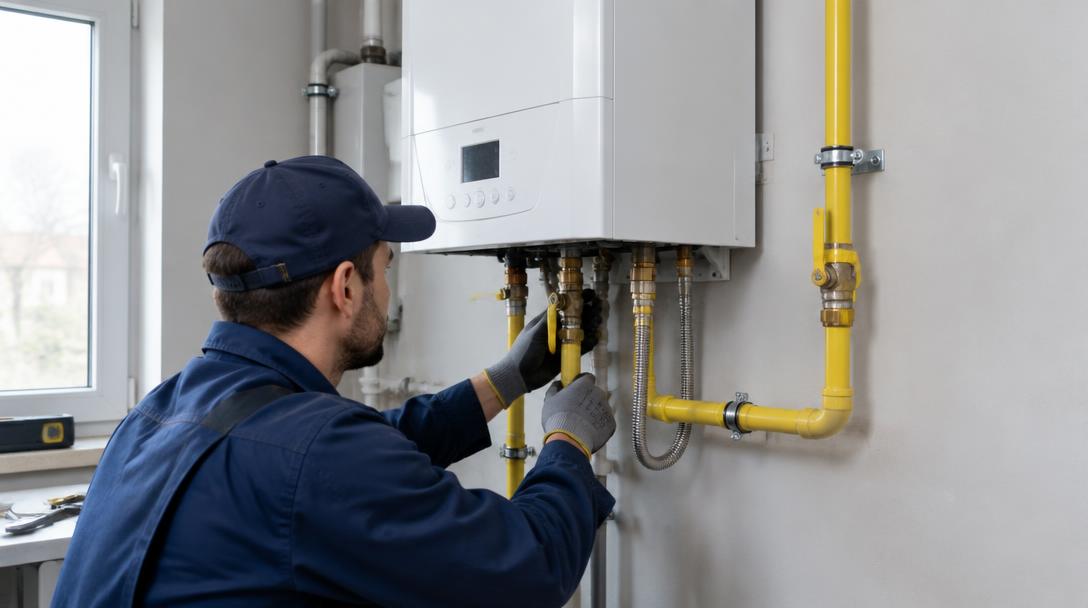
As a technician, I often meet owners who believe that "the meter is running high." Before blaming the meter, it is important to understand that the conversion to kWh is mathematically determined by the operator. The key to savings lies in the boiler's efficiency.
- Maintenance: A dirty heat exchanger reduces efficiency. This means you will need more kWh to reach the same room temperature.
- Combustion adjustment: The correct air-fuel ratio ensures that you utilize the maximum calorific value of the gas.
- Condensing Technology: Modern boilers take advantage of the heat in exhaust gases, achieving an efficiency rating that often exceeds 100% relative to the Net Calorific Value.
Frequently Asked Questions (FAQ)
1. Where can I find the current calorific value?
This value is mandatorily listed on the back of your bill, in the consumption breakdown section. It is also published monthly on the websites of the Distribution Network Operators (e.g., enaon.gr).
2. Can the calorific value change from month to month?
Yes, it changes slightly depending on the composition of the gas entering the national system. Usually, the fluctuations are small (on the order of 2-3%), but they do affect the final kWh result.
3. Why does my neighbor have a different correction factor?
If the neighbor is in an area with a significant difference in altitude or if they belong to a different distribution network, the pressure and temperature factor may differ slightly, although it is always the same for the same apartment building.
4. How much does a cubic meter actually cost?
With an average value of 11.5 kWh per cubic meter, if the price of a kWh is €0.06, then your cubic meter costs approximately €0.69 (excluding regulated charges and VAT).
Conclusion
The conversion of m³ to kWh is a transparent process that ensures you pay for the actual energy you consume rather than just for the volume of a gas that may vary in quality. To stay in control of your expenses, it is enough to know the average calorific value (approximately 11.5) and keep your boiler in excellent condition through annual maintenance.