
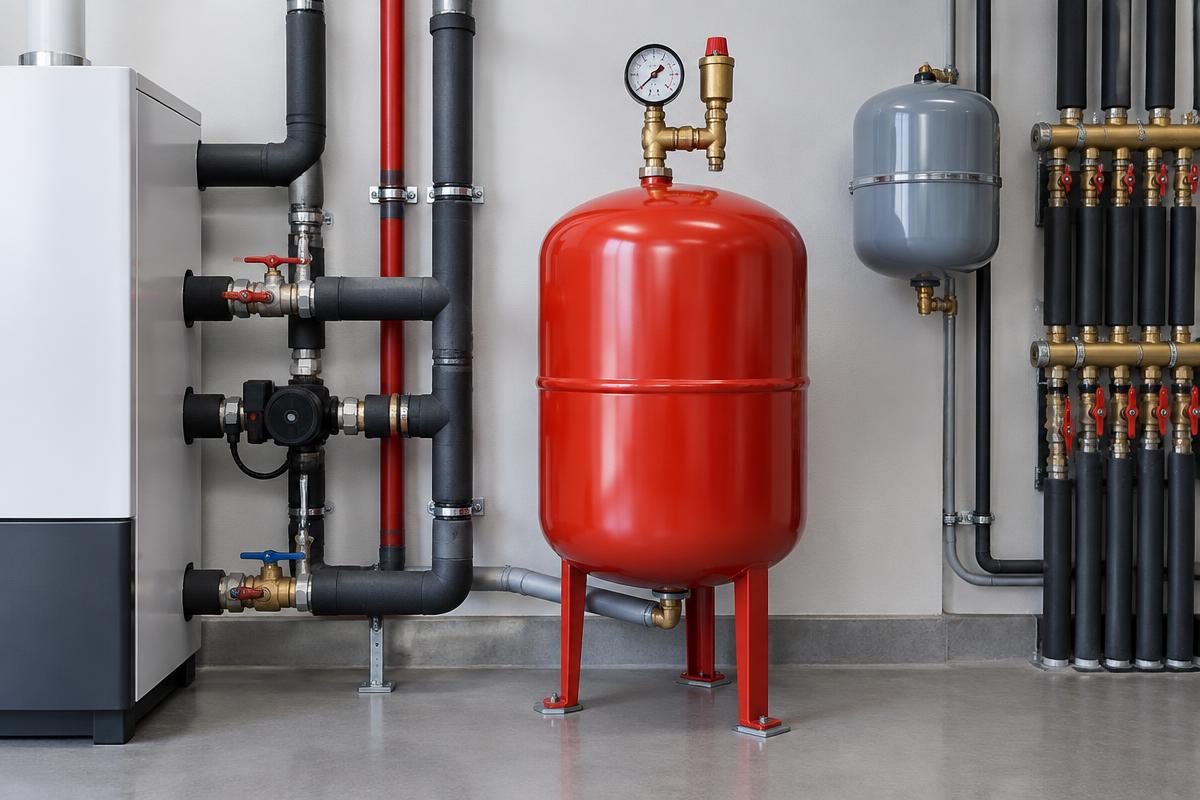
Introduction to the phenomenon of increased pressure
One of the most common problems faced by homeowners with autonomous heating is the gradual or sudden rise of pressure on the boiler's pressure gauge. The ideal operating pressure in a cold system typically ranges between 1.2 and 1.5 bar. However, when the needle approaches or exceeds 3 bar, the safety valve is activated, causing water to leak onto the boiler room floor.
In this article, we will analyze the critical role of the expansion vessel, the causes that lead to overpressure, and how a technician or an informed homeowner can correctly diagnose the problem, avoiding unnecessary expenses and equipment damage.
What is the expansion vessel and how does it work?
Water, like most liquids, expands when heated. In a closed heating circuit, this extra volume of water has nowhere to escape. This is where the expansion vessel comes in.
It is a metal tank containing an internal rubber membrane (usually made of EPDM or butyl). The membrane divides the vessel into two parts: one part is filled with system water, and the other with compressed air or nitrogen.
- During heating: The water expands, enters the vessel, and compresses the air behind the membrane.
- During cooling: The compressed air pushes the membrane, returning the water to the circuit and keeping the pressure stable.
Main causes of pressure rise
1. Loss of air in the expansion vessel
This is the most common cause. Over time, air can leak from the vessel's valve (similar to a car tire valve). Without the air "cushion," the vessel fills entirely with water. Since water is incompressible, its minimal expansion during heating causes an instant rise in pressure above 3 bar.
2. Ruptured vessel membrane
If the rubber membrane tears, water passes to the air side. In this case, the vessel becomes unusable. A quick test is to press the pin of the air valve: if water comes out instead of air, the vessel needs replacement.
3. Faulty automatic filling valve
The automatic filling valve is the component that adds water to the system when pressure drops. If the valve seat has scale deposits or is worn, it may allow a continuous flow of water from the water supply network into the heating system. Because the municipal network usually has a pressure of 4-6 bar, the boiler pressure will rise continuously, even when the heating is turned off.
4. Internal heat exchanger failure (for wall-hung boilers)
In wall-hung gas boilers that also produce domestic hot water (DHW), the heat exchanger may develop a leak. In this case, mains water enters the heating circuit, raising the pressure to the levels of the water supply network.
How to check the expansion vessel pressure
For a proper check, it is not enough to put a pressure gauge on the vessel valve while the system is under pressure. The procedure followed by every experienced technician is as follows:
- Isolate the boiler or close the supply valves.
- Drain the water from the boiler until the water pressure gauge shows zero (0).
- Measure the air pressure in the vessel. For an average home, the air pressure should be approximately 1.0 to 1.2 bar.
- If it is lower, add air using a pump or compressor.
- Open the valves again and set the water pressure to 1.3 - 1.5 bar.
The importance of the safety valve
The safety valve is the "guardian angel" of the installation. It is set to open at 3 bar to protect pipes and the boiler from explosion or deformation. If you see the valve dripping, never plug it! It is a symptom of a problem, not the cause. Often, after a few activations, the safety valve may not seal properly due to mineral deposits and continue to drip even after the pressure drops. In that case, it requires replacement along with fixing the expansion vessel.
Frequently Asked Questions (FAQ)
How often should the expansion vessel be checked?
The expansion vessel check should be part of the annual maintenance of the burner and boiler. Natural air loss is expected, and topping it up prevents more serious damage.
Why does the pressure rise only when the radiators are on?
This is the classic sign that the expansion vessel has no air or is undersized for the installation. When the water is cold, the pressure appears normal, but without space for expansion, the pressure skyrockets as soon as combustion begins.
Can I add air myself?
Although technically possible with a bicycle pump, the procedure requires releasing the water pressure to zero. Without this step, the air measurement will be incorrect. It is recommended to call a licensed technician.
Conclusion
A rise in boiler pressure is not something to be ignored. In most cases, simple maintenance of the expansion vessel is enough to solve the problem. However, neglect can lead to damage to the safety valve, the circulator, or even leaks in pipe joints. Proper system regulation ensures economy, safety, and longevity for your heating installation.