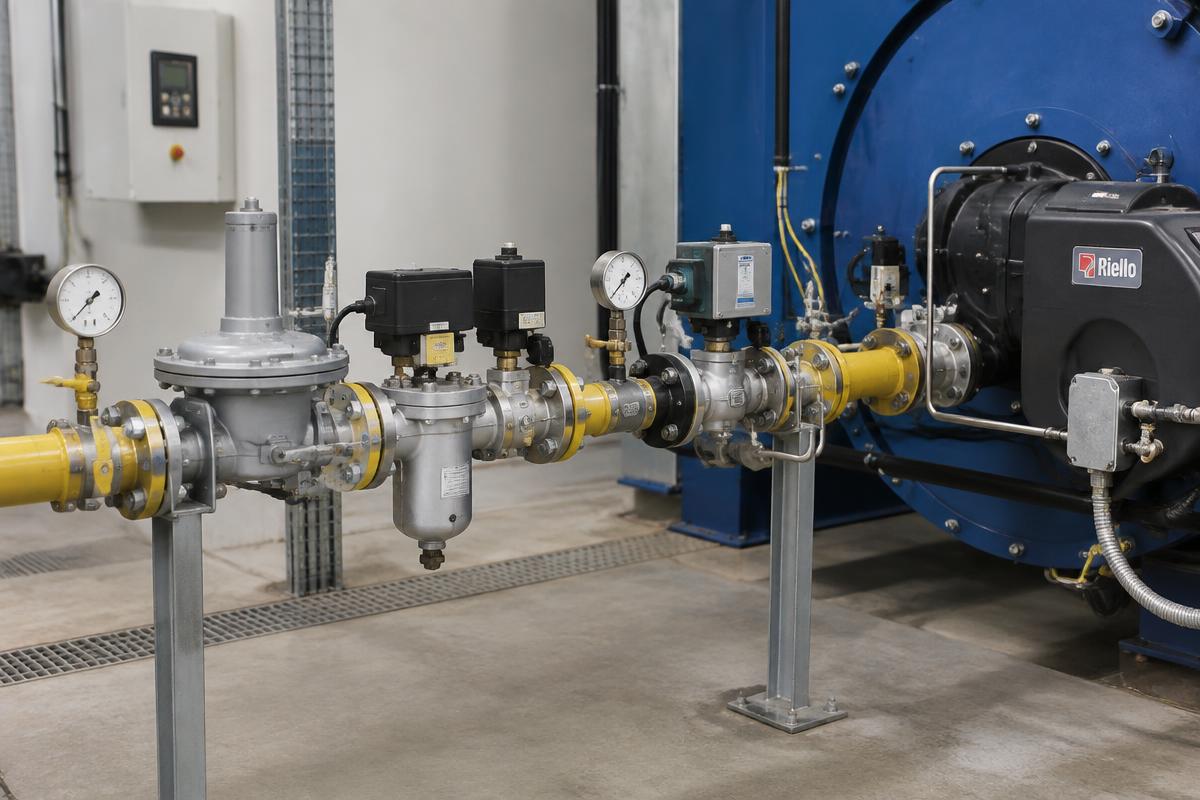
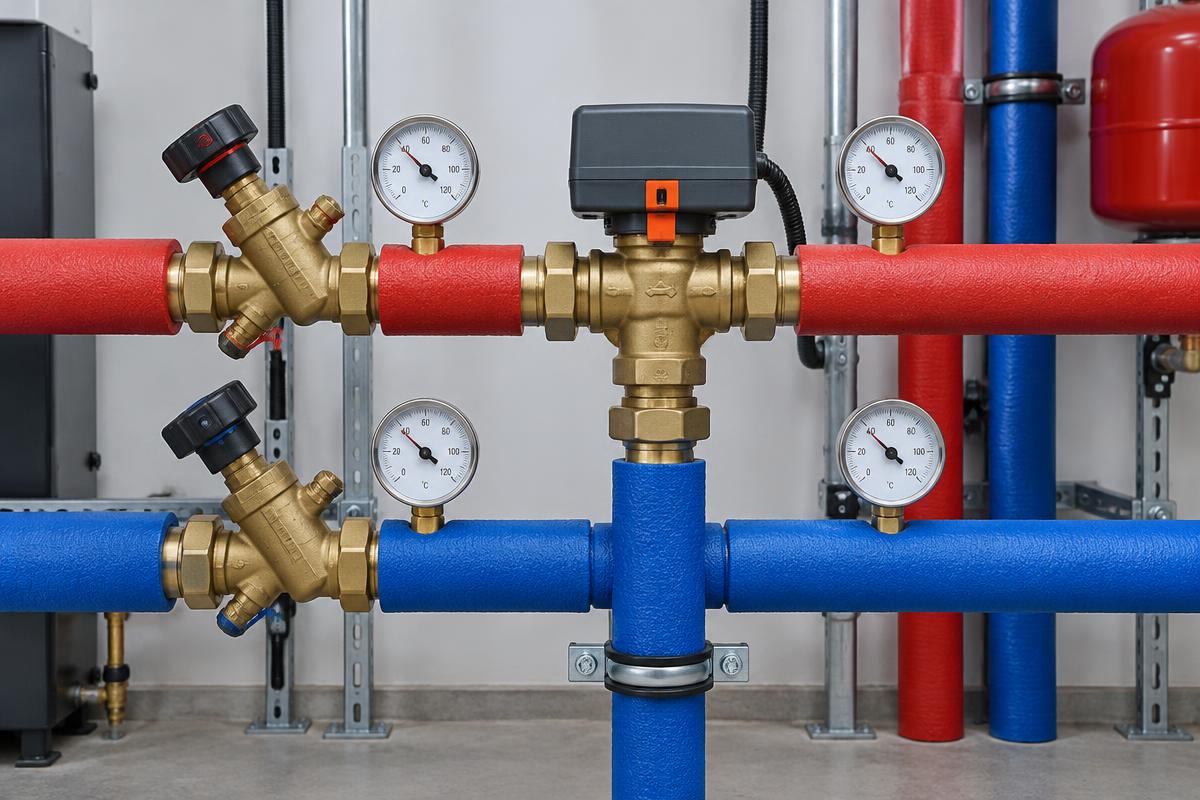
The gas train is the set of components that prepare, control and secure the natural gas supply before it reaches the burner. The exact layout varies depending on power and manufacturer, but the basic philosophy is common.
Typical sequence of components
A common layout may include: a manual isolation valve, a gas filter, a pressure regulator, a low-pressure switch, one or two safety solenoid valves, a high-pressure switch, and test points.
Manual valve
Allows for complete isolation of the section for maintenance or in an emergency.
Filter
Retains particles that could affect the regulator, valves, and control instruments. A clogged filter causes a pressure drop when consumption increases.
Pressure regulator
Reduces and stabilizes the pressure to a level suitable for the burner. Its proper operation is critical for stable combustion.
Pressure switches
Pressure switches confirm that the pressure is within the permitted window. If the pressure is too low or too high, the sequence is interrupted.
Safety solenoid valves
They open only when the automation system gives the command. Upon loss of voltage, they close to stop the gas flow.
Why the sequence matters
The correct sequence ensures that every component operates within the conditions for which it was designed. For example, the regulator must be protected from pollutants, while the pressure switches must measure at the appropriate pressure point.
Gas train fault diagnosis
Diagnosis is performed section by section: we measure pressure before and after critical components and monitor at which stage of the sequence the burner stops. This avoids unnecessary component replacements.