When cold air is normal and when it indicates a problem
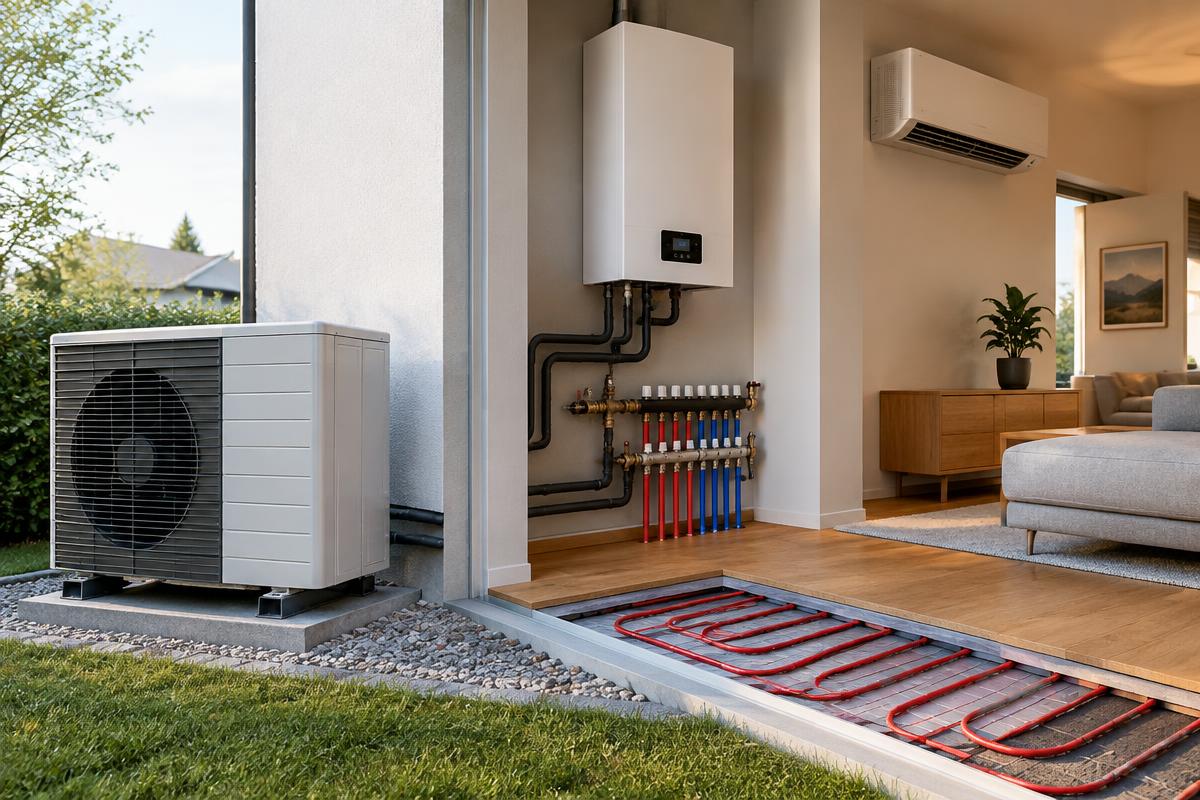
A fan coil heats a room by passing air through a coil containing hot water. Heat is usually produced by a heat pump or boiler and transported to the unit via piping. Therefore, if the fan operates before the coil has warmed up or without sufficient water circulation, the air at the outlet may feel cold.
This does not always mean there is a failure. At startup, it takes time for hot water to reach the unit. Additionally, air that is slightly warmer than the room can feel cool when it blows directly onto your body. The criterion is not just the sensation on your hand, but whether the room temperature is gradually increasing.
A problem exists when the phenomenon persists while there is an active heating demand, the space does not heat up, or an error code appears. A useful initial observation is whether all fan coils are affected or only one. In the former case, production and central heat circulation are mainly examined; in the latter, the specific unit and its branch.
Thermostat and fan settings: the first checks
Before assuming there is a mechanical failure, check the operating commands. The local thermostat and the central system control must allow heating. In two-pipe systems, the same network is used for heating or cooling, depending on the season. Selecting heating on the room controller is not enough if the central system remains in cooling mode.
- Mode: confirm the heating selection, rather than fan-only or cooling mode.
- Desired temperature: set a value higher than the current room temperature so that there is an actual heating demand.
- Schedule: check time schedules, economy mode, and any window contact that might interrupt heating.
- Fan speed: prefer the automatic setting, where available, instead of a permanent high speed.
Some controllers allow the fan to operate even when the water valve has closed because the desired temperature has been reached. In this case, the fan coil recirculates room air, which may feel cold. This behavior can be addressed by adjusting the controller settings, if supported.
Where a water temperature sensor and a corresponding cold draft prevention function exist, the fan may start only when the coil is sufficiently hot. Incorrect configuration, poor placement, or failure of the sensor may override this protection. Relevant parameters should be checked by a technician, according to the manual.
Heat pump: water temperature, weather compensation, and defrosting
If all fan coils are blowing lukewarm or cold air, the supply water temperature and the actual operation of the heat pump need to be checked. Low water temperature may be due to weather compensation settings that do not meet the building's needs, operation limitations, or a fault. Weather compensation adjusts the water temperature to external conditions, but it must be calibrated for the specific terminals.
There is no single correct temperature for all fan coils. Their output depends on water temperature and flow, incoming air temperature, and fan speed. A unit selected for higher water temperatures may perform poorly in a low-temperature installation. It is necessary to check the manufacturer's performance tables, not arbitrarily increase the supply temperature, which usually increases energy consumption.
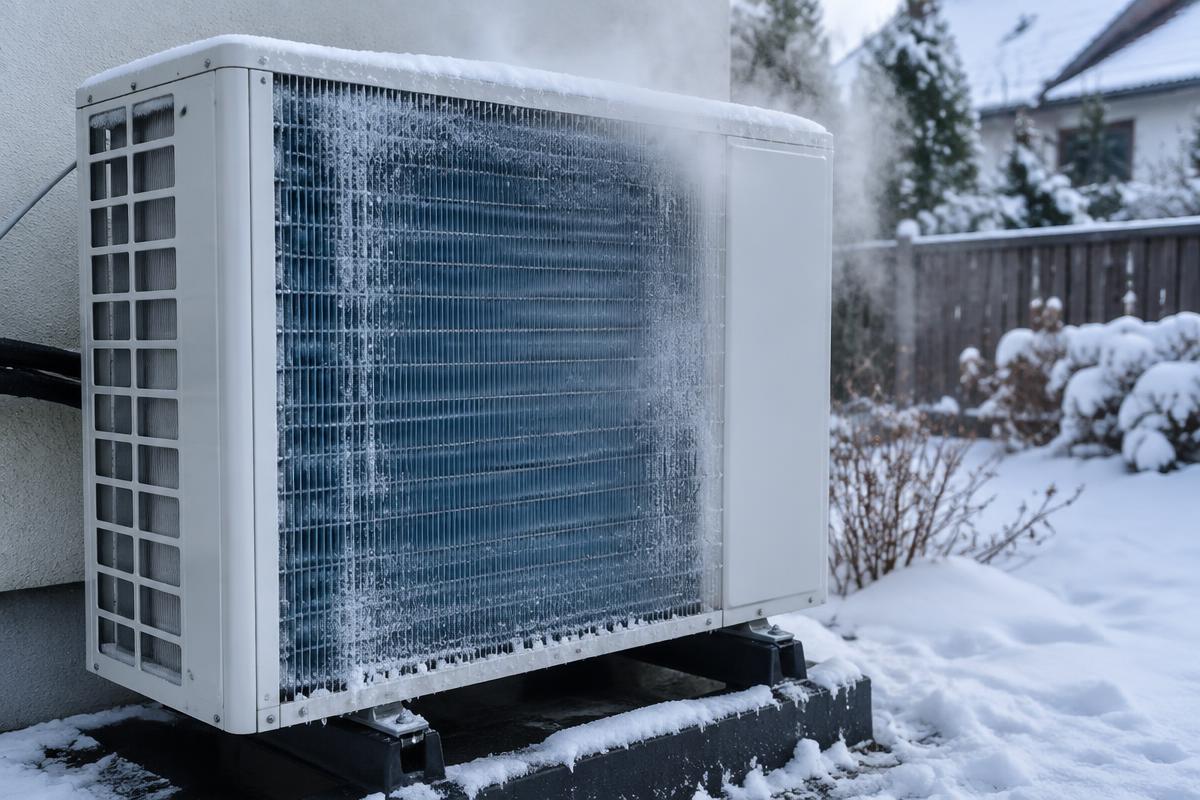
In air-source heat pumps, the defrosting of the outdoor unit may temporarily reduce the available heat for the water. If the fans continue to operate without proper management, you may feel a cold draft. A temporary heating interruption may also occur when the system prioritizes the production of domestic hot water.
Frequent or prolonged interruptions, the inability to return to heating, and persistent ice on the outdoor unit require inspection. Do not remove ice with tools and do not attempt to interfere with the refrigeration circuit.
Air in the circuit, closed valve, and insufficient circulation
When only one fan coil is not heating, a likely cause is that not enough hot water is passing through the coil. Air in the circuit, a closed isolation valve, a blocked electric valve, or incorrect balancing can reduce or stop the flow. Gurgling sounds reinforce the suspicion of trapped air, without being a diagnosis on their own.
The electric valve must open when the thermostat requests heating. If the actuator does not receive a command or is stuck, the fan may run while the coil remains cold. The technician checks the command, the valve movement, and the flow without bypassing protections.
At the installation level, insufficient pump operation, a clogged water filter, or poor hydraulic balancing can leave some units without adequate flow. When combining fan coils and underfloor heating, different temperature requirements and the operation of mixing circuits, where present, are also examined.
The pressure gauge reading should be evaluated according to the specific installation's specifications. Do not repeatedly add water to address a pressure drop, as there may be a leak or a problem with the expansion tank. Venting is performed only where intended and using a safe procedure: in a hot or pressurized circuit, there is a risk of burns.
Air filters and practical diagnostic sequence
A dirty air filter usually restricts air flow and overall heating performance; it is not the typical cause of truly cold blowing. However, it should be checked, along with any obstructions in the intake and exhaust grilles. Clean only the filters designated as accessible to the user, with the unit turned off and according to the manual. Disconnect the electrical power before removing them, as required.
For effective diagnosis, follow this sequence:
- Record whether the problem affects one unit or the entire installation.
- Check the heating mode, desired temperature, and time schedule.
- Check if the heat pump is performing a defrost cycle or domestic hot water production.
- Note error codes and displayed temperatures, without changing technical parameters.
- Request a technician if the system does not recover or the room remains cold.
The technician compares supply and return temperatures, air temperatures, and available water flow with the design data. This separates a heat production, circulation, or control problem. If there is a leak near electrical parts, a burning odor, or a tripped circuit breaker, stop operation and do not attempt to restart.
Frequently Asked Questions
Why does the fan coil blow cold only at startup?
Often the fan starts before hot water reaches the coil. If the phenomenon stops when the circuit warms up, check for available fan delay or cold draft prevention features.
Should I set the fan to maximum speed?
Not as a first solution. If the water is not hot enough, higher speed can make the draft more unpleasant. It does not fix a closed valve, lack of flow, or a heat pump problem.
Why is one fan coil cold while the others are heating?
This indication points more toward a local problem: air, valve, actuator, sensor, or reduced flow in that specific branch. The unit needs to be checked before changing central settings.
Does the fan coil need refrigerant top-up?
A hydraulic fan coil operates with water and does not have its own refrigeration circuit. The refrigerant is located in the heat pump and is checked only by a suitably certified technician if there are relevant indications.