Introduction: The role of the buffer tank in modern systems
Installing a heat pump is the premier choice for upgrading the energy efficiency of a home in Greece. However, a common disagreement between technicians and owners is the necessity of a buffer tank. Many consider it an unnecessary expense, while others insist on it as a panacea. In reality, its use depends on the hydraulic requirements of the installation and the operating method of the control system.
What is a buffer tank and how does it work?
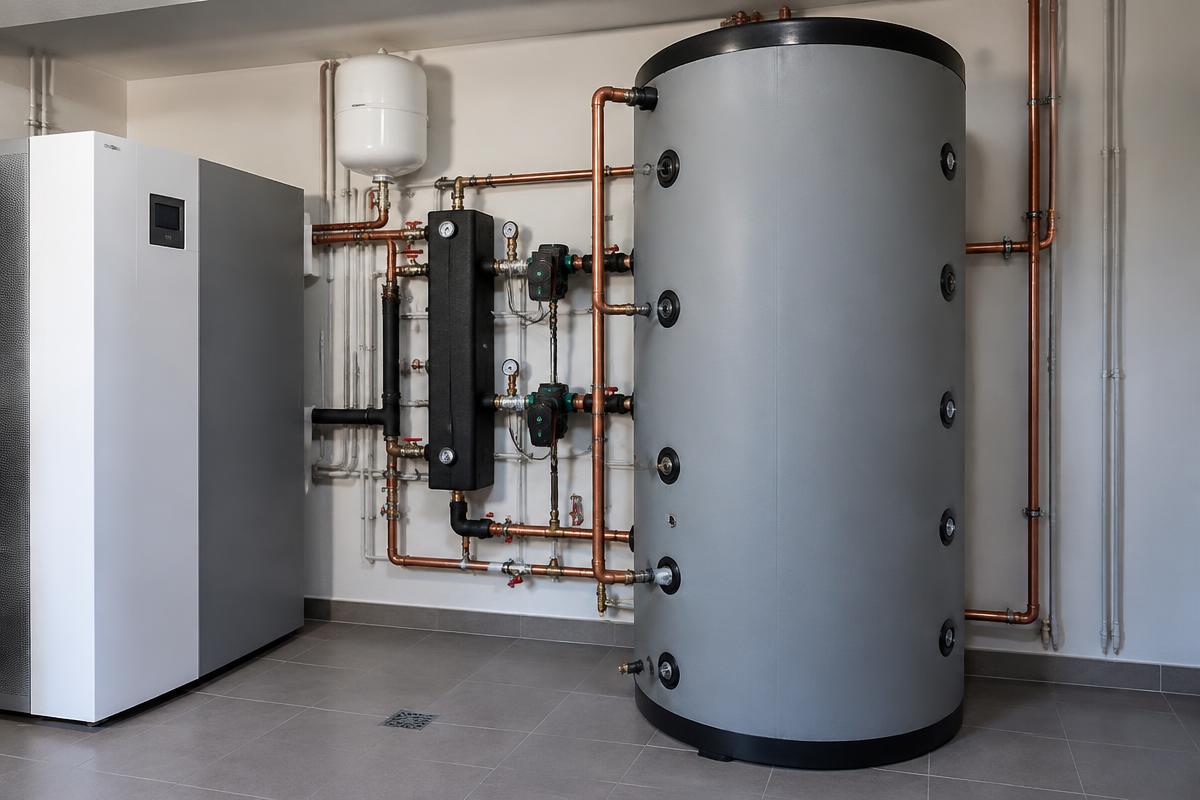
A buffer tank is an insulated water tank placed between the heat pump and the radiators (or underfloor heating). It acts as an "energy reservoir" and a means to stabilize flow. Its primary purpose is twofold:
- Increasing thermal mass: It prevents frequent starting and stopping of the compressor (short cycling), especially when heating demand is lower than the minimum output of the pump.
- Ensuring flow: It ensures that the pump always has the required minimum amount of water to operate correctly.
When is hydraulic separation necessary?
Hydraulic separation is required when the water flow needed by the heat pump to operate efficiently is different from the flow required by the home's circuits. This often happens in older installations with panel radiators or in homes with multiple heating zones.
Scenarios where use is mandated
- Multiple zones with solenoid valves: If a house has three floors and two are closed off, the water flow decreases dramatically. The pump will trigger a "Flow Error" if there is no buffer tank or hydraulic separator.
- Heterogeneous systems: A combination of underfloor heating on the ground floor and Fan Coils on the upper floor. The requirements for flow and temperature differ radically.
- Low water content: If the pipe network is small (e.g., in a 70 sq.m. apartment), the energy in the water is exhausted quickly during the defrost process.
The critical function of Defrost
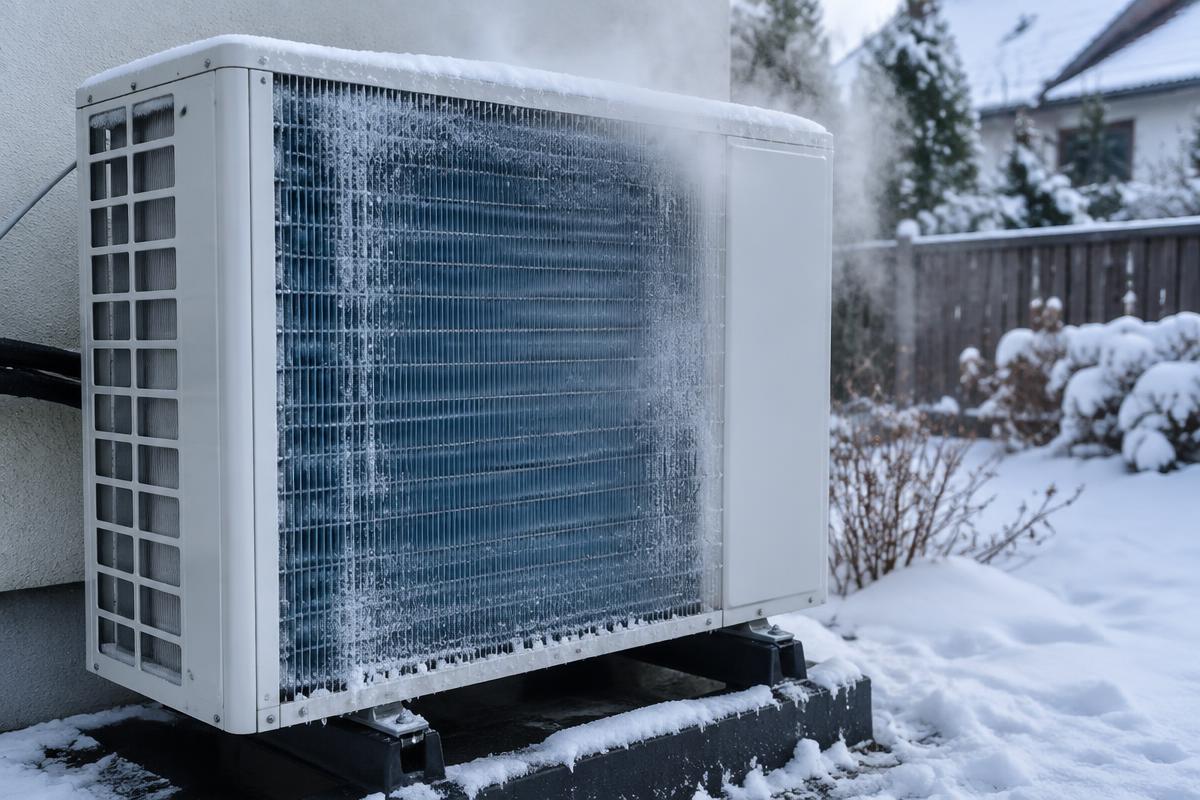
On cold days with high humidity, the outdoor unit of the pump accumulates ice. To melt it, the system reverses its cycle and "steals" heat from the home's internal network. If the system does not have sufficient water volume (usually 10-15 liters per kW of power is required), the water temperature drops sharply. This can lead to a shutdown due to low return temperature or, in the worst case, freezing of the heat exchanger.
With a buffer tank connected in series or as a separator, the pump draws the energy for defrosting from the tank, without affecting comfort in the interior spaces.
Connection types: Series vs. Parallel
The choice of connection depends on the problem we want to solve:
1. Connection in series (Buffer in Series)
The tank is placed on the return or supply line. It is mainly used to add water volume to the system. It is the most economical solution and maintains a high coefficient of performance (COP), as a second circulator is not required.
2. Parallel connection (4-pipe Buffer)
The tank acts as a hydraulic separator. The pump circulates water into the tank, and a second circulator draws water from the tank for the house. It is the ideal solution for complex systems, but it requires proper adjustment of flow rates to avoid mixing water, which would reduce efficiency.
Frequently Asked Questions (FAQ)
1. Can I avoid the buffer tank if I have underfloor heating?
Yes, often underfloor heating has massive thermal mass (the concrete itself). If the circuits are always open and there are no thermostats in every room closing off the flows, the tank can be omitted.
2. How many liters should the tank be?
A general rule for Greece is 15-20 liters per kW of nominal heat pump power. For a 10kW pump, a 150-200 liter tank is more than enough.
3. Does using a tank increase electricity consumption?
If the installation is simple, adding a parallel tank with a second circulator may slightly reduce the COP due to thermal losses from the tank and the consumption of the extra circulator. However, the longevity of the compressor is the most significant gain.
4. What is a hydraulic separator and how does it differ?
A hydraulic separator is a smaller tank (usually 20-50 liters) that focuses exclusively on balancing pressures and flows, without offering significant thermal storage.
Conclusion
The buffer tank is not an "accessory" that a merchant is trying to sell you, but a tool for safety and smooth operation. If your installation includes multiple zones, Fan Coils, or if the pump is a Monobloc type with a small volume of water in the pipes, investing in a buffer tank will save you from breakdowns and provide stable heating for many years.