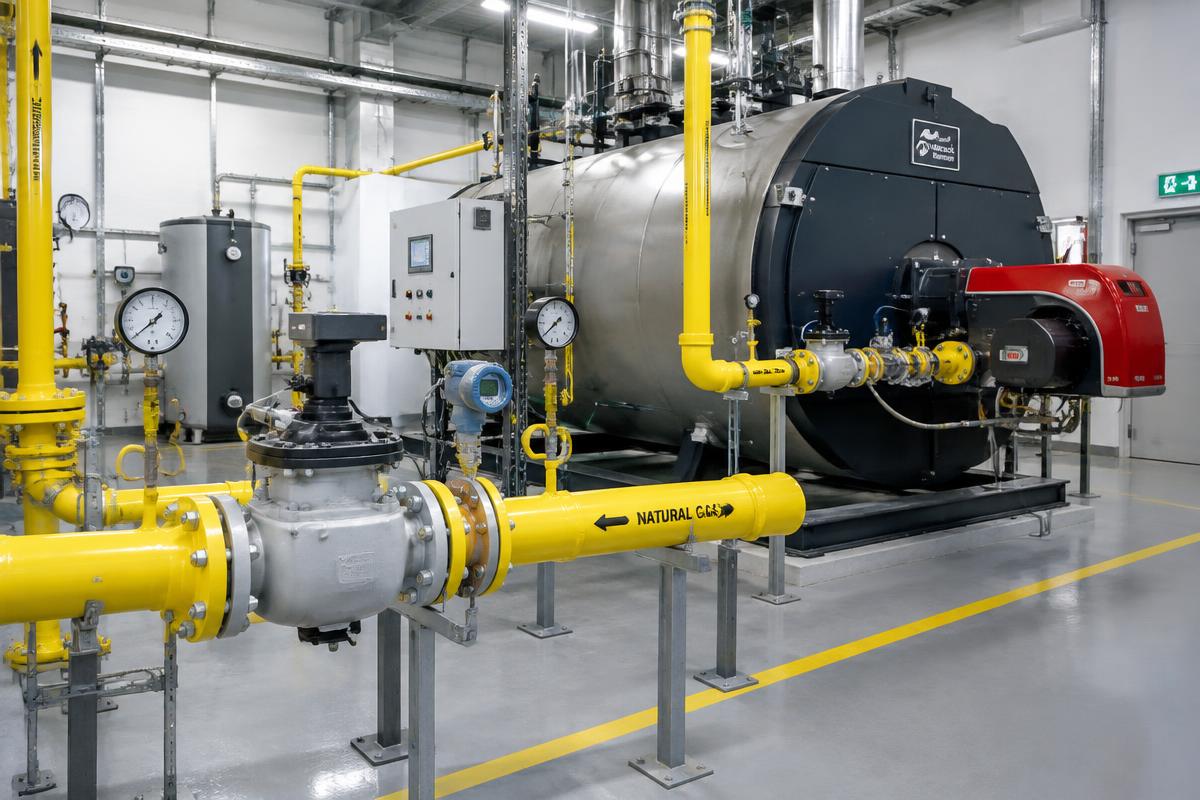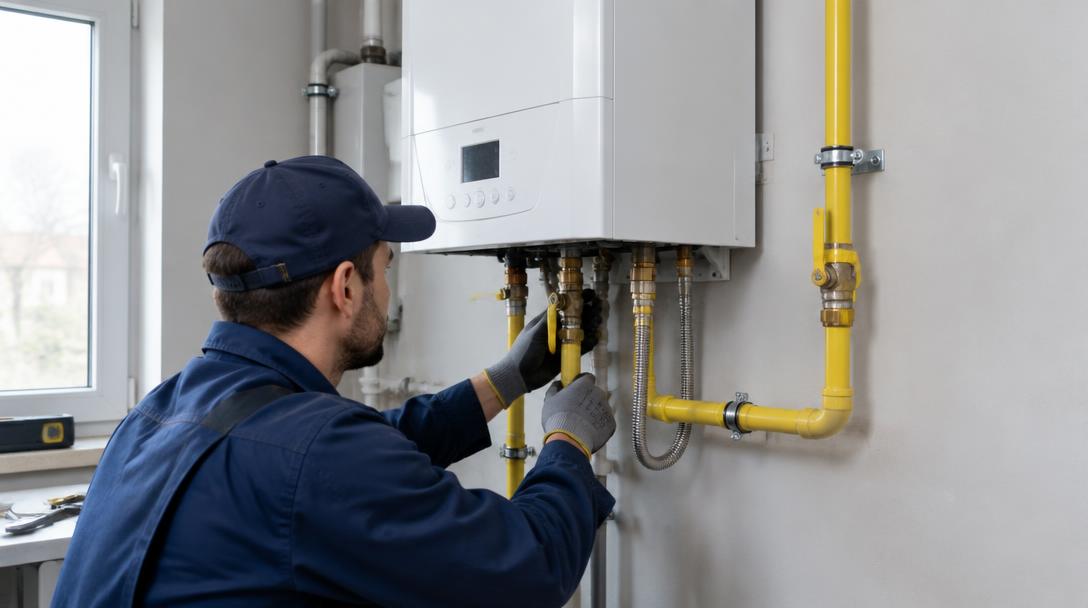
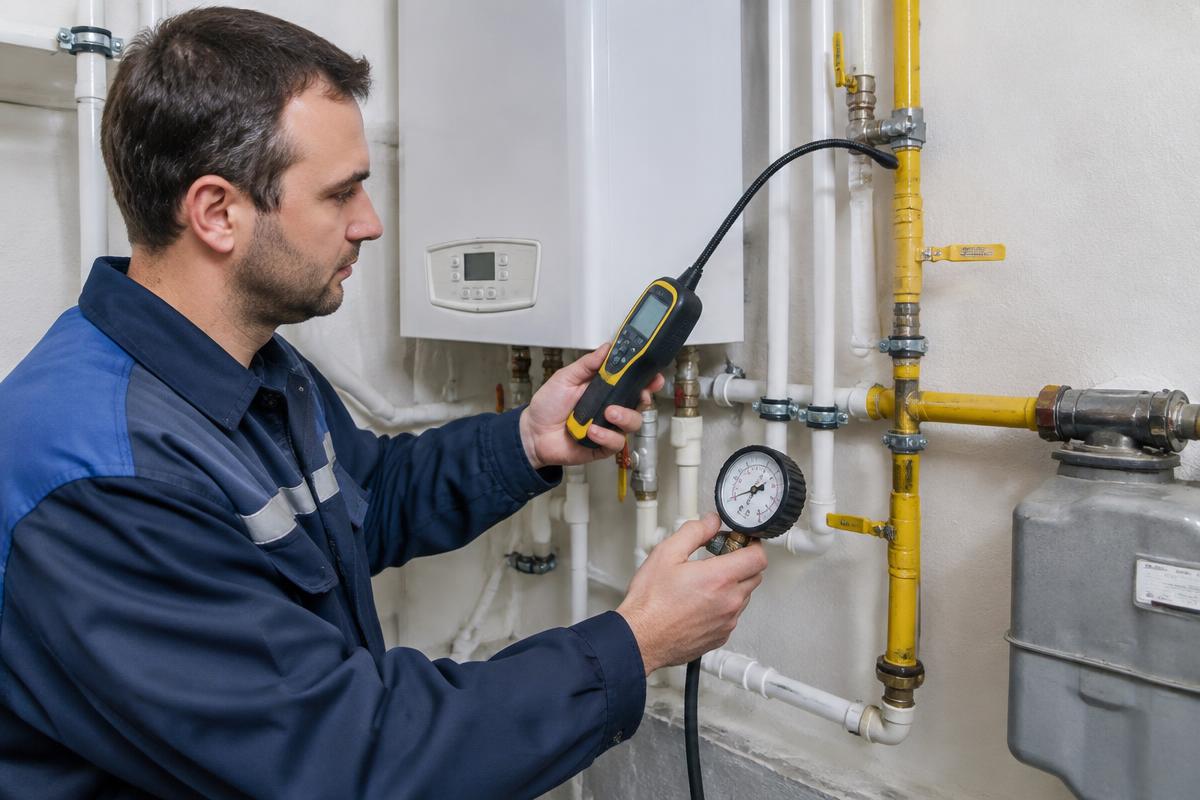
When a natural gas burner does not start, the correct diagnosis must follow a specific sequence. Randomly replacing components usually increases downtime and can create new problems.
1. Start command check
First, it must be confirmed that there is an actual operational demand from the thermostat, PLC, BMS, or control system. If there is no command, the problem is not necessarily with the burner.
2. Power supply check
Check the main power supply, fuses, auxiliary circuits, and emergency stops. Many trips are due to a loss of power in a single safety chain.
3. Combustion air check
The fan must start, and the air pressure switch must confirm sufficient airflow or pressure. If the correct contact does not close, the sequence does not continue.
4. Natural gas pressure check
Check the pressure before and after the regulator, as well as the status of the low and high gas pressure switches. Pressure that appears correct with the burner stopped may drop when flow is demanded.
5. BMS sequence check
The alarm history and the step where the sequence stopped are among the most useful pieces of information. A trip during pre-purge has a different cause than a trip during ignition.
6. Ignition and flame monitoring
Check the ignition transformer, electrode, pilot where applicable, gas valves, and flame detection system.
Conclusion
The correct approach is to identify the first point where the sequence is interrupted and check the cause. This significantly reduces diagnosis time.