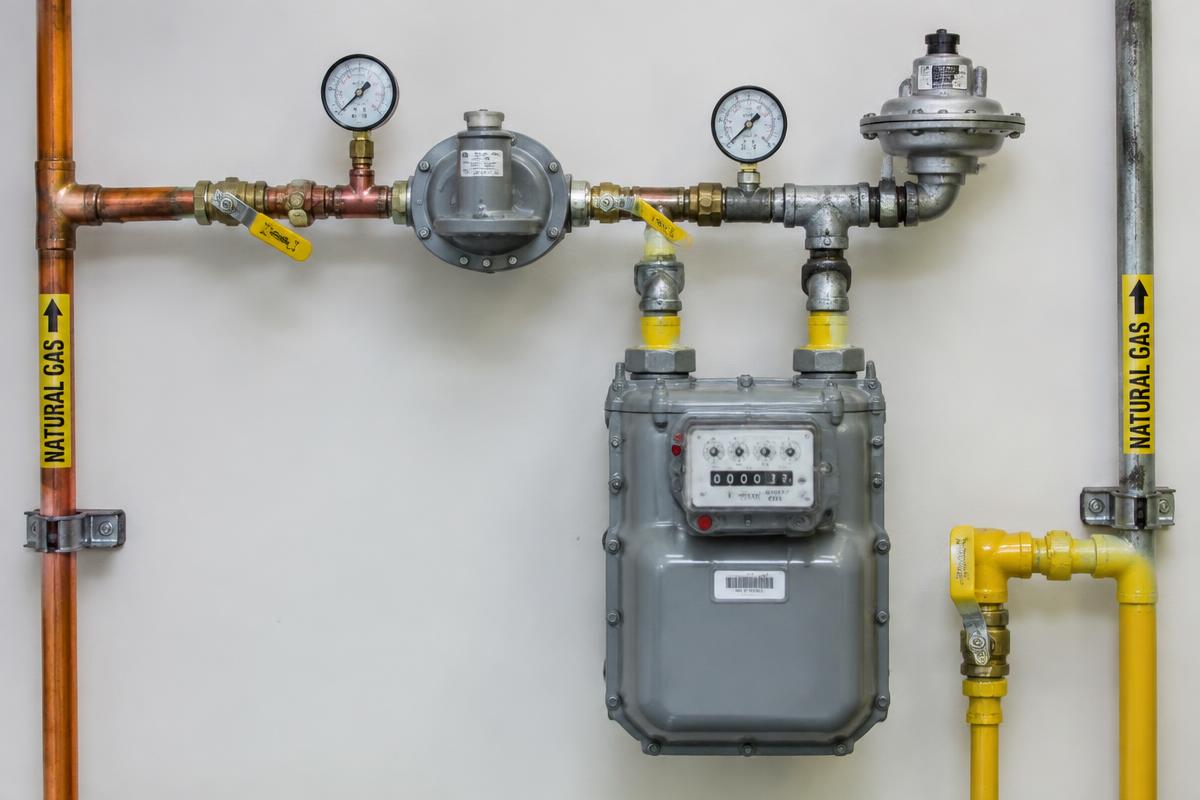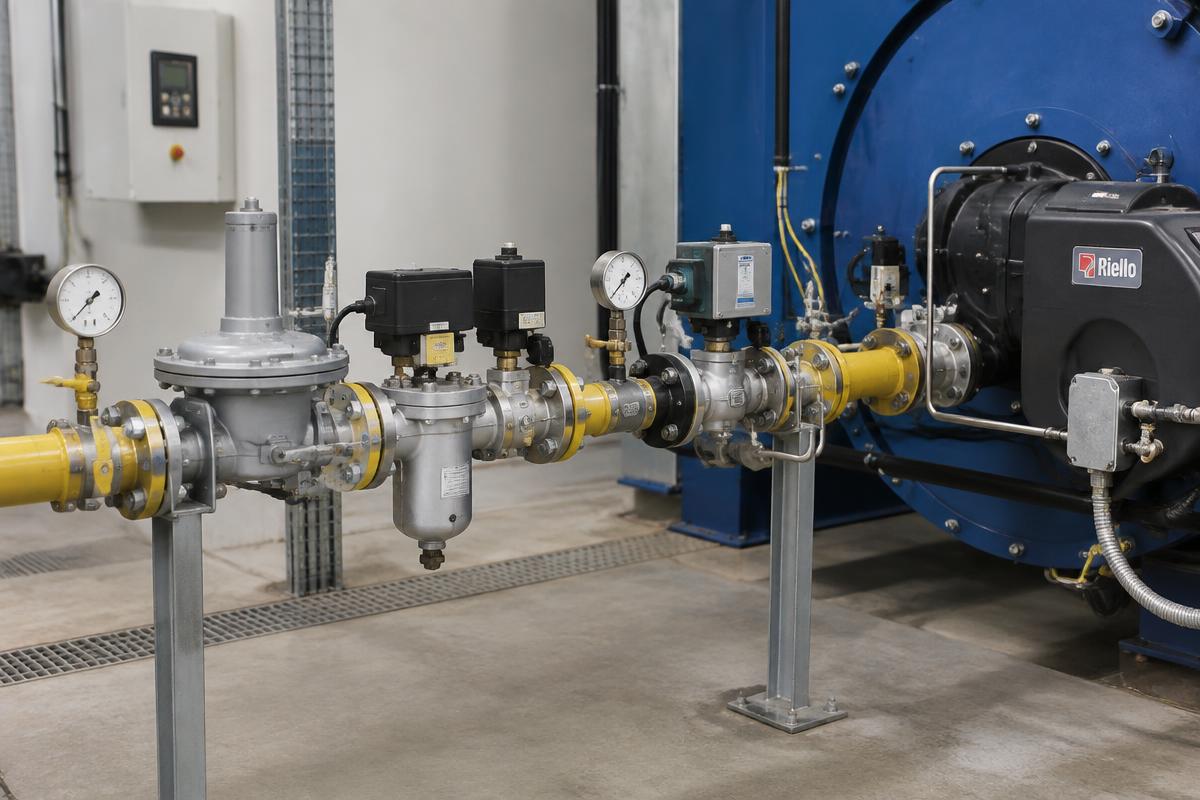
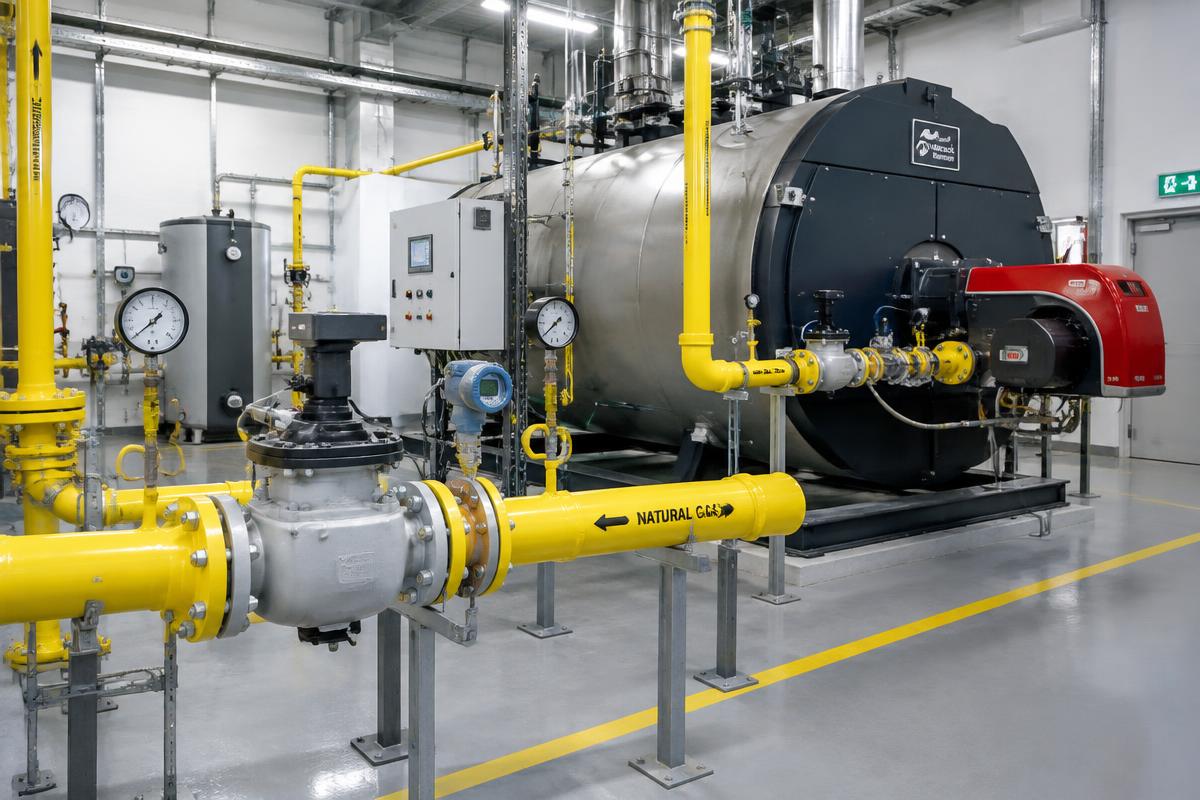
Correct pipe diameter is a fundamental requirement for the reliable operation of an industrial natural gas network. A pipe that is too small for the required flow rate can cause significant pressure drops and burner issues, even if the pressure at the facility's inlet is normal.
What determines the diameter
The choice is not based solely on a burner's nominal power. Factors such as the required gas flow rate, network pressure, piping length, local resistances, number of fittings, and the acceptable pressure drop to the consumer are all taken into account.
Flow rate and thermal power
The higher the thermal power of the consumers, the greater the required natural gas flow rate. Actual consumption also depends on the calorific value and the efficiency of the installation.
Pressure drop
As gas moves through the pipe, it loses pressure due to friction. Additional losses are created by elbows, valves, filters, reducers, and other components. As the flow rate increases, these losses become more significant.
Why a no-load measurement is insufficient
A network might show normal pressure when burners are off but experience a large drop when they are operating. Therefore, the adequacy of a piping system is judged based on its behavior under actual load, rather than just a static reading.
Flow velocity
Excessive velocity can be associated with increased pressure losses, noise, and adverse network performance. Permissible velocity and pressure drop are determined by engineering design and applicable technical requirements.
Future expansions
In industrial settings, it is common to add new consumers. A network that was initially sufficient may later operate at its limit. Before a new large burner is connected, the total available supply must be checked, not just the feasibility of adding another branch.
Conclusion
Correct sizing is a combination of flow rate, length, pressure, components, and total load. If recurring pressure drops are observed, the piping system is one of the points that must be evaluated through technical calculations and actual measurements.