In the event of a leak, natural gas does not always appear exactly at the point of the fault. It can migrate through underground passages, shafts, wiring, or technical ducts.
Why does it migrate?
Gas follows paths of least resistance and can diffuse through gaps, pipe routes, and structural passages.
Risk in enclosed spaces
A space that does not contain natural gas equipment may exhibit gas accumulation if it communicates with the source of the leak.
Shafts and underground channels
These must be inspected with particular care, as they can act as gas migration routes.
Diagnosis
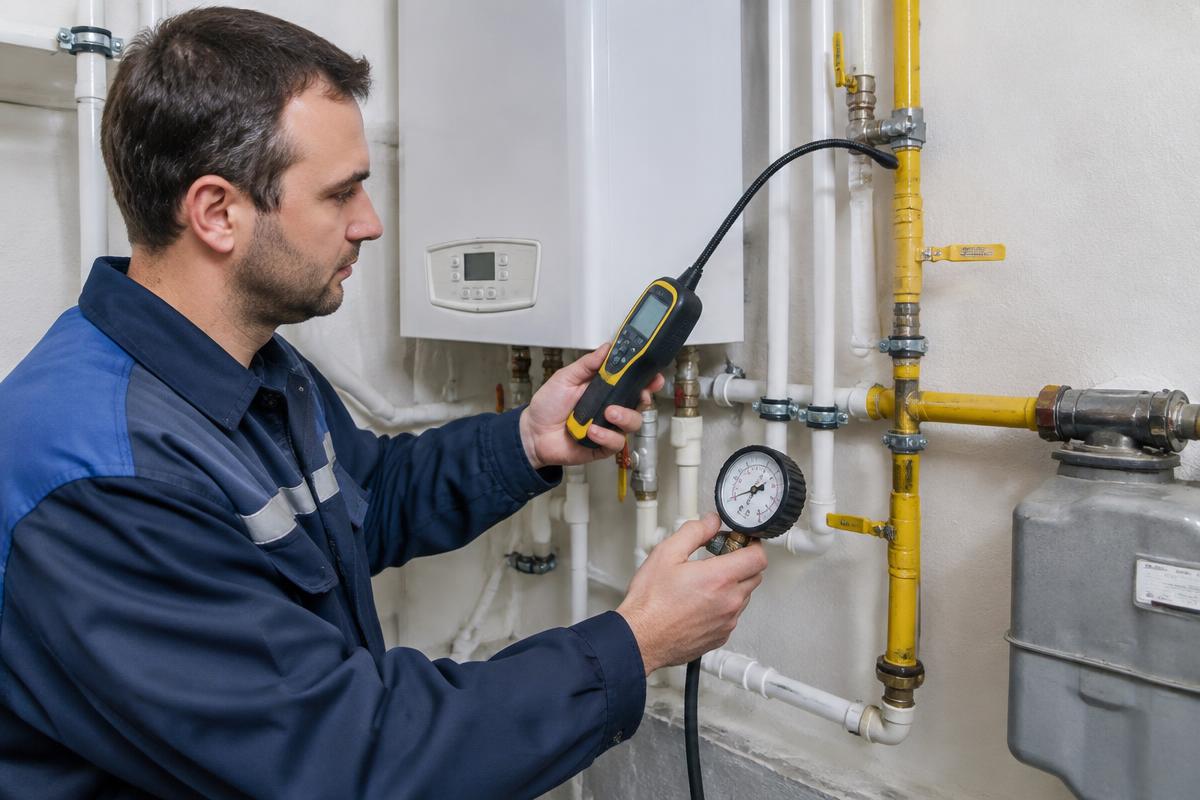
The investigation starts at the point where gas was detected and systematically expands toward potential sources and migration routes.
Conclusion
The highest reading is not always located at the actual point of the leak. It is necessary to map the concentration throughout the area.