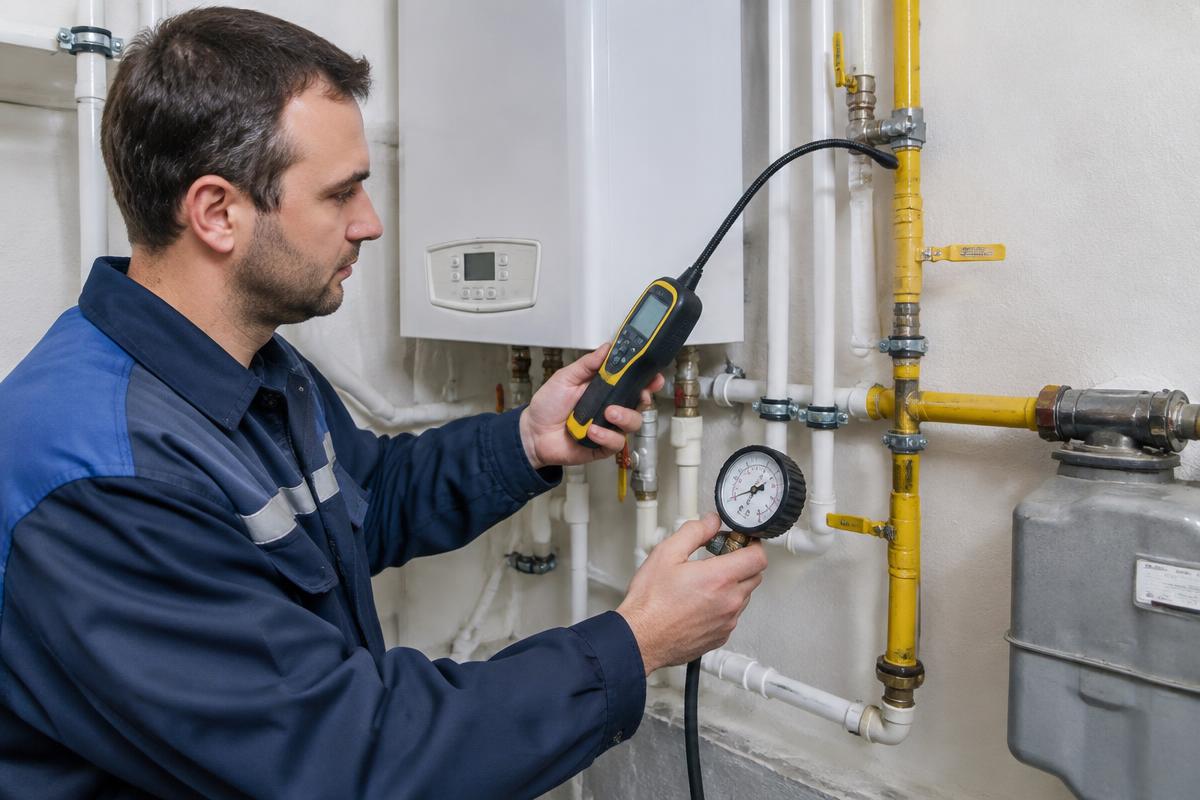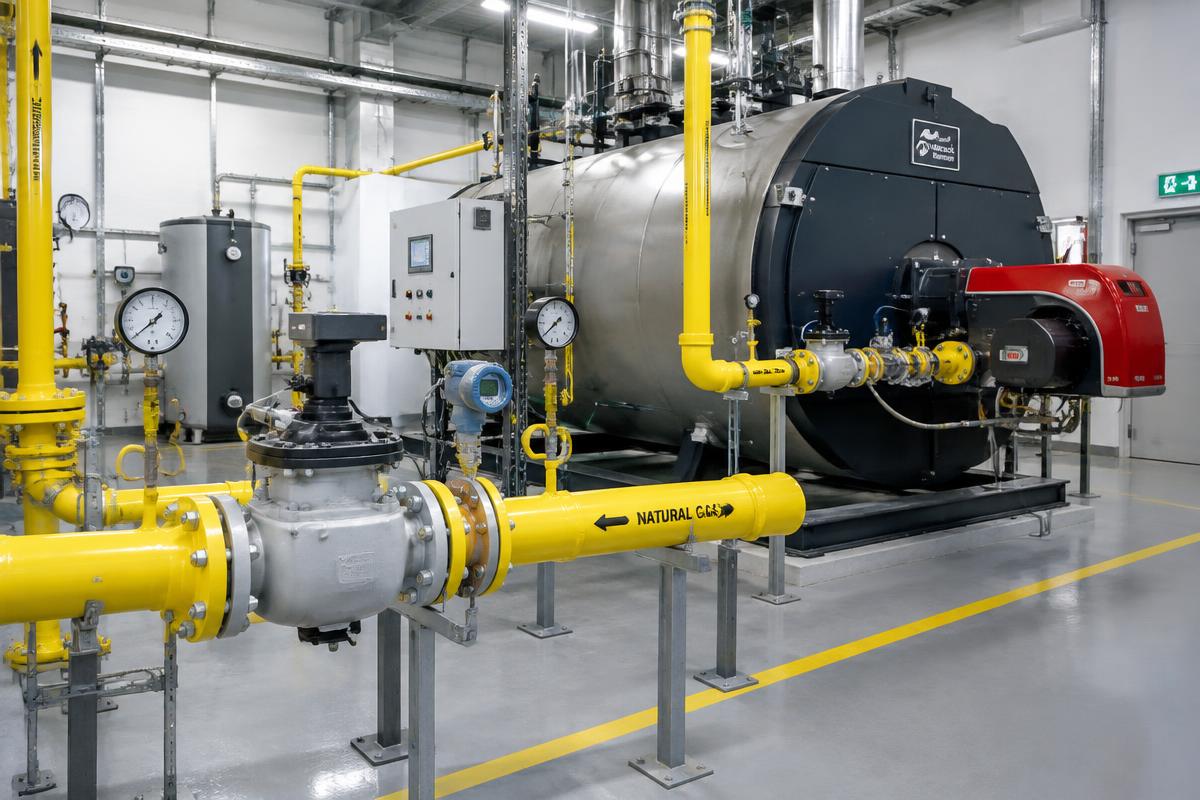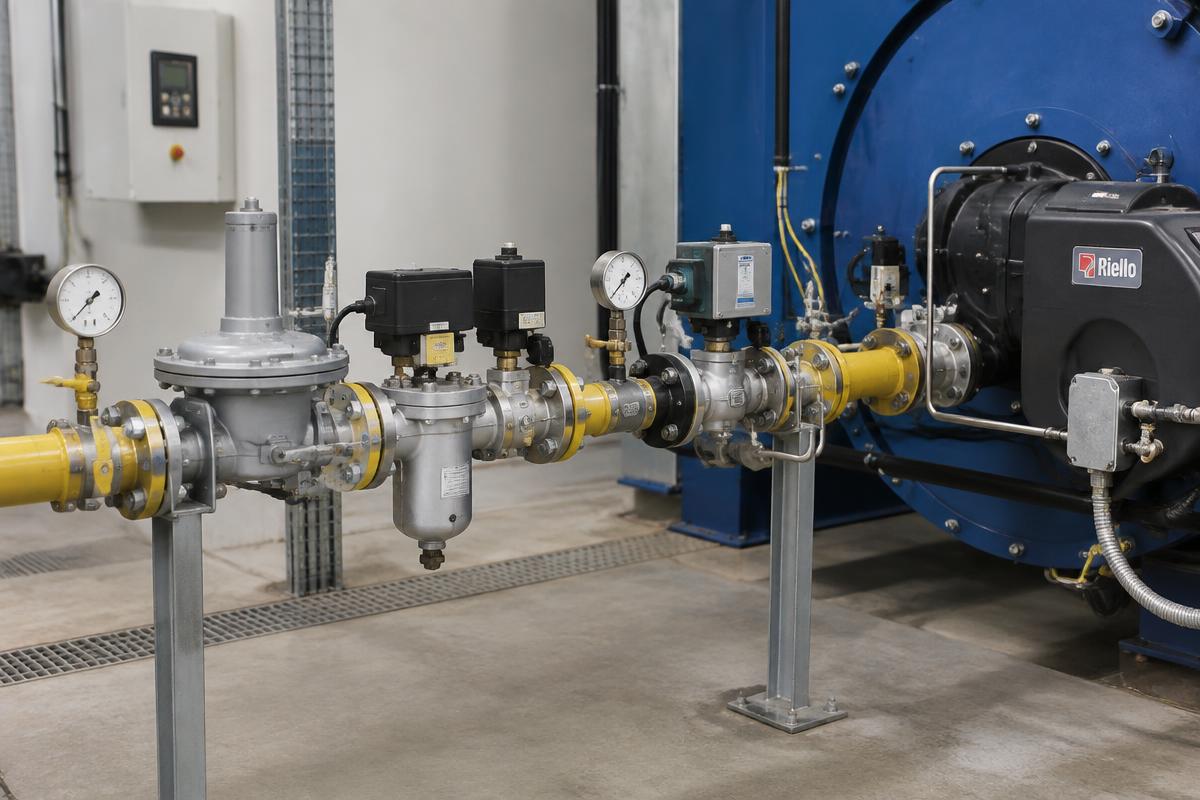
An intermittent Low Gas Pressure alarm is more difficult than a permanent fault, because when the technician arrives, the pressure may appear normal. Proper diagnosis requires logging conditions at the exact moment the trip occurs.
Checking if the alarm is a real pressure drop
First, we determine whether the pressure switch reacted to a real drop or if there is an issue with the pressure switch itself, the impulse line, or the wiring. Simultaneous logging of pressure and electrical contact is very useful.
Simultaneous operation of other consumers
In a shared network, starting a second large load can momentarily drop the pressure. If the alarm appears at specific times or when another machine starts, the total network demand should be examined.
Filter and regulator
A partially clogged filter or a regulator that does not respond well may allow normal operation at low loads but fail at maximum flow.
Setpoint too close to normal pressure
If the margin between normal dynamic pressure and the setpoint is too small, minor, normal fluctuations can cause trips. The correct solution is not to change the setpoint arbitrarily, but to check the design, burner requirements, and actual pressure.
Intermittent electrical contact
Vibration, a loose terminal, or a worn contact can cause momentary opening in the safety circuit. Therefore, the electrical side must also be checked, not just the pressure.
What should be logged
Alarm time, burner load, pressure before and after the regulator, status of other consumers, and the controller error code. With this data, a pattern that is not visible during a simple on-site inspection can be identified.
Goal: to find which variable changes at the moment of the trip. Random setting changes usually hide the problem without solving it.