A low natural gas pressure alarm is one of the most common causes of burner shutdown. It does not always mean the central supply actually has low pressure. It may stem from a filter, regulator, piping, valve, or an incorrect setpoint.
Static pressure check
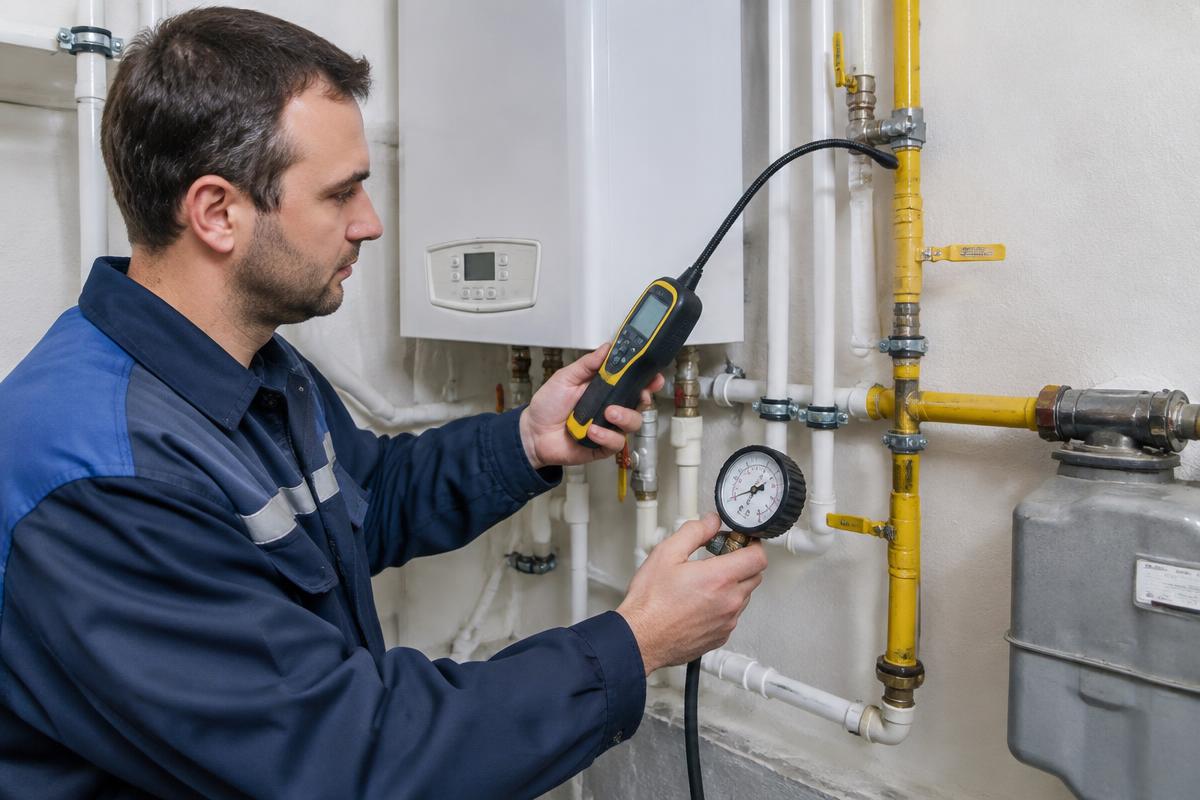
With the burner stopped, the pressure in the gas train is recorded. This value serves as a reference point but is not sufficient for a diagnosis.
Dynamic pressure check
The critical measurement is taken while the burner is increasing its load. If the pressure drops sharply, the upstream network, filter, regulator, and the adequacy of the piping cross-section must be examined.
Low-pressure pressostat
The setpoint, the actual pressure at the sampling point, and the condition of the electrical contact are checked. A faulty or incorrectly adjusted pressostat can cause unwanted trips.
Clogged filter
Measuring the differential pressure before and after the filter indicates whether there is significant resistance to flow. The problem usually becomes more pronounced at high loads.
Pressure regulator
If the inlet pressure remains stable but the outlet pressure drops, the regulator, impulse lines, and any pilot system must be checked.
Proper diagnosis
Pressures should be recorded at more than one point simultaneously. This is how the exact location of the pressure loss is identified.