What does it really mean when the power goes out?
You turn on the oven, the water heater is running, and as soon as another appliance starts, the power cuts off. The most common scenario is an overload of a circuit or the overall electrical supply. However, the same description may refer to current leakage, a short circuit, or a connection problem. A correct diagnosis begins with identifying which protection device was triggered.
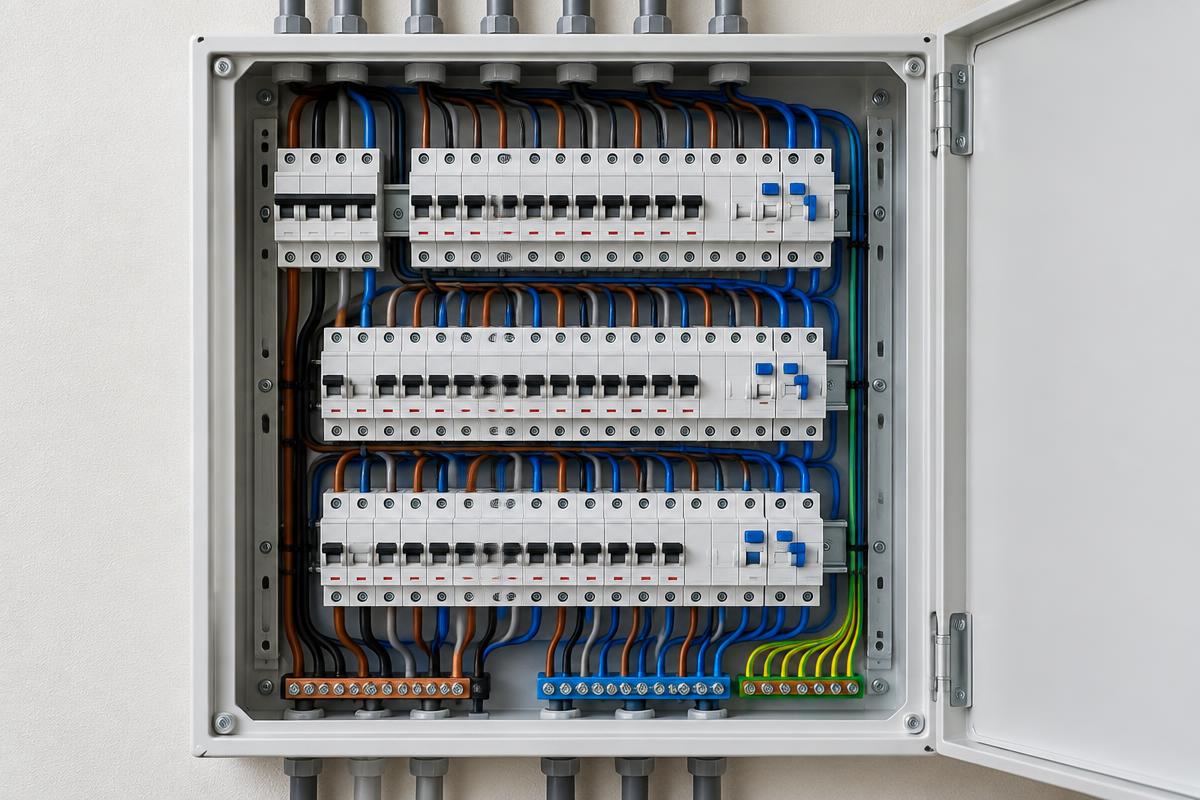
Without removing the electrical panel cover, observe its indications and labels:
- Miniature Circuit Breaker (MCB) of a specific circuit: usually cuts off power to specific sockets or appliances and protects against overload and short circuits.
- Main circuit breaker or service fuse: may cut off the entire installation when there is an overcurrent.
- Residual Current Device (RCD), also known as a ground fault circuit interrupter: triggers when it detects a difference between the incoming and outgoing current.
- Combined RCBO device: provides protection against both leakage and overcurrent.
A simple main switch is not necessarily an automatic protection device. If all protection devices appear to be enabled but there is no power, there may be a network outage or another fault. Do not attempt to intervene with the meter or any sealed equipment.
Overload: when appliances demand more power
Every circuit has specific limits, which depend on the cross-section and installation method of the conductors, the temperature, cable grouping, and its protection. When appliances require more current than is allowed, the miniature circuit breaker may cut the power to limit the risk of overheating.
For a nearly ohmic load in a 230 V single-phase supply, the calculation current = power / voltage applies approximately. A 2,000 W appliance consumes about 8.7 A. Two such appliances on the same circuit require about 17.4 A before adding other loads. In a circuit with a 16 A breaker, this can lead to tripping, though not necessarily immediately.
The trip time depends on the magnitude of the overload and the characteristics of the protection device. For motors, compressors, and electronic devices, simply dividing power by voltage is not always enough. You need the nameplate data and, where required, measurements.
Water heaters, electric stoves, fan heaters, kettles, and laundry appliances during the water heating phase are often involved. It is not just about how many appliances are running, but how much they consume at that moment. Also, two sockets on different walls may belong to the same circuit. Conversely, separate circuits do not preclude overloading the total supply.
When the cause is not the total consumption
If the RCD trips, you should not automatically assume that it "cannot handle the appliances." A standard RCD is not triggered by overload. Possible causes include insulation wear, humidity, a faulty heating element, or the cumulative leakage of many appliances. Thus, adding one more appliance may cause an interruption without exceeding the circuit's power limit.
Another possibility is a short circuit, which usually causes the protection to trip quickly. However, an immediate trip is not enough for a safe conclusion: some loads exhibit high inrush current. An electrician must examine the device, the circuit, and the type of protection.
Particular attention should be paid to loose or oxidized connections. These can cause localized overheating even without enough total current to trigger the miniature circuit breaker. A burning smell, discoloration of a socket, buzzing, sparks, or flickering lights require inspection. The absence of a tripped fuse does not prove that the installation is safe.
What you can safely do after a power cut
First, turn off the appliances that were running and note which ones they were. If safe, unplug portable appliances from the sockets by pulling the plug, not the cord. Do not touch wet, burnt, or visibly damaged components, and do not open sockets or the electrical panel.
- Check the extent of the outage: does it affect one circuit, the whole house, or even neighboring properties?
- Record the protection device that tripped: a photo of the panel front can help the electrician.
- Note when it happened: immediately upon startup or after several minutes of operation?
- Avoid repeated resets: this is not a fault-finding method.
Only if there are no signs of damage, moisture, or overheating, and you know how to operate the specific protection device, can one attempt a reset using the external lever after removing the loads. If it trips again, does not stay active, or if there is any doubt, leave the affected circuit out of operation and call a licensed electrician. Do not reconnect a suspicious appliance for testing.
If there is a burning smell, smoke, or sparking, cut off the power supply only if it can be done without danger. Do not approach a panel that is smoking or wet. In case of an electrical fire, move away, call emergency services, and do not use water.
How to properly solve and prevent the problem
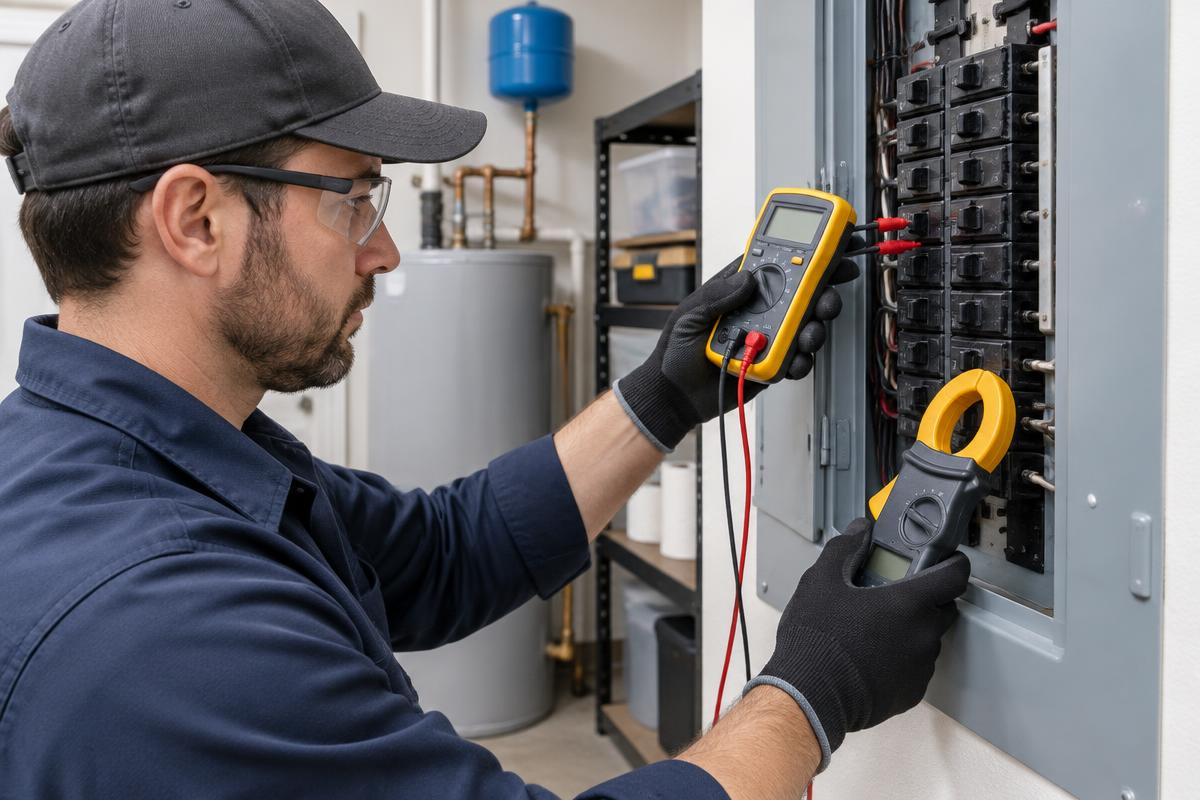
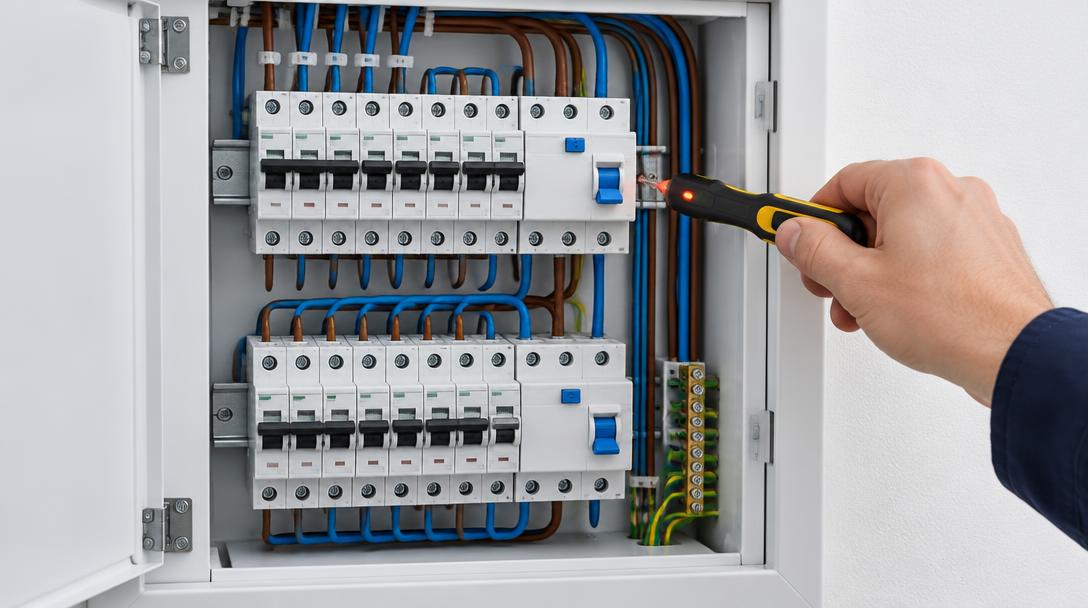
It is not enough for an electrician to replace the tripped protection device. They need to check the load distribution, conductor cross-sections, connections, grounding, and the suitability of the protective devices. Depending on the symptoms, current, insulation resistance, and RCD function measurements are performed.
If an overload is confirmed, the solution may involve changing usage scheduling, installing a new independent circuit for high-load appliances, or implementing a load management system. In a three-phase installation, phase distribution is also checked: one phase may be overloaded while the others have margin. Any increase in power supply requires an inspection of the installation and the corresponding procedures with the network operator.
Do not install a larger fuse simply to make it stop tripping. Do not bypass the RCD either. The protection must correspond to the circuit's capabilities. A larger power strip also does not increase the circuit's capacity. Avoid daisy-chaining power strips and connect high-power appliances according to the manufacturer's instructions, using a suitable installation.
Frequently Asked Questions
Why does the fuse trip after a few minutes?
Delayed tripping can be due to thermal protection against overload. However, it can also be related to a fault that appears when an appliance heats up. Time alone is not enough for a diagnosis.
If I plug the appliance into another socket, is the problem solved?
Not necessarily, because the other socket may belong to the same circuit. If there is a suspected fault in the appliance, moving it is not a safe test. Inspection is required before it is used again.
Can multiple appliances trip the RCD?
Yes, if their leakage adds up enough to trigger it. This differs from an overload. Measurements are needed to determine if a specific appliance, the installation, or a combination of loads is responsible.
Is it normal for the power to trip frequently?
No. Repeated activation of protection indicates that an investigation is needed. Until inspected, avoid the combination of loads that caused the overload and keep any appliance showing suspicious symptoms out of service.