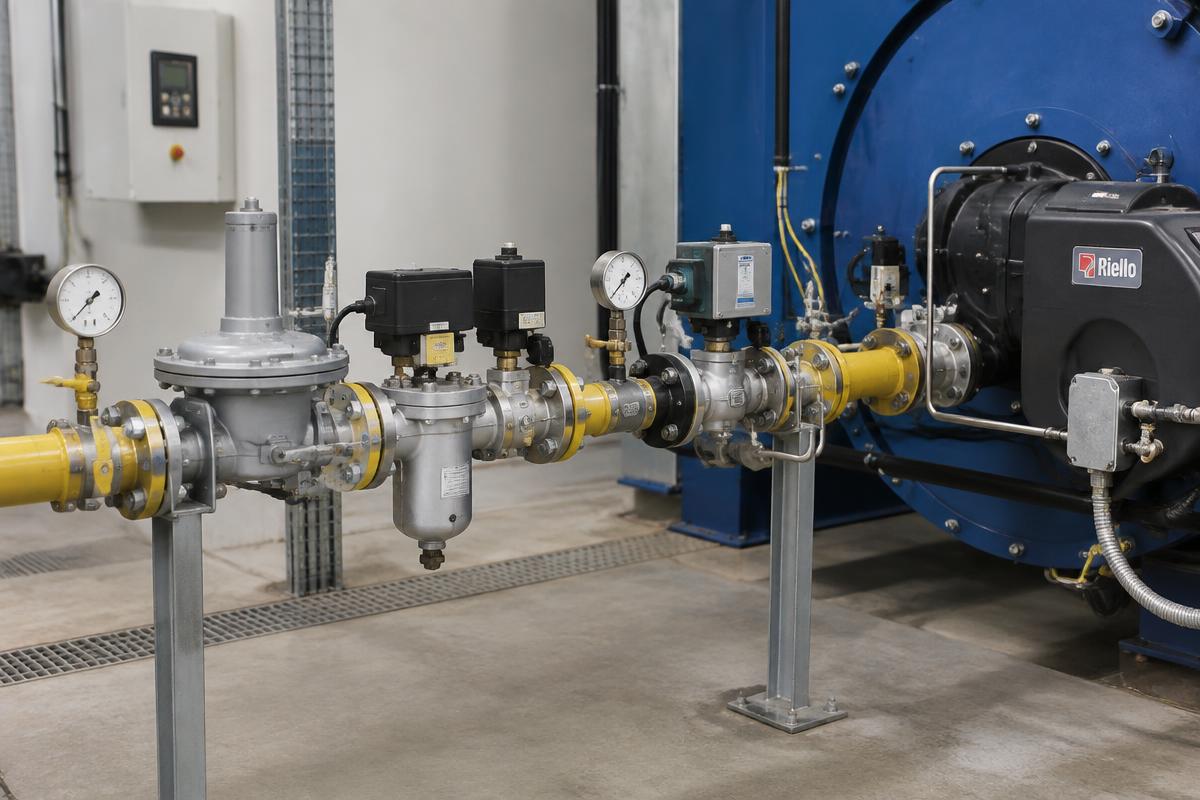
The pressure relief valve is used in certain installations to limit small or temporary pressure increases on the outlet side of a regulator. It does not perform the same function as a slam-shut valve, and these two devices should not be confused.
What a relief valve does
When the pressure exceeds the set value, the valve can open and discharge a controlled amount of gas to a designated safe relief point. Once the pressure returns to normal, the valve closes.
What a slam-shut does
The slam-shut follows a different logic: it does not relieve pressure, but cuts off the supply. After a trip, inspection and manual reset are usually required.
Why the discharge location matters
The discharged gas must not be released arbitrarily into an enclosed space. The discharge system is designed and constructed according to the study, equipment instructions, and applicable codes so that no dangerous concentration is created.
When to suspect a relief leak
Repeated discharge may indicate an excessive pressure rise after lock-up, an unstable regulator, improper settings, or a problem with the component itself. The solution is not to block the discharge outlet.
Setpoints relationship
In a properly designed system, the settings of the regulator, relief valve, and slam-shut valve follow a specific logic and spacing. They should not be changed independently without verifying the overall protection of the installation.
Maintenance
Operation and tightness are checked according to the maintenance schedule. Any sign of continuous discharge requires immediate technical investigation.
Key distinction: relief = controlled pressure relief, slam-shut = supply isolation. Their functions are different and often complementary.